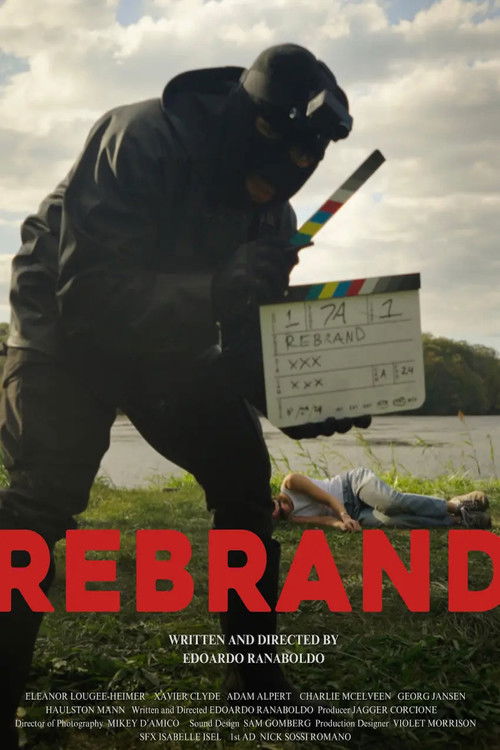
Rebrand (2025)
Directed by Edoardo Ranaboldo
No · Ultra Based
How we score movies →Consciousness Markers
The cast includes actors of apparent racial diversity, but no documented discourse or intent around representational casting exists. The diversity reads as unremarkable naturalism rather than programmatic inclusion.
The premise of content creators being hunted while making their final video carries a latent irony about the attention economy, but the film does not appear to develop this as explicit anti-capitalist critique.
No LGBTQ+ themes, characters, or representation identified in any available source.
No feminist framing, female empowerment arc, or gender-politics commentary identified in available sources.
No racial commentary, race-based conflict framing, or racial justice themes identified in the film's premise or critical reception.
No climate or environmental messaging identified. The woods are a setting, not a statement.
No body positivity themes or messaging identified in any available source.
No neurodivergence themes, characters, or representation identified in any available source.
No historical revisionism or recontextualization of historical events identified. The film is a contemporary slasher.
No evidence of sermonizing, on-the-nose moralizing, or heavy-handed messaging in the film's premise, reception, or director's stated intent.
Synopsis
A group of camping YouTubers head to the woods to make their final video. Unbeknownst to them, four masked men follow behind, planning to make a video of their own.
Why it received this score
Edoardo Ranaboldo's "Rebrand" arrives on the festival circuit as a slasher about camping YouTubers who discover, in the most irreversible way possible, that the internet does not follow you into the woods. The premise is clean, the threat is physical, and the film has the good sense to let its genre machinery do the talking. Comparisons to Ti West's "You're Next" have been floated, which is a reasonable lineage for a film that appears more interested in dread and craft than in delivering a seminar on systemic inequality.
The director has spoken about using genre to explore "identity and the power of the medium," and there is, buried somewhere in the concept, a faint flicker of commentary about influencer culture. Content creators meeting a violent end at the hands of men who want to make their own video does carry a certain grim irony about the attention economy. The film does not appear to press this point with any urgency, however. The irony is structural, not sermonizing. It is the difference between a film that has a thought and a film that corners you to share it.
The result is a genre entry that scores almost nothing on the scale of progressive cultural signaling, and this is not a criticism. Its modest cast diversity registers as unremarkable naturalism rather than programmatic representation. There is no climate anxiety, no identity politics, no lecture energy whatsoever. "Rebrand" is, in the taxonomy of this analysis, a remarkably clean specimen. It wants to frighten you. That is, in the current landscape, a more radical act than it sounds.
Analysis generated by our Consciousness Algorithm