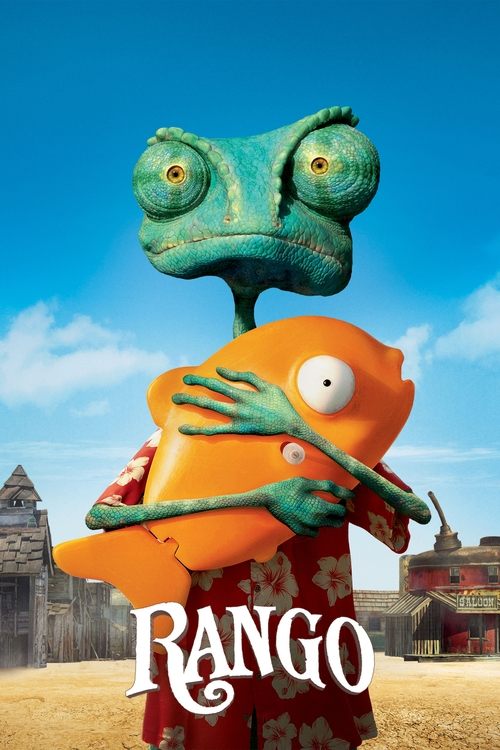
Rango (2011)
Directed by Gore Verbinski
No · Ultra Based
How we score movies →Consciousness Markers
The film includes a plot about water scarcity and corporate malfeasance, but treats these as adventure plot elements rather than ideological critique of capitalism.
The entire cast consists of anthropomorphic animals rather than human characters, making human representation assessment irrelevant to the film's design.
No LGBTQ+ themes, relationships, or representation are present in the film.
The film contains no feminist messaging or commentary about gender roles or women's experiences.
Racial consciousness is not applicable as the film features only anthropomorphic animals without human racial or ethnic characteristics.
While the plot involves a drought, this functions as a standard Western narrative device rather than environmental or climate consciousness.
No body positivity themes or messaging are present in the film.
No representation of or commentary on neurodivergence is evident in the film.
The film engages with Western genre conventions affectionately but does not rewrite or reinterpret historical events.
The film maintains a comedic tone throughout and avoids preachy messaging or moral lectures about social issues.


Synopsis
When Rango, a lost family pet, accidentally winds up in the gritty, gun-slinging town of Dirt, the less-than-courageous lizard suddenly finds he stands out. Welcomed as the last hope the town has been waiting for, new Sheriff Rango is forced to play his new role to the hilt.
Why it received this score
Rango arrives as a monument to cinematic pastiche, a film so thoroughly committed to the grammar of Western cinema that it has little bandwidth for contemporary social consciousness. Gore Verbinski constructs an elaborate homage to the genre, complete with references to classic Westerns and the formal language of the medium itself. The narrative concerns a chameleon who assumes a false identity, though this conceit serves the film's comedic architecture rather than any examination of performative authenticity or identity politics. The entire cast consists of voice actors portraying animals, rendering questions of representation entirely moot. There is no human casting to evaluate, no LGBTQ+ subtext, no feminist positioning, and no racial consciousness because the film exists in a purely zoological register. The drought afflicting the town of Dirt functions as a standard plot device to generate conflict and adventure, not as a vehicle for environmental messaging or climate consciousness. The film is aggressively apolitical, content to be a well-crafted entertainment that declines to wrestle with anything resembling a social issue. This is not a criticism, merely an observation. Rango knows what it is: a clever children's film about mistaken identity and heroism, executed with technical virtuosity and charm. It is simply not a film that concerns itself with the particular preoccupations of contemporary progressive sensibilities.
Analysis generated by our Consciousness Algorithm
Critic Reviews
“Rango is wild, woolly and weird, and the first movie of 2011 that I must see again.”
“Rango is some kind of a miracle: An animated comedy for smart moviegoers, wonderfully made, great to look at, wickedly satirical, and (gasp!) filmed in glorious 2-D.”
“Verbinski's greatest triumph is that he allowed the animation to free rather that confine him. There is indeed a new sheriff in town, with Rango destined to become a classic.”
“It is, for what it is, a work of considerable care and craft. And it's completely soulless.”