Rampage (2018)
Directed by Brad Peyton
No · Ultra Based
How we score movies →Consciousness Markers
Dwayne Johnson as the lead protagonist and Naomie Harris in a supporting role provide demographic diversity, but the film makes no thematic point about their representation and treats it as standard modern casting practice.
While the film casts Black and other minority actors, it demonstrates no explicit racial consciousness or commentary about their experiences or identities.
Naomie Harris plays a competent scientist, but the film makes no effort to explore feminist themes or center women's experiences in any meaningful way.
Corporate negligence drives the plot, but the film presents this as a plot device rather than a critique of capitalism or corporate power.
No LGBTQ characters, relationships, or themes present in the film.
The film's genetic mutation crisis has no connection to climate change or environmental degradation themes.
No body positivity themes or representation of diverse body types featured in the film.
No characters with neurodivergence or exploration of neurodivergent representation.
The film contains no historical revisionism or reframing of historical events.
The film avoids any preachy messaging or attempts to educate the audience about social issues.


Synopsis
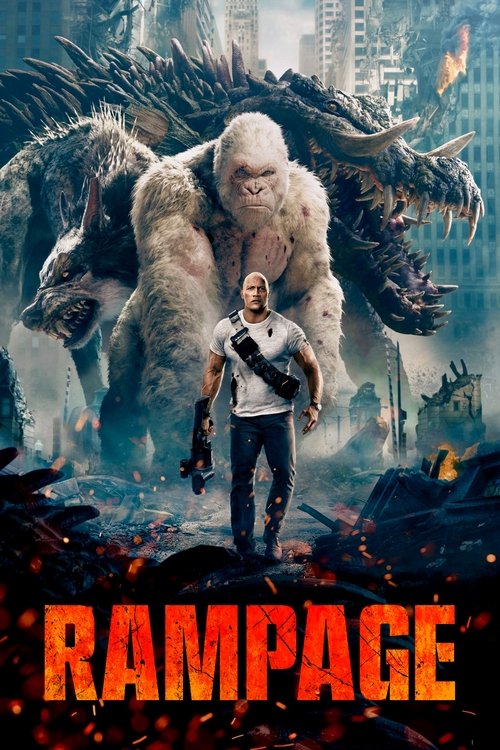
Primatologist Davis Okoye shares an unshakable bond with George, the extraordinarily intelligent, silverback gorilla who has been in his care since birth. But a rogue genetic experiment gone awry mutates this gentle ape into a raging creature of enormous size. To make matters worse, it's soon discovered there are other similarly altered animals. As these newly created alpha predators tear across North America, destroying everything in their path, Okoye teams with a discredited genetic engineer to secure an antidote, fighting his way through an ever-changing battlefield, not only to halt a global catastrophe but to save the fearsome creature that was once his friend.
Why it received this score
Rampage exists in the most politically neutral space a major studio action film can occupy. It features a diverse cast and places a Black man in the heroic protagonist role, but these casting choices function as simple demographic inclusion rather than any coherent statement about representation. The film makes no attempt to interrogate its own themes, explore the ethics of genetic experimentation, or comment on corporate malfeasance with any seriousness. It is a film about giant animals destroying a city, and it commits to that premise with admirable single-mindedness.
The presence of Naomie Harris in a secondary role as a genetic scientist and Demetrius Grosse in the cast provides surface-level diversity, yet the narrative makes no effort to center or meaningfully develop these characters around their identities. They are simply present, which is the bare minimum of contemporary Hollywood casting practice. The film contains no LGBTQ representation, no feminist consciousness, no climate commentary disguised as plot mechanics, and certainly no critique of the biotech corporations whose negligence drives the disaster.
One observes a certain perverse integrity in Rampage's refusal to inflect its destruction with social meaning. It is a film that knows exactly what it is: an adaptation of an arcade game starring the world's most charismatic former wrestler, designed to entertain audiences in April with CGI spectacle and minimal cognitive engagement. In this respect, it achieves its modest aims without pretense or apology.
Analysis generated by our Consciousness Algorithm
Critic Reviews
“Keeps playing its two winning cards over and over again, and is smart enough to realise they are more than enough. The first is the giant animal carnage itself, which crackles with fun ideas and flourishes throughout. The second is the comic chemistry of a superbly picked cast who bring everyone in on the joke.”
“What makes Rampage especially enjoyable is the way it sneaks up on the audience. Before casting off every shred of dignity and abandoning itself to good-humored excess, the movie passes itself off as a reasonably serious science-fiction movie.”
“The filmmakers try to innovate largely by making the movie as toothless and easily digestable as possible. Nothing in the film is real enough to care about past the moment, or serious enough to trouble audience’s sleep. Maybe in a world that’s already full of real-life disasters, it’s innovative enough to make monumental destruction this much dumb, lightweight fun.”
“Rampage is a big, noisy nothing—an action extravaganza that fails at being funny just as hard as it fails at being serious.”