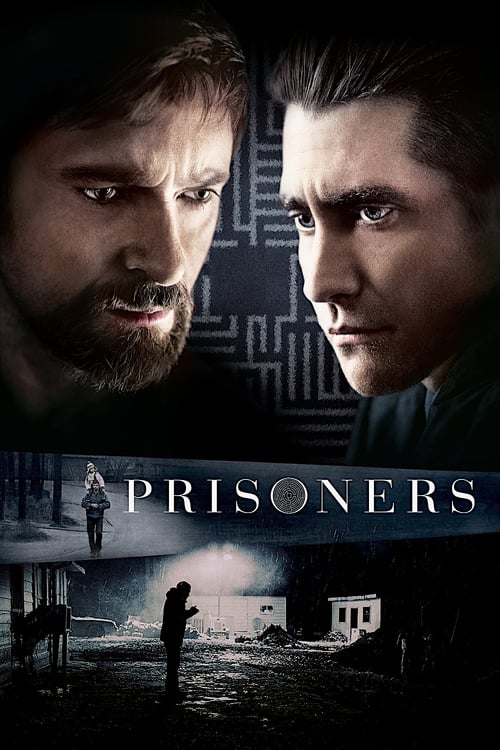
Prisoners (2013)
Directed by Denis Villeneuve
No · Ultra Based
How we score movies →Consciousness Markers
The cast is racially diverse, including Viola Davis, Terrence Howard, and others in substantial roles, but this diversity is presented as natural to the story rather than foregrounded as a statement about representation.
A key character exhibits behaviors consistent with developmental disability, though the film does not explicitly label or engage with neurodivergence as a thematic concern.
While female characters are present and grief-stricken mothers are depicted with agency and emotional depth, the narrative remains centered on masculine violence and paternal desperation rather than feminist critique.
The film contains characters of color in significant roles, but racial identity is not examined, discussed, or thematically relevant to the story's concerns.
No LGBTQ characters, themes, or representation are present in the film.
No climate-related themes, messaging, or imagery appear in the film.
The film contains no critique of capitalism, wealth inequality, or systemic economic injustice.
No body positivity messaging or themes related to body image, disability representation, or size acceptance are present.
The film contains no revisionist historical framing or reexamination of historical events.
The film maintains moral ambiguity throughout and never lectures the audience about correct social attitudes or values.


Synopsis
Keller Dover is facing every parent's worst nightmare. His six-year-old daughter, Anna, is missing, together with her young friend, Joy, and as minutes turn to hours, panic sets in. The only lead is a dilapidated RV that had earlier been parked on their street.
Why it received this score
Prisoners stands as a monument to moral ambiguity in an era increasingly hostile to such uncertainties. Denis Villeneuve's 2013 thriller concerns itself with the question of whether a desperate man can be justified in torturing a suspect to save his child, a scenario that permits no easy answers and offers no progressive reassurance. The film features a diverse cast, including Viola Davis as a mother whose grief and rage mirror Hugh Jackman's protagonist, yet these characters exist within the story's logic rather than as assertions of representational virtue. There is no lecture, no moment of awakening toward social justice consciousness.
The film's moral framework is fundamentally conservative, rooted in traditional masculine codes and the primacy of family loyalty. Vigilantism, not systemic reform, drives the narrative. The police detective, played by Jake Gyllenhaal, is competent and sympathetic, suggesting institutional trust rather than institutional critique. The film's treatment of violence is unflinching but not celebratory, presenting torture as a consequence of desperation rather than as a tool for liberation or social correction. This is a film about individual moral failure, not structural injustice.
By the standards of modern progressive cultural sensibility, Prisoners remains largely indifferent. It contains no LGBTQ representation, no climate messaging, no examination of capitalist systems, no revisionist historical framing, and no particular investment in body positivity or neurodivergence awareness. The racial diversity of the cast is presented as unremarkable, which is to say it is not weaponized for thematic purposes. The film is morally serious without being socially conscious in the contemporary sense. It asks us to sit in discomfort without offering the comfort of ideological clarity.
Analysis generated by our Consciousness Algorithm
Critic Reviews
“The thriller that's exciting, cathartic, and powerfully disturbing. Prisoners is that type of movie. It's rooted in 40 years of Hollywood revenge films, yet it also breaks audacious new ground.”
“When it comes to thrillers, this one is as good as it gets. Not for the squeamish, but for anyone who loves movies, it’s too exhilarating to miss.”
“Exciting, terrifying, worrisome stuff saturates every second of Prisoners, holding you captive, keeping you guessing until the bitter end.”
“Don’t get me wrong, I like trash just fine, and the twisty-loo, triple-abduction plot of Prisoners certainly kept me watching to the end. (You’ll figure out some of screenwriter Aaron Guzikowski’s plot twists, but not all of them.) It’s the imitation-David Fincher pretentiousness that gets on my nerves.”