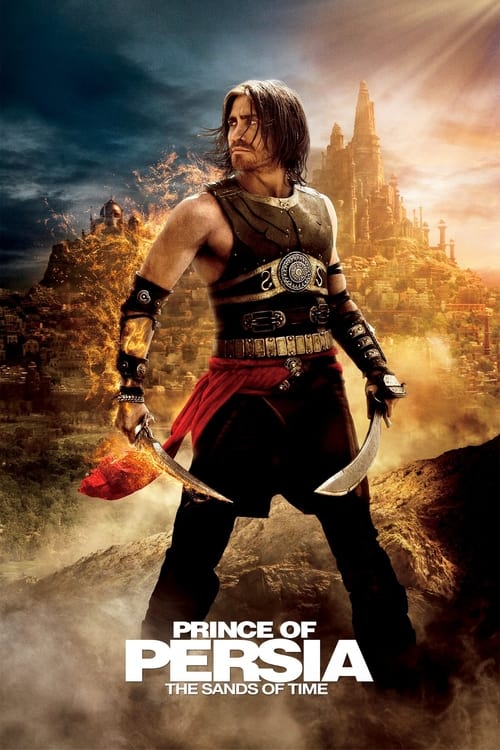
Prince of Persia: The Sands of Time (2010)
Directed by Mike Newell
No · Ultra Based
How we score movies →Consciousness Markers
White lead actor in explicitly Middle Eastern/Persian setting with supporting actors of color in secondary roles. Classic pre-2010s whitewashing that lacks any progressive intentionality or acknowledgment of representation issues.
Some actors of color present in the cast, but the narrative centers entirely on white protagonist with no meaningful engagement with racial themes or cultural specificity.
Female character (Gemma Arterton as Princess Tamina) exists but serves primarily as love interest and plot device to the male protagonist. No feminist agenda or consciousness evident.
No LGBTQ themes, characters, or representation present in the film.
No climate-related themes, environmental messaging, or ecological consciousness present in this fantasy action film.
No critique of capitalism, wealth inequality, or systemic economic injustice. Standard adventure narrative unconcerned with class politics.
No body positivity messaging or diverse body representation. Standard action hero physiques and conventional beauty standards throughout.
No representation of neurodivergent characters or conditions. No acknowledgment of disability or neurodiversity.
Fantasy adventure set in a fictional universe, not based on or revisiting actual history. No revisionist historical narrative present.
No preachy messaging about social justice, systemic inequality, or moral lessons about contemporary social issues. Pure entertainment adventure narrative.


Synopsis
A rogue prince reluctantly joins forces with a mysterious princess and together, they race against dark forces to safeguard an ancient dagger capable of releasing the Sands of Time – gift from the gods that can reverse time and allow its possessor to rule the world.
Why it received this score
Prince of Persia: The Sands of Time arrives as a curious artifact of pre-woke Hollywood, a moment when major studios still felt comfortable casting white leads in explicitly non-Western settings without meaningful interrogation of the choice. Jake Gyllenhaal as the titular prince stands amid a supporting cast that includes actors of color like Steve Toussaint and Reece Ritchie, yet the film's entire narrative and visual focus centers on a white protagonist navigating a fantasy version of the Persian empire. This is not progressive representation but rather the default casting logic of an earlier era.
The film contains no detectable LGBTQ themes, feminist messaging, or climate consciousness. There is no body positivity discourse, no neurodivergent representation, and no revisionist history of note. The supporting characters, while occasionally portrayed by non-white actors, exist primarily to serve the white hero's journey, a narrative structure that predates modern progressive sensibilities. One finds no lecture energy about systemic injustice or capitalist critique, merely a straightforward adventure tale concerned with preventing a magical apocalypse.
What emerges from this film is a perfect time capsule of Hollywood's representational indifference circa 2010. It would later become precisely the kind of casting choice that sparked the whitewashing discourse of the 2010s, yet the film itself seems entirely unaware of the conversation it would provoke. It is not aggressively offensive so much as passively oblivious, which may be the most instructive posture for understanding how representational consciousness evolved in mainstream cinema over the subsequent decade.
Analysis generated by our Consciousness Algorithm
Critic Reviews
“It deserves to be seen on a hot Saturday afternoon in a theater (preferably an air-conditioned one) peopled with other people, the way many of us used to see movies as kids.”
“This is what a videogame movie looks like now.”
“On the scale of summer action films, this is to the “Transformers” sequel what an Andy Warhol print is to a first-grader’s refrigerator painting.”
“An epic example of muddled storytelling, chintzy excitement and scatter-brained execution.”