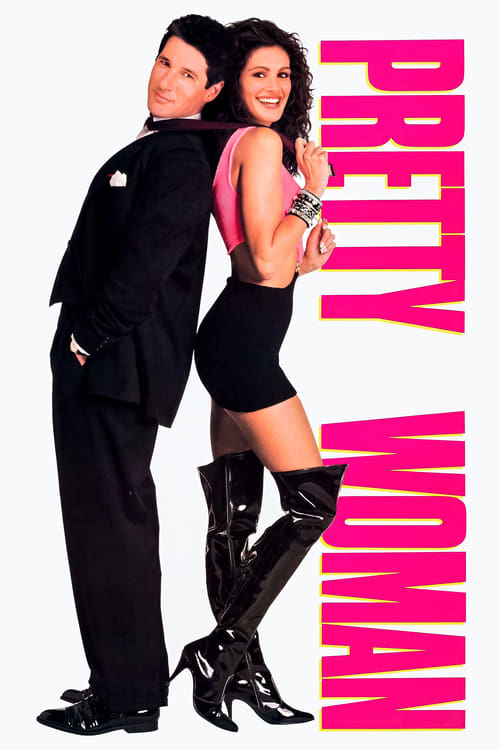
Pretty Woman (1990)
Directed by Garry Marshall
No · Ultra Based
How we score movies →Consciousness Markers
The cast is overwhelmingly white with no meaningful diversity. Supporting roles lack racial or ethnic representation, and the film shows no awareness of casting as a site of conscious inclusion.
The makeover sequence emphasizes the need to conform to elite aesthetic standards. Julia Roberts' body is presented as already acceptable, but her appearance requires professional refinement to be worthy of a billionaire.
The female protagonist requires male-initiated transformation to achieve happiness. Her arc moves from sex work to respectable woman through acquisition of proper clothes and manners, reinforcing traditional gender hierarchies.
The film operates in a racially unmarked space where Los Angeles is depicted as predominantly white. Race is not addressed, examined, or interrogated in any way.
No LGBTQ+ characters, themes, or representation of any kind. The film is entirely heteronormative without question.
No environmental themes, climate concerns, or ecological consciousness appears in the film.
The film celebrates wealth, luxury consumption, and material acquisition as paths to happiness and self-worth. Capitalism is presented as fundamentally benevolent.
No representation of neurodivergent characters or any acknowledgment of cognitive or developmental difference.
The film contains no historical content or revisionist historical framing of any kind.
The film does not lecture or preach about social issues. It operates as a straightforward romantic fantasy without preachy intent.


Synopsis
Vivian is a carefree, streetwise diamond in the rough when she meets sophisticated billionaire Edward in a chance encounter that turns into a week-long business arrangement. But Vivian's energetic spirit challenges Edward's no-nonsense approach to life, and soon they are teaching each other – and falling in love.
Why it received this score
Pretty Woman presents a curious case study in the history of romantic cinema. Released in 1990, the film predates the cultural markers we now associate with modern progressive sensibilities by nearly three decades. The narrative functions as a Cinderella story filtered through the lens of 1980s consumerism: a sex worker is rescued from her circumstances through the transformative power of a wealthy man's attention and resources. The film does not interrogate this dynamic with any visible self-awareness. Vivian's agency consists primarily of accepting a business arrangement that becomes romantic, then accepting the material rewards that flow from her newfound respectability. The film treats her work history as a stain to be erased rather than a subject worthy of examination.
The casting and representation are notably homogeneous for a film set in Los Angeles. The supporting cast is overwhelmingly white, and the film contains no meaningful exploration of race or class beyond the central transaction between Edward and Vivian. Gender representation follows traditional romantic comedy logic: the woman requires transformation (a makeover, new clothes, education), while the man requires only the woman's presence to achieve emotional fulfillment. There are no LGBTQ+ themes, no climate messaging, no anti-capitalist content (quite the opposite, in fact), and no neurodivergence represented. The film's politics, such as they exist, are fundamentally about the redemptive power of wealth and male validation.
This is not a bad film, merely a conventional one of its era, which is to say it operates without the conscious social architecture that modern audiences now recognize. It is a pre-woke artifact, innocently ignorant of the frameworks that would later emerge to critique it.
Analysis generated by our Consciousness Algorithm
Critic Reviews
“The sweetest and most openhearted love fable since "The Princess Bride."”
“The intelligence and wit of this glass-slipper heart-of-gold fantasy are shocking.”
“A ticket to Pretty Woman buys you mechanical titillation and predictable twists... Old-fashioned, assembly-line moviemaking without the old panache. [2 Apr 1990, p.70]”