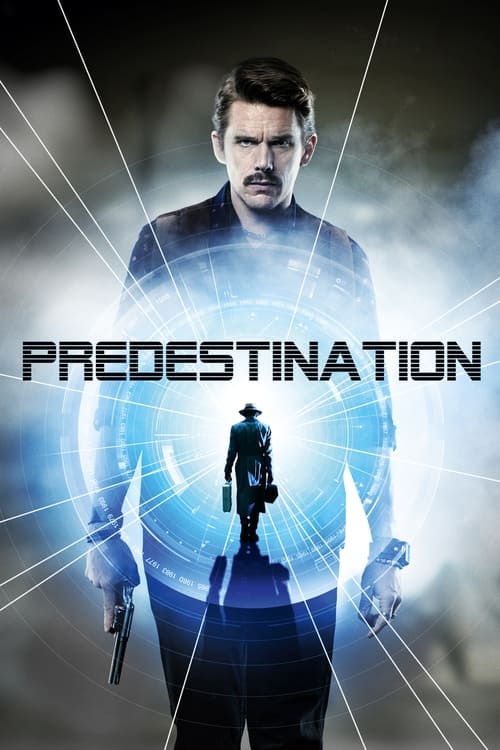
Predestination (2014)
Directed by Michael Spierig
No · Based
How we score movies →Consciousness Markers
The plot's central twist involves a transgender character whose identity is intrinsic to the narrative logic. However, the treatment is more mechanistic than affirming, using the character primarily as a plot device.
The cast is predominantly male, though Sarah Snook delivers a strong lead performance. Female representation is minimal beyond the central character.
The film contains no explicit feminist themes or critique of patriarchal systems. The female lead is reactive within a male-dominated narrative framework.
The film maintains a relatively restrained tone and does not lecture the audience about social issues, though the plot mechanics occasionally strain under their own complexity.
The film demonstrates no awareness of racial dynamics, representation, or systemic racism. Race is entirely absent from the narrative concerns.
Climate change and environmental concerns are completely absent from this time-travel thriller.
The film contains no critique of capitalism or wealth inequality. Economic systems are not addressed.
Body positivity and disability representation are entirely absent from the film's concerns.
No neurodivergent characters or themes are present in the narrative.
The film does not engage with historical revisionism or reexamination of historical narratives.


Synopsis
Predestination chronicles the life of a Temporal Agent sent on an intricate series of time-travel journeys designed to prevent future killers from committing their crimes. Now, on his final assignment, the Agent must stop the one criminal that has eluded him throughout time and prevent a devastating attack in which thousands of lives will be lost.
Why it received this score
Predestination presents itself as a clever temporal paradox wrapped in a noir aesthetic, yet its engagement with progressive sensibilities is largely incidental to its genre mechanics. The film's central twist involves a transgender character whose identity becomes crucial to the plot's causality, a fact that generates considerable cultural ambivalence. The character exists within the narrative not as an expression of affirming representation, but rather as a narrative device serving the film's predetermined logic. Sarah Snook delivers a committed performance in a role that demands significant emotional range, though the script treats her character's journey more as a mechanical necessity than as a subject worthy of genuine empathy.
The film's handling of its protagonist and antagonist relationship suggests a certain moral complexity, yet it traffics primarily in determinism rather than in any coherent argument about systemic injustice or structural inequality. The temporal mechanics operate as pure plot device, untethered to any meditation on how power functions through time or how history might be rewritten. The cast skews male-dominated, the production values are deliberately austere, and the narrative voice remains predominantly masculine. There are no gestures toward climate consciousness, body positivity, or neurodivergent representation. The film's one element of social awareness arrives through its transgender character, but this functions more as a plot mechanism than as genuine cultural engagement.
Ultimately, Predestination inhabits that curious middle space of contemporary science fiction cinema, where the machinery of the story overwhelms any deeper investigation into social consciousness. It is a film that happens to contain progressive elements without demonstrating any sustained commitment to progressive philosophy. The result is an experience that satisfies as puzzle-box entertainment while remaining indifferent to the questions its own premise might raise about identity, agency, and predetermined fate.
Analysis generated by our Consciousness Algorithm
Critic Reviews
“The Spierig brothers have deftly fashioned an unpredictable thrill ride, and the joy is to fit together all its puzzle pieces.”
“A meticulously crafted, sparse but beautifully photographed full-length feature film with strong work from a reliable veteran and a breakout performance from an actor you might not have heard of before.”
“As the heart of the story, however, Sarah Snook delivers a knockout performance that calls on her to perform the kind of tricky scenes that could have resulted in bad laughs throughout if handled incorrectly. Not only does she pull off her performance brilliantly throughout—there is not one moment in which she is anything less that utterly convincing and believable.”
“There are so many interesting ideas and concepts that could have been spun from this framework. Instead, it's the work of a bunch of filmmakers who seemingly wanted to offer up a WTF-worthy twist ending and tried to reverse engineer a movie from it.”