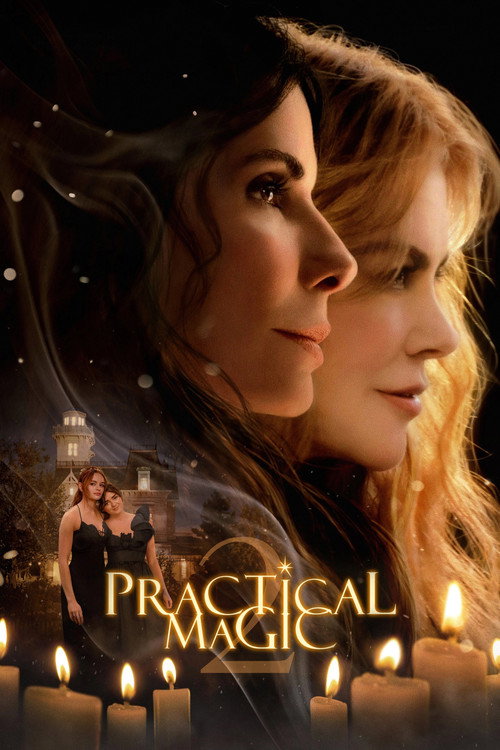
Practical Magic 2 (2026)
Directed by Susanne Bier · $30.0M domestic
Partly · Woke-Adjacent
How we score movies →Consciousness Markers
The film centers its entire narrative architecture on multi-generational female solidarity, matriarchal lineage, and female agency operating entirely outside patriarchal rescue dynamics. Critics specifically noted the film's inheritance of the original's 'unruly feminist magic,' though some felt the sequel traded that energy for safer legacy-sequel convention.
The sequel makes a deliberate effort to diversify its romantic ensemble, casting Xolo Maridueña as the central love interest opposite Joey King, introducing Latino representation into a franchise that was previously all-white in its core cast. The recasting itself also drew significant cultural commentary, though the controversy was more about legacy than identity politics.
Critics noted thematic subtext around self-actualization versus parental repression, with Sally Owens' attempt to suppress her daughters' magical identities functioning as an on-the-nose metaphor for authentic identity expression. The film does not appear to harangue the audience openly, but the metaphor is worn without much subtlety.
The casting of Xolo Maridueña in a prominent romantic role introduces Latino representation into the franchise in a way that cultural commentators noted explicitly. The film does not appear to foreground racial consciousness as a thematic concern, but the casting choice is pointed enough to register.
The only adjacent signal is peripheral: Joey King's premiere fashion choice sparked online discourse about female bodies and public commentary on young women's appearance. This is red-carpet noise, not film content, and scores accordingly.
No evidence of LGBTQ+ themes, characters, or storylines in the film or its surrounding cultural discourse. The romantic pairings are all heterosexual.
No climate themes, environmental messaging, or ecological subtext of any kind appear in the film or its cultural reception materials.
No anti-capitalist, class-critique, or wealth-inequality themes are present. The film is concerned with ancestral curses, not economic systems.
No neurodivergence themes, characters, or representation are present in the film or research materials.
The film operates in a fictional fantasy universe with no engagement with historical events, figures, or revisionist reframing of the past.
Synopsis
The Owens sisters must confront the dark curse that threatens to unravel their family once and for all.
Why it received this score
Practical Magic 2 arrives twenty-eight years after its predecessor, carrying the franchise's foundational conviction that women with supernatural gifts are more interesting than women without them, and that men are largely decorative. Susanne Bier, a director not previously known for her investment in multigenerational witch dynasties, shepherds the Owens women through another confrontation with their ancestral love curse. Sandra Bullock and Nicole Kidman return, which is the film's most reliable asset. Joey King and Maisie Williams arrive to replace Evan Rachel Wood and Alexandra Artrip in roles the internet spent considerable time mourning, a controversy the film addresses by simply proceeding as if it never happened, which is perhaps the most dignified available option.
The film's progressive sensibilities sit in the same register as its predecessor: matriarchal, female-centric, operating from the premise that the patriarchy is at best an inconvenience and at worst a curse (occasionally literally). The introduction of Xolo Maridueña as the central romantic interest is the sequel's most visible casting statement, and the film wears it without particular discomfort or particular comment, which is roughly the correct approach. Where the film accumulates more cultural self-consciousness is in its treatment of Sally's suppression of her daughters' magical identities, a metaphor for authentic self-expression that the screenplay underlines, circles, and annotates in the margin. The audience is not left to do interpretive work. The audience is escorted to the interpretation and seated.
Critics awarded the film a 36% on Rotten Tomatoes. Audiences gave it 93%. This gap is not a mystery. The film is warm, nostalgic, female-led, and unchallenging, which is a perfectly coherent artistic position, and one the market has rewarded. As a cultural artifact, it occupies a specific niche: progressive enough to signal its values, cozy enough not to prosecute them. A film that believes in female solidarity the way a greeting card believes in friendship. Earnest, decorative, and entirely comfortable with itself.
Analysis generated by our Consciousness Algorithm
Critic Reviews
“When it comes to conjuring the Owens back on the big screen, Bullock and Kidman have already done the hard part. So, live a little! And let yourself fall for “Practical Magic” like you’ve never been hurt before.”
“Despite some warts, Bier’s “Practical Magic 2” brings the sisters, the aunts and a relentlessly charming Pace together in a flawed but magical film that will not let go of your face until you remember to always throw spilt salt over your left shoulder, keep rosemary by your garden gate, plant lavender for luck and fall in love whenever you can.”
“It’s no classic follow-up à la Top Gun: Maverick, but it casts a cute enough spell.”
“Even if Practical Magic was a beloved part of your childhood, it’s hard to see what would excite you about this sequel. Bier’s addition to the franchise is as bizarrely paced as the original and significantly less charming. ”