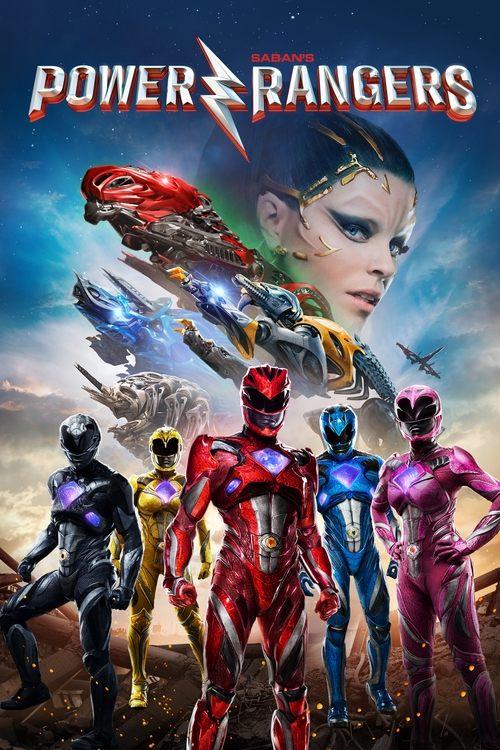
Power Rangers (2017)
Directed by Dean Israelite
Partly · Woke-Adjacent
How we score movies →Consciousness Markers
Diverse ensemble cast featuring Asian, Latina, Black, and Indian actors in leading roles, reflecting contemporary Hollywood representation standards for 2017.
RJ Cyler's Billy is explicitly depicted with autism and portrayed with sensitivity and nuance, avoiding stereotypical savant tropes and presenting neurodivergence as natural variation.
Female characters are present but not positioned as particularly empowered or central to the narrative in ways that would suggest feminist critique or agenda.
Brief, understated LGBTQ+ representation that registers more as basic inclusion than progressive messaging or thematic exploration.
Minimal preachy messaging; the film prioritizes spectacle and character development over explicit instruction on social issues.
No explicit racial themes, commentary, or consciousness evident in the narrative; diversity is presented as aesthetic rather than thematic.
No climate-related messaging or environmental consciousness present in the film.
Standard corporate superhero narrative with no critique of capitalism or wealth inequality.
No body positivity messaging or diversity in body representation evident in the film.
No historical revisionism or reinterpretation of historical events present in this contemporary superhero origin story.


Synopsis
Five ordinary teens must become something extraordinary when they learn that their small town of Angel Grove — and the world — is on the verge of being obliterated by an alien threat. Chosen by destiny, our heroes quickly discover they are the only ones who can save the planet. But to do so, they will have to overcome their real-life issues and before it's too late, band together as the Power Rangers.
Why it received this score
The 2017 Power Rangers represents the particular strain of progressive sensibility that manifests as diverse casting in service of a fundamentally conventional superhero narrative. The film assembles its five leads with obvious attention to demographic representation: Asian, Latina, Black, and Indian actors fill the roster alongside white performers, suggesting a commitment to visible diversity that was increasingly expected from major studio productions by 2017. Yet this diversity exists primarily as a visual fact rather than as the organizing principle of the story.
More pointedly, the film includes explicit neurodivergent representation through RJ Cyler's Billy, who is depicted with autism and portrayed without the usual tragic-genius clichés, which constitutes a genuine attempt at sensitive characterization. The film also includes a brief moment of LGBTQ+ representation, though handled with such restraint that it barely registers as progressive messaging rather than basic factual inclusion. The broader narrative, however, remains apolitical in its refusal to engage with systemic themes, offering instead a story about personal growth and acceptance that could have been told identically with a monochromatic cast in 1995.
The film's social consciousness, such as it is, emerges through representation and representation alone. There is no racial commentary, no examination of economic inequality, no climate awareness, no interrogation of institutional power. We are offered a diverse group of teenagers who overcome personal issues to save the world, which is admirable in its own modest way but falls well short of the comprehensive progressive vision that would constitute genuine cultural engagement with contemporary social themes.
Analysis generated by our Consciousness Algorithm