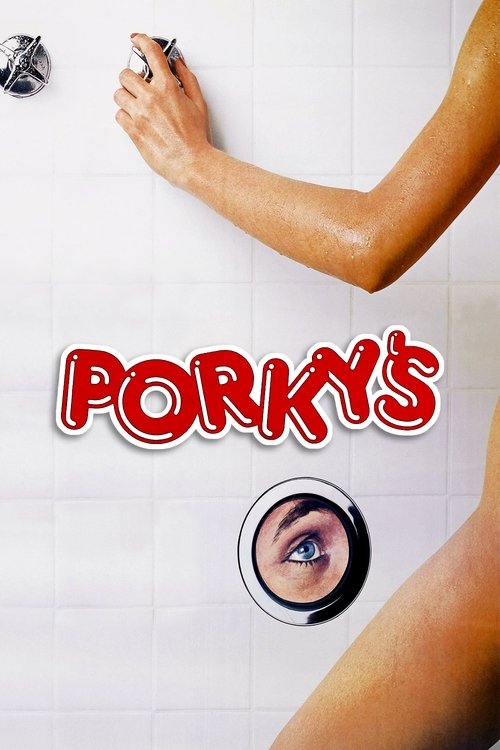
Porky's (1982)
Directed by Bob Clark
No · Ultra Based
How we score movies →Consciousness Markers
Cast is entirely white, reflecting 1982 mainstream comedy norms. No meaningful diversity or intentional representation is present.
Mild class comedy directed at rural working-class antagonists, but this reflects traditional comedy dynamics rather than systemic critique.
Women are depicted primarily as objects of male desire and conquest. Limited agency, portrayed largely for titillation and comic effect.
Physical comedy centers on mockery and humiliation. Bodies are treated as sources of ridicule rather than sites of dignity.
No LGBTQ characters or themes present. Heterosexual male pursuit of women is the entire romantic framework.
No racial themes, characters, or consciousness present. The film is entirely unconcerned with racial representation or dynamics.
No environmental themes or climate messaging of any kind appears in this teen comedy.
No representation of neurodivergent characters or themes. The film shows no awareness of such categories.
Set in 1954 but makes no attempt to interrogate or reframe historical racial or gender dynamics of the era.
The film contains no preachy messaging or moralizing. It is purely comedic in intent, with no educational subtext.
Synopsis
In 1954 Florida, a group of high school boys head to a strip club in the Everglades in an attempt to lose their collective virginity. When the club's owner and his sheriff brother swindle them out of their money and embarrass them, the boys plan revenge.
Why it received this score
Porky's represents a pre-social consciousness era of American comedy, a time when the primary concern of filmmakers was whether a joke would land rather than whether it might cause offense to any demographic group. Bob Clark's 1982 teen romp is a monument to unreconstructed sensibilities. The film treats women primarily as objects of desire and occasional comic foils. Female characters exist in the narrative chiefly to be gawked at, pursued, or manipulated. There are no competing narratives about female agency or autonomy. The sole exception is Kaki Hunter's character, who possesses more initiative than her counterparts, yet even this characterization serves the larger comedic project of male adolescent escapades.
The racial composition of the cast reflects 1982 Florida and the limited imagination of mainstream comedy production. No meaningful diversity is present, nor does the film concern itself with such matters. There are no LGBTQ characters, no climate messaging, no disability representation, and certainly no antiracist consciousness. The film's humor derives entirely from bodily comedy, sexual transgression, and class-based mockery of rural working people. The sheriff characters are portrayed as buffoonish antagonists, which functions as a mild critique of authority but hardly constitutes progressive social messaging.
What we encounter in Porky's is cinema before the modern cultural markers took hold. The film is not aggressively hostile to progressive values, nor is it attempting to subvert them. It simply operates in a space where such concerns do not exist. By contemporary standards, it remains a relic of adolescent male fantasy filmmaking, utterly indifferent to representation, equity, or systemic critique. This is precisely what makes it valuable as a historical artifact and precisely why it scores so low on the scale of contemporary cultural consciousness.
Analysis generated by our Consciousness Algorithm
Critic Reviews
“It's lewd, it's crude and it's funny - don't try to say you didn't laugh.”
“A portion of the audience will be strongly offended by Porky's, just as another portion will find it filthy but fun. However, there is no debating the success of Mr. Clark's casting, for he has assembled a cheerful, likable bunch of actors, most of them unknowns.”
“It has some of ["American] Graffiti's" sweetness of spirit, but none of its style or depth of feeling; it has some of "Animal [House"]'s raunchiness, but none of its loony anarchy.”
“Unfortunately, except for one raucous routine, this "Animal House" clone is an overblown, over-publicized, overwrought exploitation flick that's about as funny as the first dirty joke my father told me. [09 Apr 1982]”