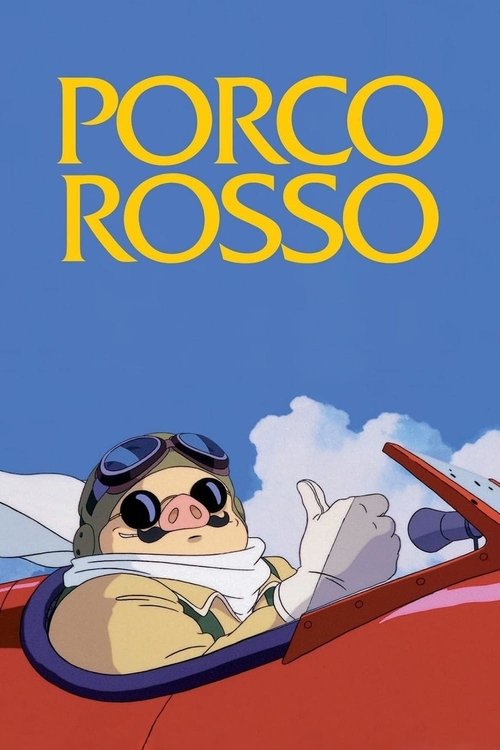
Porco Rosso (1992)
Directed by Hayao Miyazaki
No · Ultra Based
How we score movies →Consciousness Markers
Fio demonstrates competence and bravery, but the film does not advance feminist ideology or social commentary. She is simply a capable character within the narrative.
Fio Piccolo serves as a capable female mechanic character, but her presence reflects the story's needs rather than progressive casting politics. The ensemble remains predominantly male.
Sky pirates attack wealthy cruise ships, suggesting critique of wealth, but anti-capitalism is incidental to the adventure plot rather than a central message.
The 1930s fascist Italian setting serves as an adventure backdrop rather than a vehicle for historical revisionism or progressive reinterpretation.
The film contains philosophical reflection on war and masculine honor, but lacks preachy moralizing or the hectoring tone associated with modern social consciousness narratives.
No LGBTQ+ themes, characters, or representation present in the film.
No racial consciousness or commentary on race present in the film.
No climate or environmental themes are present in the narrative.
Porco's pig form functions as a curse and source of alienation, not as a celebration of alternative embodiment.
No neurodivergence representation or themes are present in the film.


Synopsis
In Italy in the 1930s, sky pirates in biplanes terrorize wealthy cruise ships as they sail the Adriatic Sea. The only pilot brave enough to stop the scourge is the mysterious Porco Rosso, a former World War I flying ace who was somehow turned into a pig during the war. As he prepares to battle the pirate crew's American ace, Porco Rosso enlists the help of spunky girl mechanic Fio Piccolo and his longtime friend Madame Gina.
Why it received this score
Porco Rosso occupies a peculiar historical moment, arriving in 1992 as a work of adventure cinema that predates the cultural markers we now associate with progressive sensibilities. Hayao Miyazaki's film concerns itself with war, honor, masculinity, and the spiritual exhaustion that follows conflict, themes that carry moral weight without necessarily performing contemporary social consciousness. The film's protagonist, transformed into a pig as punishment for his participation in war, serves as a meditation on individual alienation rather than a statement about systemic oppression. Fio Piccolo, the girl mechanic, emerges as capable and resourceful, yet her characterization flows from narrative necessity, not from the deliberate casting and character-construction choices that would later define progressive filmmaking.
The film's setting in 1930s fascist Italy, teeming with sky pirates and American aviators, functions primarily as aesthetic backdrop and adventure playground. There is no attempt at revisionist historical commentary or at recontextualizing the era through a modern progressive lens. The wealthy cruise ship passengers who fall victim to piracy are simply plot devices in a larger narrative about honor and redemption. The capitalist structures that enable their luxury remain unexamined and uncriticized in any sustained way. One observes a film that engages with serious themes of war and disillusionment without feeling compelled to package those observations into digestible social messaging.
The film's restraint, its refusal to lecture or to perform moral superiority, marks it as a product of its era. Miyazaki's sensibilities lean humanist and philosophical rather than ideological. The result is a work of genuine artistic ambition that operates outside the contemporary framework entirely, registering as almost quaint in its lack of engagement with modern cultural consciousness markers, a quality that paradoxically grants it a certain integrity.
Analysis generated by our Consciousness Algorithm
Critic Reviews
“Animator/fabulist Hayao Miyazaki pays homage to Hollywood’s wartime adventure films in this masterwork built around the adventures of a high-flying pig.”
“Not only does this rank among Miyazaki’s finest achievements, it reflects his personal love of aviation, his political concerns and his fullest expression to date of a non-fantasy world resembling our own. ”
“As usual with Miyazaki, the plot fits, starts and digresses at will, taking in the textures of pre-fascist Italy, details on the history of aviation and a lucid discussion on gender equality and physical beauty. Oh, and the kids will love it too.”
“The plot is hardly the point here - the animation is delightful, colourful and detailed and the flying sequences in seaplanes as old-fashioned as this style of animation are exhilarating.”