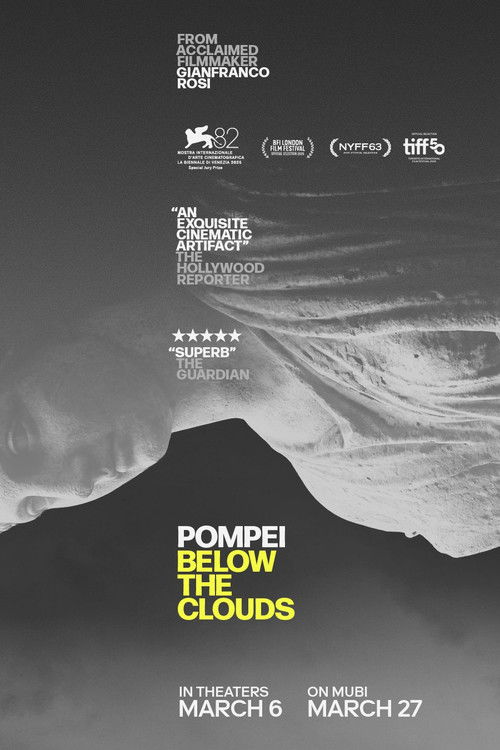
Pompei: Below the Clouds (2025)
Directed by Gianfranco Rosi
No · Ultra Based
How we score movies →Consciousness Markers
The film's central concern with volcanic threat and geological precarity invokes implicit climate anxiety and environmental danger, though this remains unspoken and embedded in visual observation rather than explicit messaging.
While the film observes economic precarity and working people, there is no explicit critique of capitalism or 'eat the rich' messaging. The focus remains on human endurance rather than systemic critique.
The film maintains a contemplative, observational tone rather than preachy instruction. Its meditative pace and visual language suggest patient observation over moral instruction or educational messaging.
The film documents Neapolitan life naturally without any apparent concern for demographic representation or casting choices. Subjects appear organically as part of their environment rather than as deliberate casting decisions.
While some female archaeologists and emergency workers are visible in the film, there is no explicit feminist agenda or commentary. Their presence reflects the actual composition of these professions rather than a conscious political statement.
While the film engages with Pompeian history and archaeology, it does so respectfully and without apparent revisionist intent. History is treated as a haunting presence rather than a text to be rewritten.
No LGBTQ+ themes or representation are present in this documentary. The film remains entirely uninterested in sexual or gender identity as a subject matter.
The film contains no examination of racial dynamics, identity politics, or racial consciousness. Naples is treated as a place and culture without racialized analysis.
Body positivity is entirely absent from this work. The film shows human bodies as they are without comment or celebration, treating physicality as an unremarkable fact of existence.
No representation of or discussion of neurodivergence appears in the documentary. The film contains no disability consciousness or neurodiversity themes.
Synopsis
Naples faces dual volcanic threats from Vesuvius and Campi Flegrei. Amid increasing tremors, archaeologists work as residents live anxiously, haunted by Pompeii's fate while emergency services strain.
Why it received this score
Gianfranco Rosi's meditative essay on Naples operates in a register so fundamentally removed from contemporary progressive discourse that scoring it for cultural consciousness feels rather like analyzing the woke content of a stone. The film concerns itself with the collision of geological time and human mortality, the layering of history upon living bodies, the patient work of archaeologists and firefighters. Its subjects are simply Neapolitans going about their lives under the weight of Vesuvius, existing without commentary or self-consciousness about their demographic composition or identity markers.
What Rosi has created is a work of genuine artistic ambition that treats its material with the solemn reverence of a funeral oration. The black-and-white cinematography suggests a deliberate rejection of contemporary visual culture itself. There is nothing here of the Instagram-friendly diversity casting, the carefully calibrated representation, the preachy edge that characterizes the modern progressive text. The film is content to show ordinary life continuing in the shadow of ancient catastrophe, which is perhaps the most radical position available to a documentary maker in 2025: the refusal to instrumentalize human experience toward any agenda whatsoever.
The film's only marginal engagement with contemporary consciousness stems from its implicit acknowledgment of climate anxiety and environmental precarity, though even this remains largely unspoken, embedded in the visual fact of a city living with constant seismic threat. This is not a film made for our moment's particular moral crusades. It is a film made for time itself, which means it will likely baffle and bore those seeking affirmation of their values in the cinema.
Analysis generated by our Consciousness Algorithm
Critic Reviews
“Time stands still and leaps across the epochs in Below the Clouds, which reveals how much our world has been transformed over the millennia, while also remaining the same. ”
“It is an intensely disquieting, utterly distinctive film and a superb final panel to his triptych.”
“Vesuvius might erupt again. The angel of history keeps moving forward. Time destroys, preserves, and then returns (one hopes, at least). Rosi’s film is a meditative and moving document showing that process and possibility.”
“With Below the Clouds, Rosi performs an act of preemptive time travel by putting images and voices of a specific time, place, and people onto film. It’s a taxing watch that intentionally tries modern viewers’ patience, which is sure to repel most, but the nobility of Rosi’s intentions is inarguable. ”