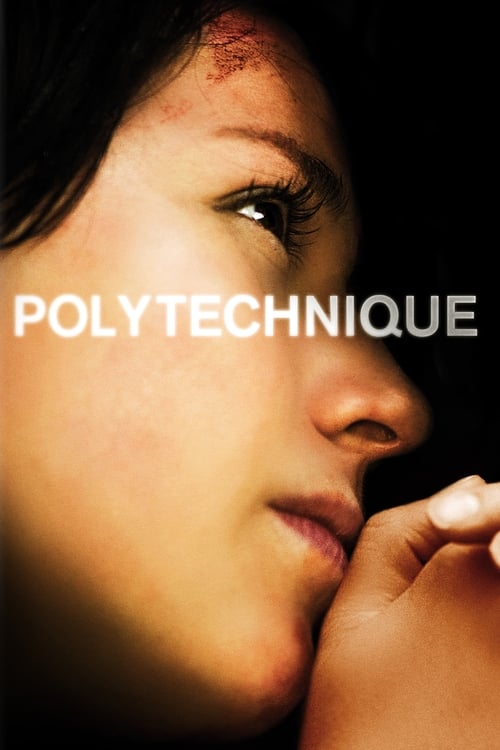
Polytechnique (2009)
Directed by Denis Villeneuve
No · Based
How we score movies →Consciousness Markers
The film directly examines misogyny as the motivation for the violence and centers the experiences of female students. The narrative structure privileges women's perspectives and the horror of gendered violence. However, the film does not articulate explicit feminist critique or advocacy, maintaining artistic distance from preachy messaging.
The film features female characters as central to the narrative, reflecting the historical reality of the massacre victims. However, this reflects historical fact rather than contemporary casting consciousness, and there is no evident effort to signal progressive representation practices.
The film maintains artistic distance and does not deliver explicit moral lessons or lectures to the audience. Its approach is contemplative and tragic rather than preachy. Some viewers might experience the exploration of misogyny as carrying implicit messaging, but this is subtle rather than overt.
No LGBTQ+ themes or characters are evident in the film. The narrative focuses exclusively on the massacre and its immediate context.
The film does not engage with racial themes, racial representation, or racial consciousness. The narrative is focused on gender-based violence, not racial dynamics.
There is no climate-related content or environmental consciousness in the film. The story is situated entirely within the context of a specific historical tragedy.
The film contains no anti-capitalist themes or critique of economic systems. It is a study of individual pathology and misogyny, not systemic economic critique.
Body positivity is not a theme in the film. The narrative concerns itself with violence and trauma, not body image or physical appearance acceptance.
While the perpetrator's psychological state is explored, the film does not engage with neurodivergence as a contemporary cultural category. Mental illness is treated as pathology rather than neurodivergence.
The film is a dramatization of documented historical events. It does not revise or reinterpret history in ways that align with contemporary progressive reframings. It presents the massacre as it occurred.


Synopsis
A dramatization of the Montreal Massacre of 1989 where several female engineering students were murdered by an unstable misogynist.
Why it received this score
Denis Villeneuve's "Polytechnique" presents a stark, austere examination of the 1989 Montreal Massacre, a mass shooting motivated explicitly by anti-female hatred. The film approaches this material with considerable gravity, shooting in black and white and refusing sensationalism. Its central thematic concern is the psychology of misogyny itself, positioning the killer's hatred of women as the animating force behind the tragedy, and the narrative structure privileges the experiences of female victims and witnesses. This direct engagement with gendered violence as a systemic phenomenon reflects a distinctly contemporary consciousness about institutional misogyny.
Yet the film's approach to these themes remains fundamentally artistic rather than preachy. Villeneuve does not lecture the audience about feminism or women's equality. Instead, the film trusts viewers to comprehend the horror through aesthetic distance and psychological exploration. The cast is diverse by necessity of the historical event itself, but the film does not celebrate this diversity or make it a point of emphasis. The work operates within a pre-woke sensibility regarding representation: it tells a story about women, centered on women's experiences, but without the contemporary apparatus of self-conscious social consciousness that would mark it as aligned with modern progressive cultural movements.
The film's restraint and artistic seriousness actually work against maximizing a woke score. A more contemporary treatment might foreground survivor healing, institutional accountability, or systemic critique in ways that would register more clearly on modern cultural markers. "Polytechnique" instead maintains a tragic, almost classical distance from its subject matter. It is a serious film about a serious atrocity, but seriousness about tragedy and alignment with contemporary progressive sensibilities are not the same thing.
Analysis generated by our Consciousness Algorithm
Critic Reviews
“Though it's as schematic in construction as Incendies, the film doesn't grind along to a ponderous plot; it's unnerving abstraction of its subject matter more daringly relays Villeneuve's view of the human cost of gender warfare. ”
“Though the characters are fictional, Polytechnique hews close to the facts regarding the 1989 incident, down to its misogynistic Marc Lépine avatar (Gaudette) separating "feminist" coeds in a classroom.”
“It is neither floridly melodramatic nor showily minimalist. The virtue - and also the limitation - of this movie is that it confronts senselessness and insists on remaining calm and sane. ”
“A weaker "Elephant," Quebecois director Denis Villeneuve's school-shooting drama Polytechnique nevertheless distinguishes itself by endeavoring to comprehend the 25-year-old man who murdered more than a dozen female students at Montreal's Polytechnique School in 1989.”