Pitch Perfect (2012)
Directed by Jason Moore
No · Ultra Based
How we score movies →Consciousness Markers
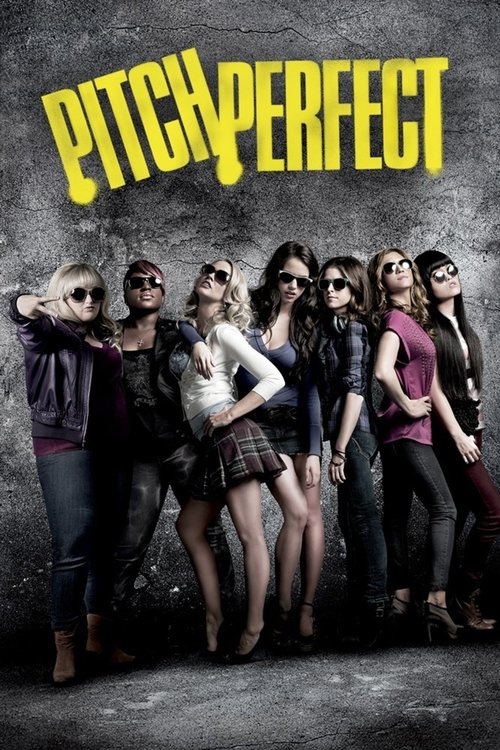
The ensemble includes women of different ethnicities, body types, and personalities, but diversity is presented as natural rather than consciously affirmed. The cast reflects a college setting without commentary on representation itself.
Rebel Wilson's character is larger-bodied and visible in the ensemble, but the film primarily uses her size as a source of humor rather than affirmation or positive representation.
An all-female ensemble occupies narrative space, but the film does not engage with feminist critique or patriarchal analysis. Female friendship is the default rather than a statement about gender.
No LGBTQ+ themes, characters, or storylines are present in the film. All romantic arcs are heterosexual.
While the cast includes Black and Asian actors, there is no racial consciousness or examination of race within the narrative. Race is not discussed or thematized.
No environmental themes or climate consciousness appear in the film.
The film contains no critique of capitalism or class structures. The college setting and competition framework are presented without irony.
No characters are coded as neurodivergent or have neurodivergent representation in the narrative.
The film contains no historical elements or revisionist framing of historical events.
The film does not pause to deliver messages or lectures about social issues. It remains focused on plot and comedy throughout.


Synopsis
College student Beca knows she does not want to be part of a clique, but that's exactly where she finds herself after arriving at her new school. Thrust in among mean gals, nice gals and just plain weird gals, Beca finds that the only thing they have in common is how well they sing together. She takes the women of the group out of their comfort zone of traditional arrangements and into a world of amazing harmonic combinations in a fight to the top of college music competitions.
Why it received this score
Pitch Perfect arrives as a curious artifact of the early 2010s, a moment when featuring an ensemble of women in a comedic vehicle still qualified as something approaching progressive. The film centers an all-female a cappella group and allows them to occupy the narrative space usually reserved for male-led comedies, a structural choice that carries more cultural weight in 2012 than it might today. The cast includes women of varying body types, skin tones, and personalities, though the film rarely examines this diversity with any particular self-consciousness. Rebel Wilson's Fat Amy character represents the film's most explicit engagement with body politics, though her larger frame becomes the basis for jokes rather than a site of genuine representation or affirmation.
The film's relationship to its female ensemble is fundamentally comedic rather than consciously progressive. These are characters defined by their eccentricities and humor rather than by any particular agenda. The romantic subplots, particularly Beca's relationship with Chloe and her attraction to a male love interest, follow conventional patterns. There is no interrogation of patriarchal structures within the college setting, no examination of power dynamics beyond the superficial conflict between the Bellas and rival a cappella groups. The film presents female friendship and solidarity as the default state of the narrative, which is refreshing by the standards of 2012 male-dominated comedy, but it stops short of making any statement about that choice.
Structurally, Pitch Perfect is a sports movie with a cappella competitions replacing football games. It contains no explicit engagement with climate, capitalism, neurodivergence, or revisionist history. There are no characters coded as neurodivergent, no lectures about systemic inequality, no environmental consciousness. The film exists in a bubble of collegiate fun divorced from larger social or political concerns. This is not presented as a moral failing, merely as an accurate accounting of what the film actually contains. It is a comedy that happens to feature women singing. Nothing more, nothing less.
Analysis generated by our Consciousness Algorithm
Critic Reviews
“Rebel Wilson is the peroxided Aussi who stole scenes as Kristen Wiig's roommate in "Bridesmaids," and this is the role that will turn her into a star. ”
“A comedy about an all-female collegiate a cappella group. And to paraphrase one of the characters in the movie, it's A-Ca-Awesome. ”
“Bouncy vocal rearrangements of pop songs, sparkling choreography and a hilarious script make for a movie that's made to be obsessed over, seen 50 times, quoted as devoutly as such sacred texts as "Heathers" and "Bring It On."”
“Only occasionally funny and not at all illuminating about the rich world of a cappella singing. ”