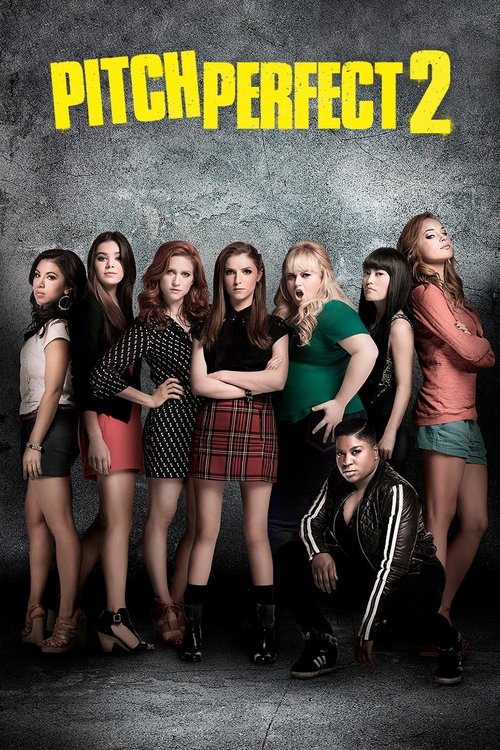
Pitch Perfect 2 (2015)
Directed by Elizabeth Banks
Partly · Woke-Adjacent
How we score movies →Consciousness Markers
The film centers entirely on female characters with agency and competitive drive. Women drive the plot, form meaningful bonds, and pursue their own goals without male characters as central drivers. This represents a genuine female-centric worldview, though the feminism remains implicit rather than explicitly interrogatory.
The ensemble features multiple women of color in central roles (Ester Dean, Hana Mae Lee), and the cast is deliberately multiracial. However, the representation remains largely incidental to the narrative rather than integrated meaningfully into the story.
While the cast includes women of color, the film engages minimally with racial themes or distinct cultural experiences. The racial diversity appears decorative rather than integral to any thematic exploration.
Rebel Wilson's Fat Amy character is presented as confident and comedically central, which could suggest body positivity. However, the character is simultaneously the object of body-based humor, undermining any genuine commitment to body acceptance.
The narrative centers on a competition organized by a major corporation (Fat Amy's father's company), which the film treats as a benign backdrop. There is no critique of capitalist structures or wealth inequality.
The film is primarily concerned with entertainment and humor. While it centers female friendship and sisterhood, it does not lecture or explicitly preach about social issues.
There are no explicit LGBTQ+ themes or characters in the film. A brief ambiguous moment involving Chloe's sexuality is present but remains unresolved and is treated primarily as comedic material.
The film contains no climate-related content, messaging, or thematic concerns whatsoever.
The film contains no representation of or engagement with neurodivergent characters or themes.
The film is a contemporary comedy with no historical elements or revisionist historical content.


Synopsis
The Bellas are back, and they are better than ever. After being humiliated in front of none other than the President of the United States of America, the Bellas are taken out of the Aca-Circuit. In order to clear their name, and regain their status, the Bellas take on a seemingly impossible task: winning an international competition no American team has ever won. In order to accomplish this monumental task, they need to strengthen the bonds of friendship and sisterhood and blow away the competition with their amazing aca-magic. With all new friends and old rivals tagging along for the trip, the Bellas can hopefully accomplish their dreams.
Why it received this score
Pitch Perfect 2 arrives in 2015 as a curious artifact of progressive entertainment that does not quite know what it is doing. The film centers entirely on female characters, all of whom possess agency, humor, and competitive drive. The ensemble is deliberately multiracial, with Ester Dean and Hana Mae Lee providing non-white representation among the core group. Yet the film's commitment to these markers of contemporary social consciousness remains largely surface-level. The female characters are strong, yes, but their strengths exist primarily to advance a plot about winning a singing competition, not to interrogate the conditions that shape their world. The diversity is present but largely incidental to the narrative.
What complexity emerges lies in the film's ambivalence about its own progressive posturing. Rebel Wilson's character Fat Amy is framed as both a comedic protagonist and an object of humor regarding her body, a tension the film never fully resolves. The presence of an Asian-American woman and a Black woman in the ensemble represents the bare minimum of multicultural casting rather than any deeper engagement with their distinct experiences. The humor often relies on stereotypes and gendered caricature, particularly in its treatment of international competitors, suggesting that the film's social consciousness extends only as far as its immediate American context.
The real achievement of Pitch Perfect 2 is its sheer female-centric worldview. No male character significantly drives the narrative. The competition, the bonds, the victories all belong to women. This fact alone distinguishes it from most mainstream comedies of its era. Yet this achievement sits uncomfortably alongside the film's reliance on familiar comedic tropes and its relative lack of interest in what these female characters might want beyond romantic validation or competitive triumph. The result is a film that checks certain boxes while remaining fundamentally invested in entertainment rather than any meaningful cultural statement.
Analysis generated by our Consciousness Algorithm
Critic Reviews
“PP2 sometimes feels less like a movie than a two-hour episode of Glee ghostwritten by Amy Schumer; jokes fly like they’re being shot from T-shirt guns at a gonzo pep rally, and not all of them stick the landing. ”
“Reprising the kind of musical performances, campus hijinks, stinging humor and sassy sisterhood put in place by its eminently likeable predecessor, Pitch Perfect 2 remixes the elements and comes up with something even slicker and sharper. ”
“Kay Cannon’s script is even lighter on narrative than its predecessor, but fills any resulting void with a concentrated supply of riotous gags, and a renewed emphasis on the virtues of female collaboration and independence.”
“I’m also guessing Kendrick did not want to come back. I’ve never seen her so flat-out bad — distracted, depressed, conviction-less. Anna, I still adore you, but you should have tried to make it work.”