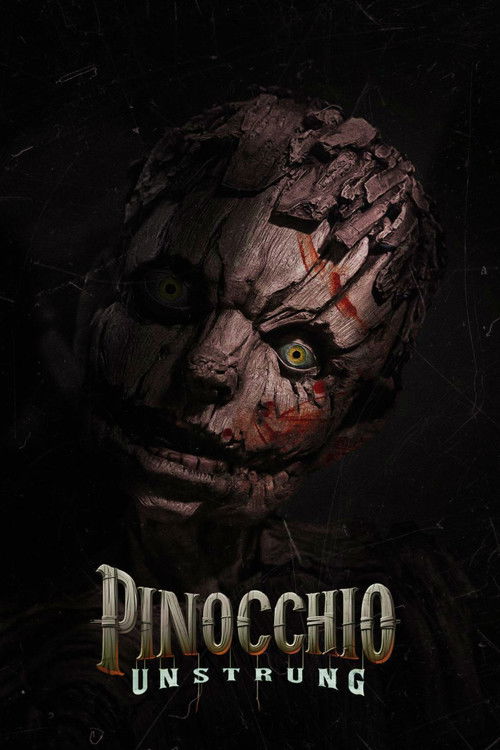
Is Pinocchio: Unstrung (2026) Woke?
Pinocchio: Unstrung · 2026 · Directed by Rhys Frake-Waterfield
Woke Score
CriticCritic Score
Audience
Ultra Based
Critics rated this 48 points above its woke score. Among Ultra Based films, this critic score ranks #1195 of 1501.
Answer: No
Woke Score 2/100 · Verdict: Ultra Based
Strongest markers: Body Positivity (8) · Representation Casting (5)
Representation Casting
Score: 5/100
The cast includes actors of varied backgrounds in what appears to be standard genre-film assembly rather than any conscious representational project. No discourse exists suggesting deliberate diversity casting.
LGBTQ+ Themes
Score: 0/100
No LGBTQ+ themes, characters, or subtext are present in the film or its surrounding cultural conversation.
Feminist Agenda
Score: 0/100
The film contains no feminist framing, no commentary on gender dynamics, and no apparent interest in the subject. It is a slasher about a wooden puppet.
Racial Consciousness
Score: 0/100
Race is not a theme, a subtext, or a point of discussion anywhere in the film's narrative or reception.
Climate Crusade
Score: 0/100
No climate or environmental themes are present. The film's ecological footprint is limited to whatever lumber was used to construct the animatronic.
Eat the Rich
Score: 0/100
No critique of capitalism or wealth structures appears in the film. The film is itself a product of aggressive IP monetization, which arguably points the other direction.
Body Positivity
Score: 8/100
Critics noted jokes made at the expense of an overweight child character, which is the precise opposite of body positivity. The marker scores marginally above zero only because the character's body is made a narrative point, however cruelly.
Neurodivergence
Score: 0/100
No neurodivergence themes or representation are present in the film.
Revisionist History
Score: 0/100
The film reimagines a fairy tale, not history. Turning Pinocchio into a murderer is revisionism of a sort, but not the politically motivated cultural reclamation this marker is designed to capture.
Lecture Energy
Score: 0/100
The film has no interest in lecturing the audience about anything except the inadvisability of being within arm's reach of an ambulatory wooden puppet.


Synopsis
Influenced by a sinister Cricket and created by Geppetto, Pinocchio launches a violent crusade to carve himself into a real boy like his brother James, one piece at a time.
Why it received this score
*Pinocchio: Unstrung* arrives as the fifth entry in Rhys Frake-Waterfield's Twisted Childhood Universe, a cinematic project whose entire philosophical foundation rests on the discovery that public domain intellectual property is free and gore is cheap. The film asks what would happen if Pinocchio, rather than learning the value of honesty, decided instead to harvest human body parts. It is, in this respect, a perfectly coherent artistic vision. The narrative offers no social messaging, no identity politics, and no evident desire to improve the audience as people. This is, from the perspective of the present analysis, a near-pristine specimen.
The research yields almost nothing across the full battery of markers, which is itself a kind of achievement. A sinister Cricket voiced by Robert Englund urges a wooden boy toward violence, and the film's thematic concerns extend precisely as far as that sentence implies. The one faint signal detected is not progressive in nature: critics noted that an overweight child character is made the subject of dark humor at their own expense, which scores a marginal eight points on body positivity by virtue of being its photographic negative. We record it dutifully and move on.
The broader cultural conversation around this film concerns itself entirely with whether converting beloved children's stories into R-rated slashers constitutes art, commerce, or some third category not yet named. These are legitimate questions. They are simply not our questions. *Pinocchio: Unstrung* is, by the metrics of this office, as ideologically inert as a piece of wood. The comparison is, under the circumstances, apt.
Analysis generated by our Consciousness Algorithm
Critic Reviews
“For a story that is old enough to be public domain, Pinocchio: Unstrung is, at its core, a timely revisionist take on the vigilante genre.”
“Pinocchio Unstrung balances gore and whimsy, delivering on everything the Twisted Childhood Universe should be — no lie.”
“Pinocchio: Unstrung is never especially frightening, and even its jump scares are oddly muffled, but it is abundantly gross and grisly in all the ways a cheap-and-cheerful slasher should be. ”
“It’s a nasty piece of work. Cheerfully nasty, in fact, as it goes for black comedy laughs by bumping off characters in grisly drop-a-dumbbell-on-your-face scenarios. But it’s not-so-nice nasty as well, by being smirking and unpleasant; the kind of film that makes a joke out of the overweight kid puffing on an inhaler. ”
Related rankings
Consciousness Markers
The cast includes actors of varied backgrounds in what appears to be standard genre-film assembly rather than any conscious representational project. No discourse exists suggesting deliberate diversity casting.
No LGBTQ+ themes, characters, or subtext are present in the film or its surrounding cultural conversation.
The film contains no feminist framing, no commentary on gender dynamics, and no apparent interest in the subject. It is a slasher about a wooden puppet.
Race is not a theme, a subtext, or a point of discussion anywhere in the film's narrative or reception.
No climate or environmental themes are present. The film's ecological footprint is limited to whatever lumber was used to construct the animatronic.
No critique of capitalism or wealth structures appears in the film. The film is itself a product of aggressive IP monetization, which arguably points the other direction.
Critics noted jokes made at the expense of an overweight child character, which is the precise opposite of body positivity. The marker scores marginally above zero only because the character's body is made a narrative point, however cruelly.
No neurodivergence themes or representation are present in the film.
The film reimagines a fairy tale, not history. Turning Pinocchio into a murderer is revisionism of a sort, but not the politically motivated cultural reclamation this marker is designed to capture.
The film has no interest in lecturing the audience about anything except the inadvisability of being within arm's reach of an ambulatory wooden puppet.