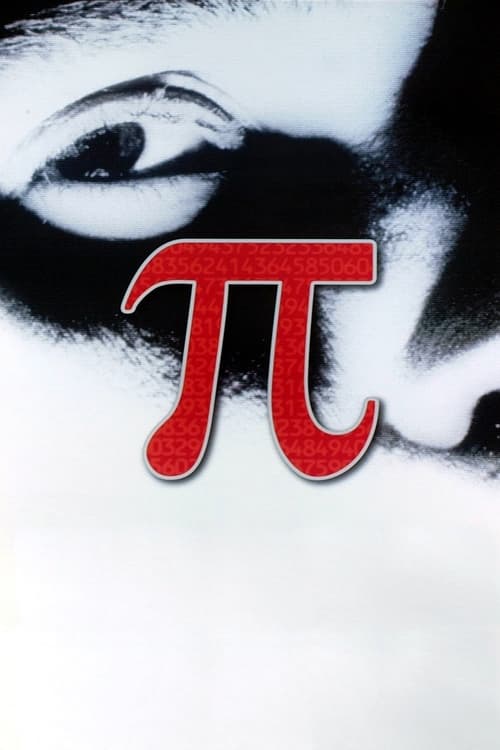
Pi (1998)
Directed by Darren Aronofsky
No · Ultra Based
How we score movies →Consciousness Markers
The film critiques obsessive pursuit of certainty and control, which tangentially relates to capitalist anxieties, but this critique is not explicit or ideologically framed.
Cast includes diverse actors, but their selection appears driven by narrative requirements rather than conscious diversity considerations. Predominantly male ensemble with limited female roles.
The protagonist exhibits paranoia and obsessive-compulsive patterns, but the film treats these as symptoms of psychological pathology rather than neurodivergence to be celebrated or normalized.
The film is abstract and philosophical, exploring themes of pattern recognition and mathematical meaning, but it avoids explicit preachy lecturing about social issues.
Female characters are minimal and peripheral to the narrative. The film shows no engagement with feminist themes or concerns.
While the cast includes actors of various racial backgrounds, the film displays no explicit racial consciousness or commentary. Representation appears incidental rather than intentional.
No LGBTQ+ themes, characters, or storylines present in the film.
Climate themes are entirely absent from this mathematical psychological thriller.
Body positivity themes are not addressed or relevant to the film's concerns.
The film contains no historical elements and thus no revisionist historical engagement.


Synopsis
A mathematical genius discovers a link between numbers and reality, and thus believes he can predict the future.
Why it received this score
Darren Aronofsky's 1998 directorial debut is a fractured, monochromatic descent into the mind of a mathematician convinced he can perceive the hidden order underlying reality. Shot on high-contrast black-and-white film, the work operates in the register of experimental psychological thriller rather than social commentary. The protagonist's obsession with numerical patterns and his subsequent paranoia serve as the film's central concern, with the narrative functioning more as a portrait of intellectual unraveling than as a vehicle for contemporary cultural messaging.
The film incorporates Jewish thematic and symbolic elements, reflecting Aronofsky's own background and the Kabbalistic traditions that inform the protagonist's search for cosmic meaning. Yet these elements exist within an abstract, almost dreamlike framework that resists preachy interpretation. The ensemble cast, while including actors of various backgrounds, does not appear selected for reasons of conscious representation. Rather, they function as characters within the narrative world of mathematical obsession and urban paranoia.
What emerges is a work preoccupied with epistemology and psychological deterioration, not with the social consciousness markers that would come to define the 2020s cultural landscape. The film predates contemporary progressive sensibilities by considerable distance, operating instead within the idiom of experimental cinema and the psychology of compulsion. It is an artifact of its moment, unconcerned with the demographic arithmetic that would later become a primary concern of cultural discourse.
Analysis generated by our Consciousness Algorithm
Critic Reviews
“It is a brilliant intellectual adventure that fans of bold independent filmmaking will want to experience, even though the ending is something of a letdown. ”
“A triumph of low-end production design, shot in sizzling, solarized black and white, and driven by a propulsive, insinuating score, Pi is a horror movie that makes you think and an indie film that makes you squirm.”
“Aronofsky's ability to capture the rush and confusion of racing down a timeline toward infinity, only to suddenly slam into a dead end, makes for impressive and occasionally disturbing stuff.”
“With this odd mixture of elements the film's tone is gloomy, portentous, and hysterical, yet at the same time strangely earnest and square, as if David Lynch had tried to somehow make a movie version of Scientific American.”