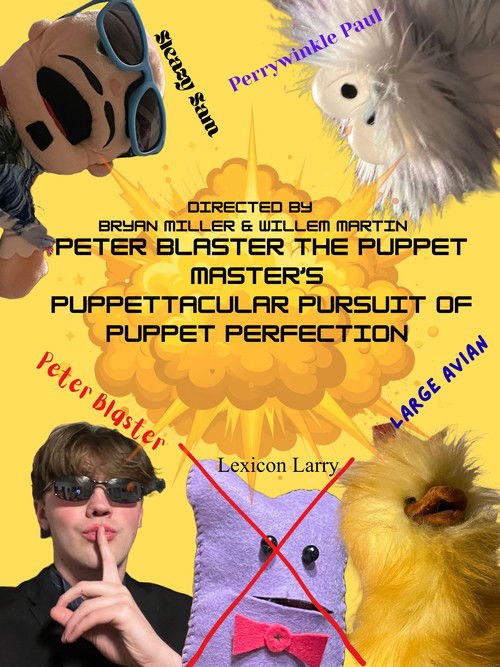
Peter Blaster the Puppet Master's Puppettacular Pursuit of Puppet Perfection (2026)
Directed by Bryan Miller
No · Ultra Based
How we score movies →Consciousness Markers
The failed comedian protagonist and his struggle within the comedy industry could be read as critique of capitalist entertainment structures, though this appears incidental to the genre mechanics.
The cast appears to consist of unknown or regional actors with no apparent attention to demographic diversity. No information suggests intentional casting choices aligned with representation goals.
Rural Montana setting and comedy club world could theoretically include characters of color, but nothing in available information indicates intentional racial representation or consciousness.
The film appears designed for genre entertainment rather than moral instruction, though any comedy-horror hybrid risks tonal inconsistency that could read as preachy.
The premise involves violence and revenge but does not appear to engage with feminist critique or gender dynamics. The abuse narrative is presented as comedic rather than examining power structures.
A horror-comedy predicated on violence and revenge offers no apparent engagement with body positivity or inclusive body representation.
No evidence of LGBTQ+ themes, characters, or representation in the available synopsis or production information.
No indication of climate themes, environmental concerns, or ecological messaging in a film about puppets and comedy club violence.
No evidence of neurodivergent characters or representation in the available information about this film.
This is a contemporary absurdist comedy-horror with no historical subject matter or revisionist historical engagement.
Synopsis
Peter Blaster is not regarded well among the frequenters of comedy clubs in Bozeman, Montana. He blames his lack of comedy skills on his puppets, whom he abuses. But they have had enough of his violence.
Why it received this score
Peter Blaster the Puppet Master's Puppettacular Pursuit of Puppet Perfection emerges from the peculiar subgenre of absurdist comedy-horror that has flourished in recent years, though it appears largely indifferent to the cultural preoccupations that animate contemporary prestige cinema. The film's central conceit, a failed comedian in rural Montana whose mistreated puppets achieve consciousness and exact revenge, operates in a register of pure genre mechanics rather than social commentary. The narrative thrust concerns itself with slapstick violence and puppet autonomy as metaphor, not with the lived experiences of marginalized communities or systemic critique.
The production itself bears all the hallmarks of a small-scale regional horror-comedy, the kind of project that prioritizes conceptual novelty and tonal whiplash over demographic representation or progressive messaging. The credited cast consists of three names unfamiliar to mainstream audiences, a fact that signals either genuine ensemble casting or simply the economics of low-budget independent production. Nothing in the available information suggests the film engages with questions of representation, identity politics, or contemporary social consciousness. The Bozeman setting and comedy club milieu feel chosen for their tonal utility rather than their sociological specificity.
This is not to fault the film for its apparent lack of progressive sensibilities. Rather, it appears to operate in an entirely different register of filmmaking, one that predates or bypasses the cultural concerns that have come to dominate serious cinema over the past decade. It is a film about puppets and violence, not about us. In this respect, it achieves a kind of purity.
Analysis generated by our Consciousness Algorithm