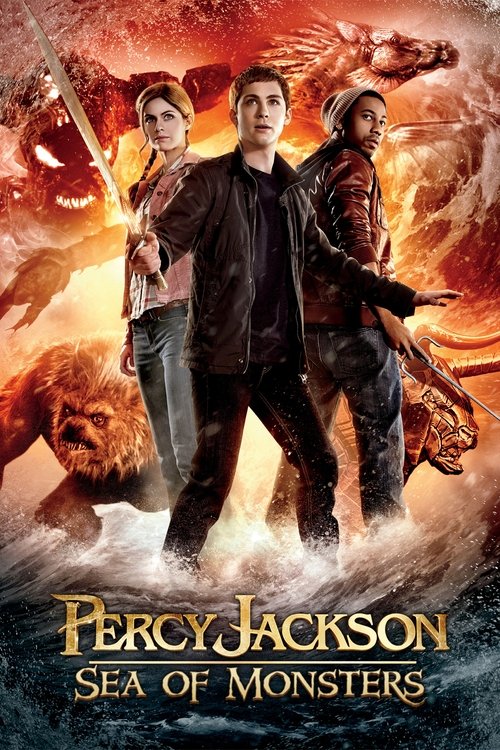
Percy Jackson: Sea of Monsters (2013)
Directed by Thor Freudenthal
No · Ultra Based
How we score movies →Consciousness Markers
Annabeth Chase is a capable female character but functions primarily as supporting player in a male-centered narrative. No conscious feminist agenda or gender commentary present.
Diverse cast including Brandon T. Jackson and Alexandra Daddario, but diversity appears incidental to source material rather than a deliberate progressive choice. No thematic foregrounding of representation.
Brandon T. Jackson's character exists in the narrative but without any thematic engagement around race. Racial consciousness is entirely absent from the storytelling.
No explicit LGBTQ+ content or themes in the 2013 film, despite later books in the series introducing queer characters. The adaptation does not engage with this aspect of the source material.
No particular body positivity messaging or engagement with body diversity. The cast conforms to conventional Hollywood attractiveness standards.
Minimal moralizing or preachy messaging. The film prioritizes action and adventure over social instruction or commentary.
No environmental or climate themes present. The film is a straightforward mythological adventure with no engagement with ecological concerns.
No critiques of capitalism, wealth inequality, or economic systems. The narrative prioritizes fantasy spectacle over social commentary.
While Percy has ADHD in the source books, the film makes no explicit reference to neurodivergence or disability representation.
The film adapts Greek mythology but presents it as straightforward narrative rather than revisiting it through a contemporary social lens.


Synopsis
In their quest to confront the ultimate evil, Percy and his friends battle swarms of mythical creatures to find the mythical Golden Fleece and to stop an ancient evil from rising.
Why it received this score
Percy Jackson: Sea of Monsters arrives as a thoroughly conventional mythological adventure, untethered from any particular cultural moment or progressive sensibility. The 2013 film adaptation makes no apparent effort to foreground questions of representation, identity, or social consciousness, instead treating its source material as straightforward fantasy spectacle. The cast includes actors of various backgrounds, but their presence functions as incidental rather than intentional, with no thematic engagement around diversity or social commentary. The film concerns itself with quests, monsters, and magical artifacts, not with interrogating systems of power or exploring marginalized perspectives through a contemporary lens.
What emerges is a film that predates, or exists entirely outside of, the specific cultural moment that produced modern progressive sensibilities in mainstream entertainment. Brandon T. Jackson's Grover serves primarily as comedic relief, while Alexandra Daddario's Annabeth is competent but peripheral to the narrative structure. The underlying mythology remains unarticulated and unexamined, presented as given rather than as a text to be critically reimagined. There is no climate consciousness, no economic critique, no disability representation, no gender theory lurking in the margins. The film is simply not interested in such matters.
The result is a movie that scores low not through any deliberate counterprogramming or ideological opposition, but through sheer narrative indifference. This is neither a condemnation nor a compliment. It is simply what happens when a mid-budget fantasy sequel prioritizes action sequences and visual spectacle over social reflection. The film grossed over 200 million dollars worldwide, suggesting that audiences in 2013 had no particular appetite for such interrogation either.
Analysis generated by our Consciousness Algorithm
Critic Reviews
“Marc Guggenheim's script is capable and funny, but the film's finest wit is vehicular. ”
“Sarcastic quips and cynical attitudes abound, maybe as a way for the movie's makers to telegraph that they know this is all just so much kid stuff. But if the characters can't muster genuine awe for their adventure, it's a tall order to ask us to do it for them.”
“It’s the odd touch of local color — like the backdrop of an abandoned amusement park, or the arrival of a Civil War steamer crewed by Confederate zombies — that makes these routine acts of derring-do a bit easier to bear.”
“I'll tell you what's insane: the probability that folks will go easy on this dreck because it's aimed at younger viewers, who are being distressingly trained to expect little from their art.”