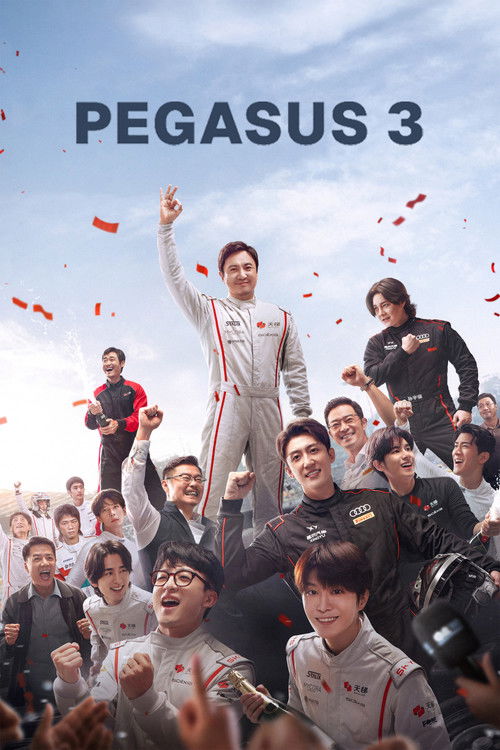
Pegasus 3 (2026)
Directed by Han Han · $425.3M domestic
No · Ultra Based
How we score movies →Consciousness Markers
While the film emphasizes personal growth and achieving something beyond competition, this appears to be character development rather than preachy messaging. The tone is comedic rather than preachy.
The cast appears to be predominantly male, reflecting traditional casting practices in mainstream Chinese cinema. No apparent effort toward deliberate demographic representation is evident.
The ensemble cast includes few prominent female roles based on available information. No apparent feminist messaging or gender-conscious storytelling is evident.
The film celebrates competitive achievement and winning, themes that align with capitalist values. There is no apparent critique of economic systems or wealth.
The film is set in a Chinese context with a Chinese cast. No evidence suggests deliberate engagement with racial or ethnic consciousness as a narrative theme.
A racing film naturally emphasizes athletic physiques and competitive capability. No evidence of body diversity or body positivity messaging is present.
No LGBTQ+ themes are evident in the plot summary, overview, or available critical materials. The film does not engage with this subject matter.
Racing and competitive athletics provide the narrative framework. No climate-related messaging or environmental consciousness is apparent in the available materials.
No reference to neurodivergence, disability representation, or related themes appears in the plot summary or critical materials.
The film is a contemporary sports comedy with no apparent engagement with historical narrative or revisionist storytelling.
Synopsis
Bearing the glory of being the "King of Bayanbulak," Zhang Chi once again embarks on his racing journey, aiming not only to win the race but also to achieve something beyond the competition itself.
Why it received this score
Pegasus 3 is a Chinese sports comedy that concerns itself almost exclusively with the pursuit of racing excellence and the personal transformations that accompany competitive achievement. The film follows Zhang Chi as he navigates team dynamics, technological change, and the departure of longtime colleagues, themes that belong entirely to the register of workplace drama and personal resilience rather than social critique. Director Han Han has crafted what appears to be a straightforward entertainment vehicle, one that treats its narrative conflicts as matters of individual determination and collective effort, not as opportunities for engagement with contemporary cultural anxieties.
The ensemble cast, drawn from mainstream Chinese cinema, functions primarily as supporting players in a story about racing and ambition. There is no apparent effort to foreground questions of representation or demographic consciousness, nor does the film seem interested in interrogating its own cultural assumptions about gender, identity, or social hierarchy. The racing context provides a narrative framework that is, by its nature, competitive and hierarchical. Team members come and go, new technologies displace old methods, and the protagonist must adapt. These are the genuine conflicts of the story.
What emerges from the available evidence is a film that understands itself as entertainment in the classical sense. It aims to provide spectacle, humor, and emotional investment in characters pursuing their goals. The progressive sensibilities that have come to define contemporary cinema in many Western markets appear to have no bearing on this production. Whether one views this as a limitation or a liberation depends entirely on one's critical disposition, but the assessment remains unchanged: Pegasus 3 is content to be what it is, a racing comedy with no apparent interest in the cultural consciousness markers that now dominate the discourse surrounding filmmaking in other parts of the world.
Analysis generated by our Consciousness Algorithm
Critic Reviews
“The pleasures of watching a film like Pegasus 3 lie in your being transported by Han's sheer mastery of the visual medium of cinema.”
“Director Han Han does a fine job of assembling tons of footage that lets us feel the dangers and peril of this kind of racing.”
“Pegasus 3 delivers exactly what fans expect from a movie series about racing car drivers who experience obstacles during high-stakes races.”