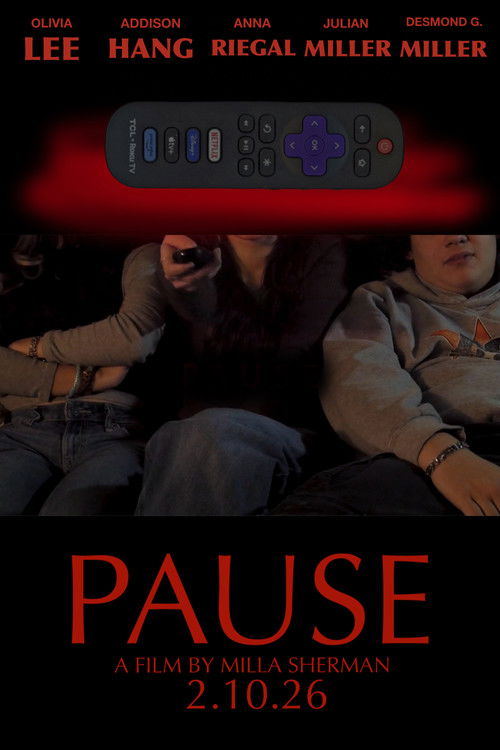
Pause (2026)
Directed by Milla Sherman
No · Based
How we score movies →Consciousness Markers
The ensemble cast appears ethnically diverse, with names and casting suggesting varied backgrounds. However, diversity seems incidental rather than integral to the narrative or themes.
The cast includes women, but there is no indication that the film engages with feminist themes or critiques gender dynamics in any meaningful way.
No information suggests the film engages with body positivity or challenges conventional beauty standards in any deliberate way.
While the cast is diverse, there is no suggestion that the film addresses racial themes or examines racial dynamics in its horror premise.
The meta-textual premise of friends watching a movie could theoretically invite preachy commentary about cinema, but there is no evidence the film pursues this direction.
The film's premise does not appear to critique capitalism or economic structures, though the meta-cinematic setting might theoretically invite such commentary.
There is no indication that the film represents or explores neurodivergence as a theme or character trait.
No evidence of LGBTQ+ themes, characters, or representation in the available plot synopsis or marketing materials for this horror-comedy.
A horror-comedy about friends watching a movie provides no obvious avenue for climate consciousness, and no evidence suggests the film engages with environmental themes.
A contemporary horror-comedy with no historical setting provides no opportunity for revisionist history.
Synopsis
A group of friends start to notice strange happenings while watching a movie.
Why it received this score
Pause presents itself as a meta-textual horror comedy, a premise that might suggest self-aware engagement with contemporary cultural anxieties. Yet the film operates primarily within the well-worn conventions of ensemble horror, deploying its cast of ethnically diverse young actors in roles that feel more incidental than purposeful. Director Milla Sherman's approach suggests a filmmaker more interested in generating scares and laughs than in interrogating the social anxieties that such a premise might invite.
The narrative choice to center the horror around the act of film-watching itself carries a certain irony that the picture does not fully explore. One might expect a film about friends watching a movie to engage with questions about media representation, consumption, or the role of cinema in contemporary life. Instead, Pause treats film-watching as merely the setting for supernatural chaos, a mechanism rather than a subject. The ensemble cast, while reasonably diverse in appearance, does not suggest any deliberate examination of how media portrays or serves different communities.
What emerges from Pause is a competent if unremarkable entry in the horror-comedy subgenre, one that happens to feature a multiethnic cast but does not appear to build its thematic architecture around questions of representation or cultural consciousness. The film's social sensibilities remain largely dormant, content to function as entertainment rather than as commentary. This is not necessarily a failing, but it does place the film squarely in the middle register of contemporary cultural awareness.
Analysis generated by our Consciousness Algorithm
Critic Reviews
“Though the subject is a largely familiar one, this is a work of considerable tonal complexity, as it stirs moments of pitch-black humor and short and violent reveries into an otherwise austerely told tale of spousal strife that wants to smash the patriarchy with feats of cinematic derring-do.”
“Star Fryogeni, who bears a striking resemblance to Frances McDormand, appears in almost every shot, and she carries the film with a bravura performance of a woman at her wit's end.”