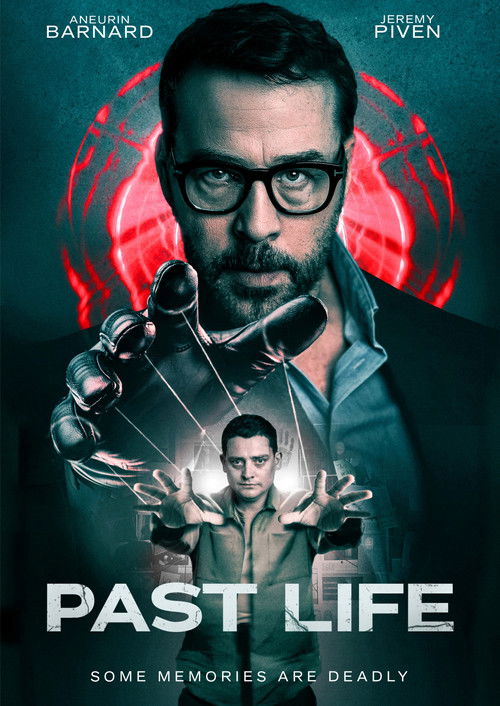
Past Life (2026)
Directed by Simeon Halligan
No · Ultra Based
How we score movies →Consciousness Markers
The cast is predominantly white and male-centered, with Pixie Lott and Emma Lau as supporting presences. No apparent effort toward inclusive casting in a contemporary context.
The film maintains genre conventions and avoids didactic messaging. There is minimal sense of the narrative pausing to lecture the audience about social issues.
The protagonist is unemployed, but this condition exists as a plot element rather than a critique of economic systems. No systemic critique of capitalism is evident.
The film shows minimal racial diversity in its cast. No evidence of racial themes, commentary, or conscious representation in the narrative structure.
Mental health and psychological trauma feature in the plot, but these appear as thriller mechanics rather than as genuine exploration of neurodivergence or mental health advocacy.
Female characters appear to exist in support roles without agency or thematic significance. No feminist critique or consciousness is apparent in the psychological thriller framework.
The film involves a forty-year-old murder mystery, but shows no evidence of reinterpreting historical events or challenging established historical narratives.
No LGBTQ+ themes or characters are evident in the film's premise, plot, or marketing. The narrative focuses entirely on a heterosexual male protagonist.
Climate change or environmental concerns play no role in this serial killer psychological thriller. The narrative is entirely divorced from ecological themes.
Body image, physical diversity, or body positivity play no discernible role in the film's concerns or character development.
Synopsis
When an unemployed reporter is hypnotized as part of a past life regression event, he wakes not with memories of life as royalty or some other glamorous person, but instead finds himself haunted by the memories of a serial killer.
Why it received this score
Simeon Halligan's "Past Life" arrives as an efficient low-budget psychological thriller content to remain within the familiar boundaries of its genre. The film concerns itself with the mechanics of psychological horror: regression therapy, repressed memory, mental manipulation, and serial killing. These are the materials of the thriller toolkit, deployed with competence but without the slightest nod toward contemporary social consciousness. An unemployed reporter stumbles into past-life memories of a killer from forty years prior, and the film pursues this premise with the single-mindedness of a genre exercise from an earlier era.
The ensemble cast, which includes Aneurin Barnard, Jeremy Piven, and Pixie Lott, performs within the conventions the script demands. There is no apparent interest here in interrogating the social dimensions of unemployment, mental health diagnosis, or the ethics of therapeutic manipulation. These elements exist solely as plot mechanics, devices to move the narrative forward toward its predetermined conclusion. Manchester serves as a backdrop, rendered with "rich cinematography" according to reviews, but the city functions as atmosphere rather than as a location with social texture.
What the work ultimately reveals is a film fundamentally indifferent to the preoccupations of contemporary cultural discourse. It does not concern itself with representation, systemic power, or the social implications of its subject matter. This might be described as a refreshing absence of contemporary anxieties, or simply as the product of filmmakers focused on delivering genre satisfaction rather than cultural commentary. Either way, the work remains untouched by the particular sensibilities that dominate so much current cinema, content instead to be a competent thriller that knows what it is and makes no apologies for it.
Analysis generated by our Consciousness Algorithm