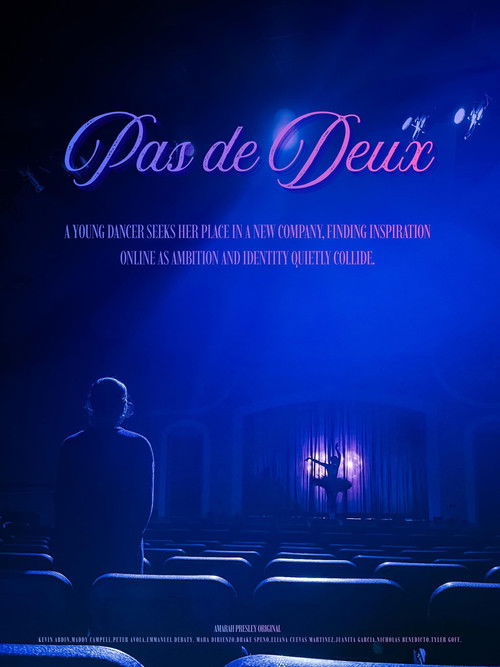
Pas de Deux (2026)
Directed by Amarah Presley
No · Based
How we score movies →Consciousness Markers
The film is entirely centered on women navigating female spaces, female hierarchies, and the self-erasure that comes from seeking female approval. The dynamics are feminist in their architecture, though the film does not appear to editorialize about it.
The director and lead cast suggest diverse representation in a field historically resistant to it. The casting reads as intentional without the film appearing to frame it as a statement.
The protagonist physically reshaping herself in her idol's image, within the context of ballet's notorious body-discipline culture, raises body-image themes. The film does not appear to resolve them with affirmative messaging.
The influencer-to-prestigious-company pipeline faintly suggests the commodification of artistic identity, but the film shows no apparent interest in making a structural critique of capitalism.
The casting of women of color in ballet, a historically exclusionary art form, carries implicit racial consciousness, but no explicit racial themes are identified in the narrative.
The disillusionment arc carries a mild implicit commentary on parasocial culture and influencer inauthenticity, but the film appears to deliver this through psychological drama rather than sermonizing.
No LGBTQ+ themes, characters, or subtext are present in the synopsis or any available research materials.
No climate themes, environmental messaging, or ecological subtext of any kind is present.
No neurodivergence themes, characters, or framing are present in any available information about the film.
The film is a contemporary original narrative with no historical setting or revisionist angle.
Synopsis
A young dancer, once a star, struggles internally after joining a new ballet company where her teacher hardly notices her. Desperate to rise again, she immerses herself in online tutorials from a profound ballerina-turned-influencer, and slowly reshapes herself and her technique in the influencer's image. As her ability strengthens, her obsession deepens. She auditions for the influencer's prestigious company and leaves feeling triumphant, only to overhear a conversation that shatters the idealized version of her idol and her newfound sense of self.
Why it received this score
Pas de Deux arrives as a psychological portrait of female ambition and parasocial collapse, set against the unforgiving geometry of the ballet world. Director Amarah Presley has constructed a film about a young woman who hollows herself out to become someone else's reflection, which is either a pointed critique of influencer culture's colonization of artistic identity or simply a very sad story about a dancer. The film, to its credit, does not appear to have decided which. The casting skews toward women of color in a milieu historically defined by its exclusions, and the choice registers without the film needing to pause and congratulate itself for it.
Where the film earns its modest social consciousness score is in its feminist architecture. The entire dramatic weight rests on women, the damage women do to themselves in pursuit of other women's approval, and the specific cruelty of discovering that your idol is merely a person. The influencer-to-prestigious-company pipeline carries a faint whiff of commodified aspiration, the ballet world as content farm, though the film appears more interested in psychological disintegration than in structural critique. The protagonist reshapes her body and her technique in someone else's image, which touches on the body-as-project anxiety embedded in ballet culture, but again without apparent interest in delivering a message about it.
The lecture energy is refreshingly low. This is a film that seems to trust its audience to draw conclusions without being handed a pamphlet at the door. In the current landscape, that restraint is its own minor achievement. Pas de Deux is, by the metrics of this particular taxonomy, a largely un-woke film about a very contemporary kind of suffering, which may be the most honest thing it could be.
Analysis generated by our Consciousness Algorithm