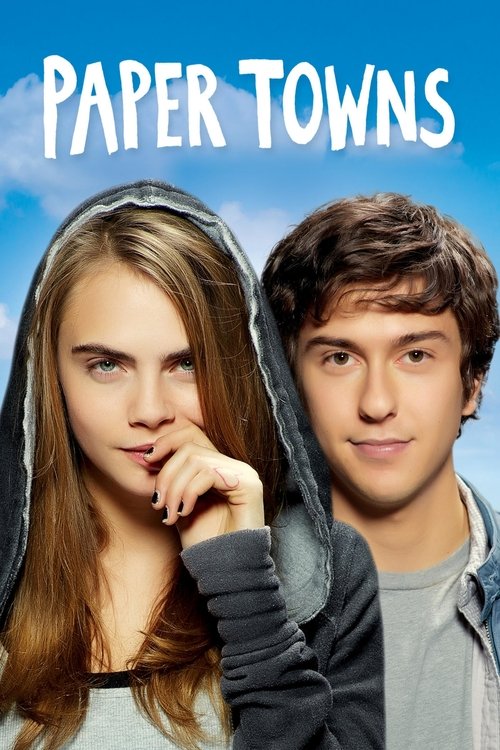
Paper Towns (2015)
Directed by Jake Schreier
No · Ultra Based
How we score movies →Consciousness Markers
The cast includes Justice Smith and Jaz Sinclair among the ensemble, providing racial diversity, but they function as supporting players without substantial narrative weight or character development.
The female lead is positioned as an object of male desire and mystery rather than a fully realized character. The narrative does not deconstruct or critique the male protagonist's obsessive behavior.
The film maintains a largely naturalistic tone without excessive preachiness, though its treatment of obsession and mystery carries a melodramatic weight that occasionally approaches heavy-handedness.
No LGBTQ+ characters or themes present in the film. The narrative is entirely heteronormative with no exploration of queer identity or relationships.
The film contains no thematic engagement with race, racism, or racial identity. Minority characters appear without any meaningful exploration of their experiences or perspectives.
No environmental themes, climate consciousness, or ecological concerns are present in the narrative.
The film contains no critique of capitalism, wealth inequality, or corporate power. Consumerism and class are not examined.
No engagement with body image, body positivity, or acceptance of diverse body types. The film presents conventional beauty standards without commentary.
No neurodivergent characters or exploration of autism, ADHD, or other neurological differences are present in the film.
The film contains no historical narrative or attempt to reframe historical events through a contemporary lens.


Synopsis
Quentin Jacobsen has spent a lifetime loving the magnificently adventurous Margo Roth Spiegelman from afar. So when she cracks open a window and climbs back into his life dressed like a ninja and summoning him for an ingenious campaign of revenge, he follows. After their all-nighter ends and a new day breaks, Quentin arrives at school to discover that Margo, always an enigma, has now become a mystery. But Quentin soon learns that there are clues, and they're for him. Urged down a disconnected path, the closer Quentin gets, the less he sees of the girl he thought he knew.
Why it received this score
Paper Towns exists in a curious liminal space, neither actively progressive nor particularly retrograde, content to float above the cultural currents of its moment. The film adapts John Green's novel about suburban adolescent obsession with the aesthetic trappings of a teen mystery but little of its thematic substance. The cast includes a modest range of racial representation, with Justice Smith and Jaz Sinclair among the ensemble, though they function as supporting players rather than drivers of the narrative. There is no meaningful engagement with identity politics, no climate consciousness, no labor critique, no interrogation of body standards. The film is simply a YA romance mystery that treats its teenage characters with a certain dramatic solemnity while declining to examine power structures or systemic concerns.
The central conceit, that a boy's obsessive fantasizing about a girl leads him on a cross-country quest, receives no ironic commentary or deconstruction. Margo Roth Spiegelman exists primarily as an object of mystery and desire, a cipher for the protagonist's emotional journey rather than a fully realized character with her own agency. The film does not seem interested in interrogating this dynamic or offering any feminist reframing of the source material's problematic gender dynamics. One finds no LGBTQ+ representation, no neurodivergent characters, no anti-capitalist sentiment, no body positivity messaging. The film is apolitical in the contemporary sense, a teen melodrama that mistakes aesthetic melancholy for emotional depth.
What remains is a film that occupies the space between earnestness and detachment, committed to neither genuine sentiment nor satirical distance. It is polished, competent, and almost entirely devoid of any markers of modern progressive cultural sensibility. For a 2015 film aimed at young audiences, this represents a notable absence rather than a deliberate choice.
Analysis generated by our Consciousness Algorithm
Critic Reviews
“The nice thing about Paper Towns is it’s as much about the friendship between Quentin, Radar and Ben as it is about Quentin’s love for Margo, and his quest to find her after she disappears yet again.”
“As slick and contrived as the plotting may be from time to time, the writers and director Jake Schreier (“Robot & Frank”) throw in enough charming character moments and literal forward motion (this is a road movie, after all) to avoid getting bogged down in whiny teen solipsism. You might not believe that any of these kids exist, but you’ll enjoy hanging out with them.”
“There may be nothing fresh left to find in teens coming of age, but director Jake Schreier (Robot and Frank) fakes it with genuine sincerity. ”
“Manufactured and manicured to appeal to the teenage fans of Green's book, Paper Towns is so polished and edgeless, that even Margo herself would look at the finished product, and question its authenticity.”