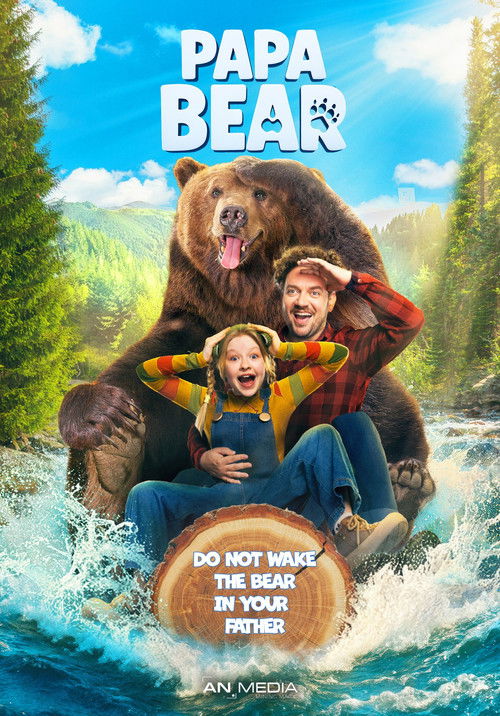
Papa Bear (2025)
Directed by Maxim Maksimov
No · Ultra Based
How we score movies →Consciousness Markers
The daughter Maria is framed as the active, competent protagonist who must protect her incapacitated father, a mild reversal of the traditional family-adventure dynamic. This is a structural observation rather than evidence of ideological intent.
The film's core premise, that a father must be literally transformed into a helpless animal before his daughter can teach him about their relationship, carries a certain instructional quality. The wilderness as a corrective force for bad parenting is a tidy moral with a bow on it.
The film features a cast drawn entirely from Russian cinema, reflecting its country of production rather than any deliberate representational agenda. There is no evidence of casting choices made to satisfy diversity considerations.
The wilderness setting and the hunter-as-antagonist framing carry a faint pro-nature undercurrent, though the film does not appear to make any explicit environmental argument. Nature is backdrop, not sermon.
No LGBTQ+ themes, characters, or subtext are present or documented in this film. The family unit depicted is conventional.
There is no racial consciousness present in this film. It is a Russian production with a homogenous cast and no commentary on race.
There is no anti-capitalist content, critique of wealth, or class commentary documented in this film.
No body positivity messaging is present or implied. The body transformation in the film is a comedic fantasy device, not a vehicle for body-acceptance themes.
No neurodivergent characters or related themes are present or documented in this film.
The film is a contemporary family fantasy comedy with no historical setting or revisionist intent whatsoever.


Synopsis
When spirited troublemaker Maria pushes her overwhelmed father too far, he takes her to their remote family cabin, hoping a dose of wilderness will teach her discipline. But after a mysterious forest encounter turns him into a bear, Mila must protect her Papa Bear from a local hunter. As the two navigate hilarious mishaps and unexpected bonding, they discover that the wild has a way of bringing families closer—one bear hug at a time.
Why it received this score
A Russian family comedy in which a father is magically transformed into a bear and must be rescued by the daughter he was attempting to discipline. The irony is not subtle. The wilderness, long a neutral party in human affairs, is here conscripted into the business of correcting patriarchal parenting styles, and it performs its duties with the efficiency of a licensed family therapist who also happens to be a forest.
The film belongs to a well-established genre of magical-inconvenience narratives, in which an authority figure is stripped of their power through supernatural means and must learn humility from the very person they were trying to control. "Papa Bear" executes this formula with apparent sincerity. The father arrives at the cabin intending to impose discipline. He leaves as a large mammal. The daughter, previously framed as a troublemaker, is revealed to be the competent one. The lesson is delivered with the gentleness of a sledgehammer wrapped in a fleece blanket.
As a document of progressive social consciousness, this film is not exactly a manifesto. It is a Russian family comedy with a bear in it. The cultural flashpoints that animate contemporary discourse, identity politics, structural critique, institutional interrogation, are entirely absent. What we have instead is a father, a daughter, some trees, and a hunter who represents the only genuine threat to family reconciliation. The hunter loses. The family wins. The bear presumably returns to being a man. We are asked to feel good about this, and most audiences will comply without resistance. The film scores low not because it fails to engage with the cultural moment, but because it appears entirely unaware that a cultural moment is occurring at all. This is, depending on your perspective, either a significant artistic limitation or a profound relief.
Analysis generated by our Consciousness Algorithm
Critic Reviews
“Discover reviews, ratings, and trailers for Papa Bear on Rotten Tomatoes.”
“But after a mysterious forest encounter turns him into a bear, Mila must protect her Papa Bear from a local hunter.”