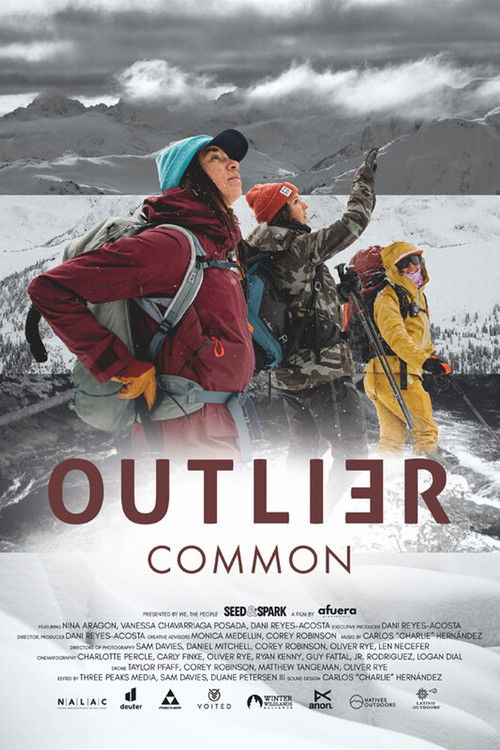
OUTLIER: Common (2026)
Directed by Dani Reyes-Acosta
Yes · Woke
How we score movies →Consciousness Markers
The entire film centers three Latina subjects explicitly chosen to represent underrepresented voices in backcountry skiing. This is the film's organizing principle, not an incidental demographic detail.
The film's entire framework is organized around centering Latina experiences and challenging the whiteness of outdoor sports culture. This is conscious and deliberate, though expressed through personal narrative rather than systemic analysis.
The focus on female athletes in a male-dominated sport carries implicit feminist dimensions, though the film appears to emphasize achievement and belonging rather than explicit gender critique.
The film appears to work in the idiom of inspirational documentary and personal narrative. While representation itself carries an implicit message, the film does not appear to adopt a preachy or heavily pedagogical tone based on festival reception and promotional framing.
The film engages with mountains and nature, but the available descriptions suggest this is primarily aesthetic and narrative backdrop rather than a focused examination of climate change or environmental destruction.
While the film may implicitly challenge historical narratives about who belongs in outdoor spaces, the available descriptions do not suggest explicit historical revisionism or reframing of past events.
The film focuses on athletic bodies performing at high levels in mountain sports. There is no indication of engagement with body positivity discourse or celebration of non-normative bodies.
No evidence of LGBTQ+ themes or representation in available information about the film.
There is no evidence of anti-capitalist themes. The film celebrates individual athletes within existing outdoor sports and tourism infrastructure without apparent critique of those systems.
No evidence of neurodivergence representation or themes in the available information.
Synopsis
OUTLIER: Common is a documentary film that follows three Latina athletes as they navigate life in remote mountains alongside the unpredictable forces of Mother Nature.
Why it received this score
OUTLIER: Common arrives as a competently executed documentary about three Latina snow athletes pursuing their passion in North American backcountry terrain. The film's central concern is representation in outdoor sports, a space that has historically catered to predominantly white, affluent participants. The director Dani Reyes-Acosta has structured the narrative around three distinct professional identities: a scientist, a filmmaker, and what the promotional materials call a "disruptor," suggesting deliberate attention to diverse expertise and social positioning within the community. This framing allows the subjects to be presented not merely as athletes but as professionals operating across multiple domains.
The documentary's approach to representation is straightforward and sincere, if somewhat uncomplicated in its execution. There is no pretense of false balance or enlightened colorblindness here. The film explicitly centers Latina voices in a space where such representation remains statistically rare, and it documents both the joy and the friction that comes with that positioning. The emphasis on "underserved voices" in marketing materials indicates that the filmmakers understand themselves to be engaged in a corrective project. The visual journey through North American mountain ranges serves as a backdrop for personal narratives that presumably address belonging, identity, and access in outdoor culture. One could argue that the film's very existence as a festival circuit entry constitutes a form of cultural advocacy.
That said, the documentary appears to be primarily a celebration of athletic achievement and personal resilience rather than a systematic critique of the structural barriers that necessitate such celebration in the first place. The film chooses the register of adventure and friendship over interrogation, which is a legitimate artistic choice but one that necessarily limits the depth of its engagement with systemic questions. The film works within the idiom of inspirational documentary rather than confrontational cinema, and this positioning shapes what kind of progressive consciousness it can express.
Analysis generated by our Consciousness Algorithm