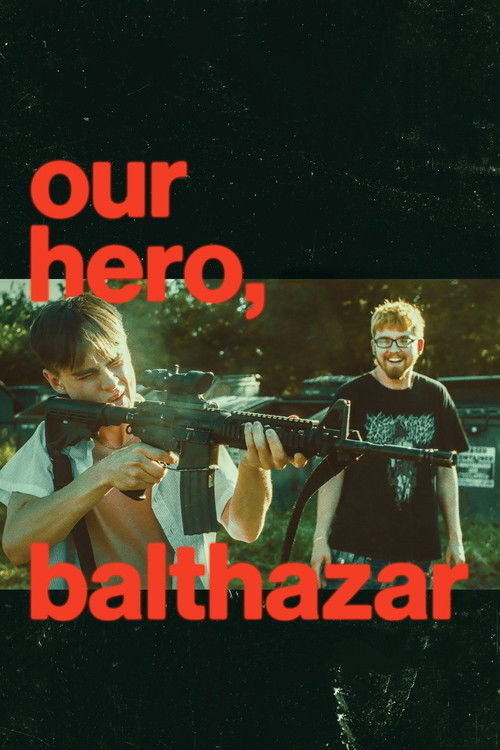
Our Hero, Balthazar (2026)
Directed by Oscar Boyson
Partly · Woke-Adjacent
How we score movies →Consciousness Markers
The film's subject matter, gun violence, performative activism, incel culture, toxic masculinity, and social media, constitutes a near-complete bingo card of 2020s cultural anxieties. Critics are divided on whether the film earns its themes or merely displays them, with The Spool calling it a 'sloppy take' while those who praise it noting its restraint. The lecture energy is present and considerable, even when the film tries to subvert it.
Class and privilege are central to the film's architecture: a wealthy New York teenager versus a boy living in a trailer with gun paraphernalia. The wealth disparity is not incidental but thematically load-bearing, inviting the audience to read Balthazar's activism as a product of insulated privilege.
The cast is predominantly white male leads, though supporting roles include Avan Jogia (of South Asian descent) and Anna Baryshnikov. The diversity present feels incidental to the story rather than a programmatic statement, but the film exists firmly in the Gen Z multicultural casting milieu.
The class and geographic contrast between the wealthy Manhattan teenager and his rural Texas counterpart carries implicit racial and cultural coding. Critics note the film engages with privilege, though it stops short of explicit racial framing.
The protagonist's performative activism is partly motivated by impressing a female activist crush, which implicitly frames male pseudo-feminism as a punchline. The film critiques rather than celebrates this posture, but the feminist discourse is present as a structural element.
The film's engagement with incel culture, social isolation, and young men who fall through the cracks of digital spaces gestures toward neurodivergent or socially alienated psychology, though this is treated as a social phenomenon rather than a celebrated identity marker.
No LGBTQ+ themes, characters, or subplots are identified in any available source material or critical coverage. The film's central tensions are entirely heterosexual and class-based.
No climate change themes, environmental activism, or related content appears in any description or review of the film. This particular crusade is entirely absent.
No body positivity themes or related content are present. The film's concerns lie elsewhere entirely.
The film is a contemporary original story with no historical setting or revisionist agenda. History is not under renovation here.
Synopsis
Eager to impress his activist crush, a wealthy New York teenager follows an online connection to Texas, where he's convinced he can stop an act of extreme violence.
Why it received this score
Oscar Boyson's debut feature arrives pre-loaded with the thematic concerns of an undergraduate sociology syllabus: gun violence, performative activism, incel adjacency, class privilege, and the psychic damage of growing up extremely online. That the film was rejected by Sundance and SXSW before being censored by the MPA suggests it managed to unsettle everyone, which is either a sign of genuine provocation or a sign that nobody could agree on what it was actually doing. Both possibilities are interesting. Neither is entirely reassuring.
The film's central conceit, a wealthy Manhattan teenager performing grief about school shootings on camera and then immediately dropping the act, is its sharpest and most honest gesture. Balthazar does not believe in his activism so much as he believes in being seen believing in it. This is a more precise critique of a certain strain of progressive social consciousness than most films with similar ambitions manage, because it implicates the very audience most likely to sympathize with the premise. The class architecture reinforces this: the boy from the trailer park with the gun collection is not coded as the villain so much as the inevitable product of everything Balthazar's world has chosen to ignore while filming itself crying. The film understands that the lecture and the lectured-at are bound together in a system neither can fully see.
Where the film strains is in the sheer density of its concerns. Gun culture, toxic masculinity, social media alienation, and the privilege gap are each given a seat at the table, and the table is only so large. Critics who found it a "borderline unbearable heap of cynicism" are not wrong to notice the weight. A film that critiques performative consciousness-raising must work very hard to avoid becoming its own object of critique. Whether Boyson fully escapes that trap is a question the film leaves open, which may be its most sophisticated move, or its most convenient one.
Analysis generated by our Consciousness Algorithm