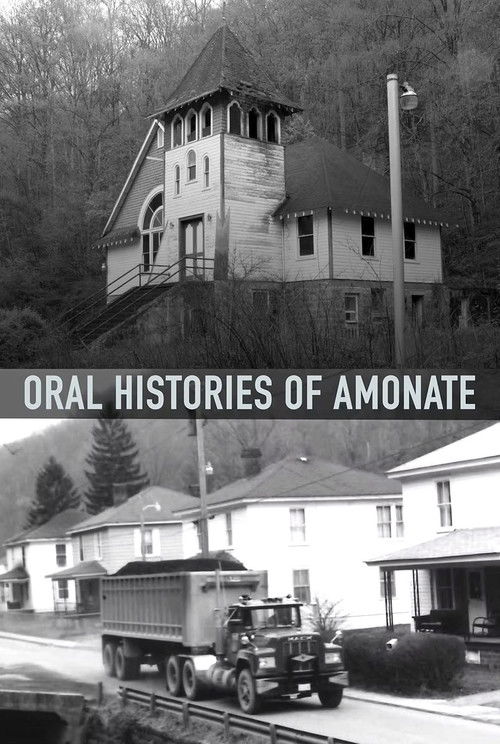
Oral Histories of Amonate (2026)
Directed by Laura Iancu
No · Ultra Based
How we score movies →Consciousness Markers
The project implicitly documents the consequences of industrial decline and economic abandonment, but lacks explicit critique of capitalism or systemic economic structures.
The filmmaker is a woman, and some of the voices heard appear to be women's perspectives on community history, but there is no explicit feminist framework or agenda present.
The film centers Appalachian voices and community members as subjects, but this is more about authentic representation than deliberate progressive casting. No apparent effort to signal diversity.
The absence of narration and editorial voice keeps lecture energy minimal, though the curation of which voices appear constitutes an implicit editorial position.
Coal mining is inherently tied to climate and environmental concerns, but the film does not explicitly engage with climate crisis rhetoric or environmental activism.
The film documents an Appalachian community without apparent engagement with racial dynamics or contemporary racial justice discourse. Appalachia's own racial complexity is not foregrounded.
The film preserves existing community memory rather than reframing or reinterpreting history through a revisionist lens.
No LGBTQ themes or representation are evident in this oral history project about heritage and community memory.
Body positivity themes are entirely absent from an oral history documentary focused on community memory and heritage.
No representation or discussion of neurodivergence appears in this community oral history project.
Synopsis
Community members of a mining town in Appalachia recall their heritage and look forward to the ever-changing future.
Why it received this score
Laura Iancu's twenty-four minute documentary is a straightforward ethnographic exercise in oral preservation. The residents of Amonate, Virginia, a coal mining community that has dwindled to fifty-nine inhabitants, speak into the camera about their past and their uncertain future. There is no narration, no editorial commentary, no visible agenda. The filmmaking itself is transparent to the point of invisibility. We hear voices. We hear the cadences of Appalachian speech. That is sufficient.
What distinguishes this project from being merely an earnest community effort is precisely its refusal to perform progressive consciousness. The residents are not presented as objects of pity, nor are they positioned as victims awaiting rescue. They exist as speakers, as keepers of memory, as people describing their own lives without intermediation. This restraint is itself a kind of radical act in a media landscape accustomed to curating suffering for consumption. The film does not lecture about deindustrialization or environmental degradation or economic inequality, though all of these forces have shaped Amonate's decline.
Still, the film's modest cultural footprint and its focus on heritage documentation rather than systemic critique places it well outside the contemporary anxieties that typically animate contemporary progressive cinema. The emphasis falls on preservation and continuity rather than transformation or awakening. In terms of cultural consciousness markers, the work simply does not register. It is content to let Appalachian voices speak without translating them through the frameworks of modern progressive sensibility.
Analysis generated by our Consciousness Algorithm
Critic Reviews
“Community members of a mining town in Appalachia recall their heritage and look forward to the ever-changing future.”