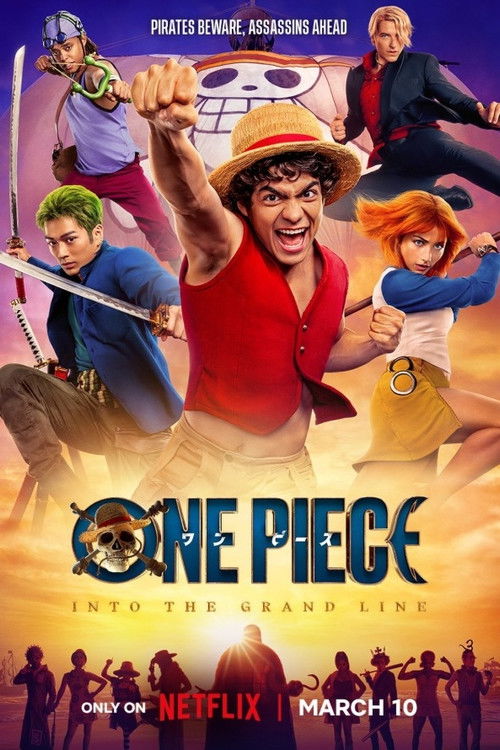
One Piece: Into the Grand Line (2026)
Directed by Emma Sullivan
No · Based
How we score movies →Consciousness Markers
The cast is deliberately multinational and diverse, reflecting modern streaming practices. However, this diversity appears to be a casting choice rather than a thematic commitment, with no explicit narrative engagement with representation itself.
Female characters like Nami are competent and central to the narrative, but this reflects the original manga rather than contemporary feminist discourse. The show does not interrogate gender dynamics or power structures.
The narrative involves pirates seeking treasure and freedom from oppressive systems, but this operates at the level of adventure trope rather than economic critique. No systemic wealth inequality is interrogated.
While the cast is racially diverse, the show demonstrates no explicit consciousness of race as a thematic element. Characters exist without commentary on their backgrounds or identities.
The show features characters with varied body types reflecting the manga's designs, but this appears accidental rather than intentional. No explicit body positivity messaging is present.
No representation of neurodivergent characters or exploration of neurodiversity is evident. The show remains indifferent to this dimension of human experience.
The narrative prioritizes entertainment and character development over preachy messaging. When themes of freedom emerge, they serve plot rather than function as moral instruction.
No environmental or climate-related themes are present. The oceanic setting is purely adventurous, with no commentary on ecological concerns or sustainability.
No significant LGBTQ+ representation is evident in the main cast or plot. The source material's relationships remain focused on platonic bonds and adventure partnerships.
The show operates in a fictional fantasy setting with no historical claims to revise or recontextualize. Historical revision is not applicable to pure adventure fantasy.
Synopsis
Netflix's epic high-seas pirate adventure, ONE PIECE, returns for Season 2, unleashing fiercer adversaries and the most perilous quests yet. Luffy and the Straw Hats set sail for the extraordinary Grand Line, a legendary stretch of sea where danger and wonder await at every turn. As they journey through this unpredictable realm in search of the world's greatest treasure, they'll encounter bizarre islands and a host of formidable new enemies.
Why it received this score
One Piece: Into the Grand Line represents the contemporary streaming adaptation paradox: a show sufficiently conscious of modern casting practices to assemble a genuinely multinational ensemble, yet fundamentally disinterested in examining the implications of any of its choices. The series inherits from its source material a vaguely libertarian sensibility about freedom and self-determination, concepts that remain pleasantly abstract when deployed in service of finding treasure and recruiting new crew members. One might mistake this for progressive content until recognizing that adventure and individual liberty require no commentary to function as narrative drivers.
The show's modest progressive markers emerge primarily through its casting decisions rather than through thematic intention. Emily Rudd's Nami operates as a capable, resourceful character, but she does so within a framework that predates contemporary feminist discourse by decades. The international cast composition reflects Netflix's algorithmic understanding of global demographics more than any commitment to representation as cultural statement. There is no moment where the text pauses to congratulate itself for this diversity, which represents either admirable restraint or simple indifference depending on one's charitable inclinations.
What emerges from Into the Grand Line is essentially a well-funded adventure serial with contemporary casting: entertaining, energetic, and thoroughly uninterested in the social consciousness that might otherwise animate its material. The Straw Hat Pirates seek freedom, yes, but they seek it for themselves and their bonds with one another, not as ideological position. This is not a flaw so much as a clarification. The show knows what it is and commits to that identity with refreshing consistency.
Analysis generated by our Consciousness Algorithm
Critic Reviews
“We're pleased to say it is bigger, better, and more ambitious in almost every way than its freshman voyage.”
“This second season takes everything that worked in the first and expands on that even further with bigger stakes, better connections between the characters, and bolder choices to differentiate itself from both the manga and anime releases.”
“One Piece Season 2 is even bolder than its predecessor, raising the stakes with more ambitious action sequences and political intrigue, while staying true to the source material.”
“It's a clumsy love letter to a tale that's captivated millions, and it's also undeniably infectious.”