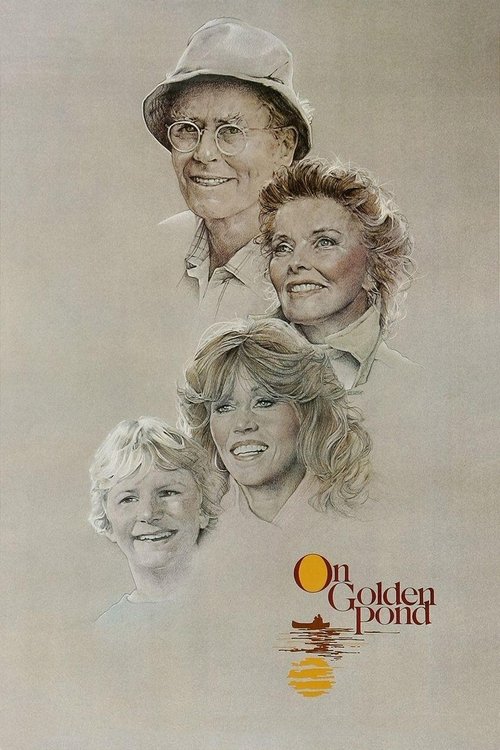
On Golden Pond (1981)
Directed by Mark Rydell
No · Ultra Based
How we score movies →Consciousness Markers
Features elderly protagonists in leading roles, which was progressive for 1981, though the casting remains limited in scope and does not reflect broader demographic diversity.
Jane Fonda's presence provides some feminist cachet, but her character functions primarily to serve her parents' emotional resolution rather than exploring her own agency.
The film's treatment of aging bodies could be read as dignifying, though this reflects naturalistic storytelling rather than explicit body positivity messaging.
The film prioritizes emotional authenticity over preachiness, with minimal moments of explicit moral instruction or preaching.
No LGBTQ themes, representation, or subtext present in the narrative.
No engagement with racial themes, consciousness, or representation of characters of color.
No climate-related themes, environmental consciousness, or ecological messaging present.
No critique of capitalism, wealth inequality, or systemic economic exploitation present in the narrative.
No representation or acknowledgment of neurodivergent characters or conditions.
No historical revisionism or reframing of past events through contemporary cultural lenses.


Synopsis
For Norman and Ethel Thayer, this summer on golden pond is filled with conflict and resolution. When their daughter Chelsea arrives, the family is forced to renew the bonds of love and overcome the generational friction that has existed for years.
Why it received this score
On Golden Pond represents the peculiar challenge of evaluating a pre-woke era film through contemporary cultural lenses. This is a distinguished drama about aging, mortality, and family estrangement that earned its Best Picture Oscar through sheer craft and emotional authenticity. Yet by the metrics of modern progressive consciousness, it occupies a curious void. The film's thematic concerns, while genuinely moving, make no gestures toward the specific cultural anxieties that would come to define the social justice discourse of the 2020s.
The casting of Katharine Hepburn and Henry Fonda in the lead roles does provide representation of elderly characters in a manner that was reasonably progressive for 1981, when aging protagonists in cinema were far less common. Jane Fonda's presence as the adult daughter adds a layer of feminist credibility to the proceedings, though her character exists primarily to facilitate her parents' emotional journey. The film's treatment of gender roles and family dynamics follows conventional patterns of its era. There is no meaningful engagement with racial consciousness, LGBTQ themes, climate concerns, anti-capitalist sentiment, body positivity discourse, neurodivergence representation, or historical revisionism.
What emerges most clearly is that On Golden Pond succeeds as intimate character drama precisely because it concerns itself with universal human experiences rather than contemporary political frameworks. It is a film that respects the dignity of its elderly protagonists without requiring them to serve as vessels for modern social messaging. For the purposes of this assessment, that restraint results in a remarkably low score, not because the film is morally deficient, but because it predates the entire cultural conversation we are attempting to measure.
Analysis generated by our Consciousness Algorithm
Critic Reviews
“On Golden Pond is a treasure for many reasons, but the best one, I think, is that I could believe it. I could believe in its major characters and their relationships, and in the things they felt for one another, and there were moments when the movie was witness to human growth and change. I left the theater feeling good and warm, and with a certain resolve to try to mend my own relationships and learn to start listening better. ”
“None of these issues are fully resolved, but just enough ... and that’s what makes On Golden Pond cinema gold.”
“Mr. Fonda gives one of the great performances of his long, truly distinguished career. Here is film acting of the highest order, the kind that is not discovered overnight in the laboratory, but seems to be the distillation of hundreds of performances.”
“The film exudes complacency and self-congratulation; it is a very cowardly, craven piece of ersatz art.”