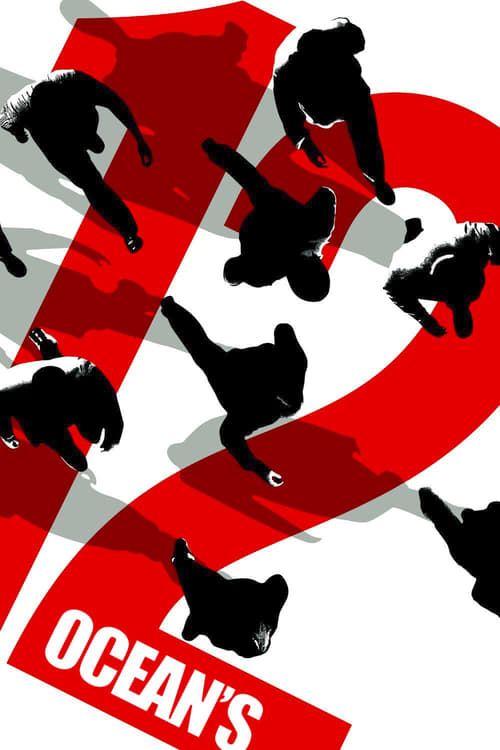
Ocean's Twelve (2004)
Directed by Steven Soderbergh
No · Ultra Based
How we score movies →Consciousness Markers
The cast includes Julia Roberts, Catherine Zeta-Jones, Don Cheadle, and Bernie Mac, but these are incidental to the narrative. No intentional representation politics are evident; casting appears driven by star power rather than progressive values.
Though the plot involves stealing money, the narrative frames theft as entertainment rather than social critique. Capitalism is neither interrogated nor condemned; wealth is simply the objective of the game.
While female characters exist in the ensemble, they occupy supporting roles with minimal agency. No feminist themes or gender-conscious storytelling is present.
Black cast members are present but their race is never addressed or explored. Characters are treated as interchangeable members of an ensemble without racial specificity.
No LGBTQ themes, characters, or references appear in the film. Sexual orientation is entirely absent from the narrative.
Climate change, environmental consciousness, or ecological themes are entirely absent from this heist comedy.
The film features conventionally attractive Hollywood stars in glamorous settings. No body diversity, size representation, or disability visibility is present.
Neurodivergent characters or themes are entirely absent. No autism, ADHD, mental health discussions, or neurodivergent representation appears in the narrative.
The film contains no historical narrative or revisionist historical claims. It is set in a contemporary heist scenario with no engagement with history.
No character pauses to explain moral, political, or social implications. The film maintains a purely entertainment-focused tone without preachy moments.


Synopsis
Despite pulling off one of the biggest heists in Las Vegas history and splitting the $160 million take, each of the infamous Ocean's crew have tried to go straight, lay low and live a legit life, but that's proven to be a challenge. Casino owner Terry Benedict demands that Danny Ocean return the money, plus millions more in interest. Unable to come up the cash, the crew is forced to come together to pull off another series of heists, this time in Rome, Paris, and Amsterdam, but a Europol agent is hot on their heels.
Why it received this score
Ocean's Twelve stands as a monument to a simpler time, when a film could assemble a glittering ensemble cast of A-list talent for the purpose of entertaining audiences with a frothy heist narrative, free from any obligation to interrogate its own social positioning. Steven Soderbergh's 2004 sequel makes no pretense toward cultural awareness or progressive sensibility. The film includes Julia Roberts and Catherine Zeta-Jones within its ensemble, but their presence registers as incidental rather than as part of any coherent statement about gender representation in the genre. Don Cheadle and Bernie Mac appear in the cast, but their characters exist in the same narrative vacuum as their white counterparts: no thematic examination of race, no commentary on systemic inequality, simply a heist comedy treating all its players with equal levity.
The film's relationship to capitalism deserves attention, though not for the reasons one might initially assume. Ocean's Twelve depicts criminals stealing vast sums of money, yet the narrative frames this thievery not as a critique of wealth accumulation but rather as a stylish game, a dance of wit and charm between the crew and their adversaries. The moral framework is purely one of personal loyalty and technical prowess. There exists no interrogation of economic systems, no discussion of wealth inequality, no suggestion that the heist represents anything other than a rousing entertainment spectacle. The film celebrates the cunning of thieves while maintaining an entirely uncritical relationship to the structures they exploit.
What emerges as most striking about Ocean's Twelve is its profound indifference to the specific preoccupations of contemporary progressive cinema. No character discusses their identity, their trauma, or their position within larger social hierarchies. The narrative contains no lecture, no moment where a character pauses to explain the moral or political implications of events unfolding on screen. This is not a failing on the film's part, merely an observation about its historical moment. Ocean's Twelve occupies a cultural space that has since become nearly extinct: the apolitical blockbuster entertainment, made with craft and style, asking nothing of its audience except that they enjoy two hours of good-looking people committing charming crimes.
Analysis generated by our Consciousness Algorithm
Critic Reviews
“Soderbergh seems to have found his vision again. It'll be a great day when he returns to writing his own material, but until then, this is none too shabby.”
“For sheer urbane elegance coupled with technical mastery and lush, old-fashioned élan, no one working for the studios today comes close to the versatile Soderbergh.”
“Let’s be honest: With a cast like this, it doesn't matter too much what the characters are doing onscreen, or if it makes about as much sense as a monochrome rainbow.”
“About halfway through you'll get an incredible hunger to see a movie.”