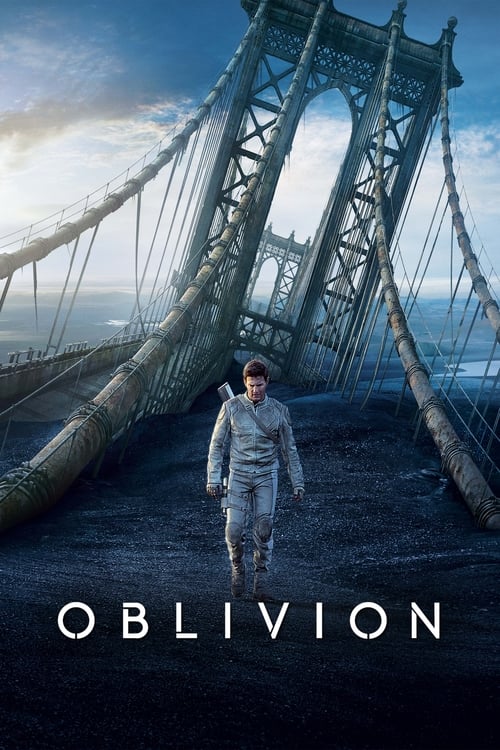
Oblivion (2013)
Directed by Joseph Kosinski
No · Ultra Based
How we score movies →Consciousness Markers
The film includes Morgan Freeman and Olga Kurylenko in supporting roles, but their casting appears incidental to the narrative rather than intentionally representative. Their characters serve plot functions without thematic engagement regarding their identities.
The film occasionally veers into expository dialogue explaining its world-building, but it maintains a relatively restrained approach to preachiness. The philosophical themes remain embedded in narrative rather than delivered as sermonic content.
The film obliquely addresses resource extraction and corporate exploitation through its plot mechanics, but it never develops these themes into conscious critique. The narrative treats institutional power as backdrop rather than subject.
The female protagonist exists primarily as a plot device to trigger the male lead's awakening and serves a traditional damsel-adjacent role. While she participates in action sequences, the narrative structure privileges masculine heroism and agency.
Though the film is set on a ravaged post-apocalyptic Earth, it shows no interest in climate science, environmental responsibility, or ecological themes. The devastation is treated as a backdrop for action rather than a subject for critique or awareness.
No LGBTQ+ themes, characters, or subtext appear in the film. The narrative focuses entirely on heterosexual relationships without any exploration of alternative identities or orientations.
The film contains no thematic engagement with racial identity, racial history, or systemic racial inequity. Character races are present but narratively irrelevant to the story's concerns.
No engagement with body diversity, body neutrality, or body positivity appears in the film. The aesthetic remains conventionally attractive and unmarked by any contemporary body consciousness.
The film contains no representation of neurodivergent characters, no exploration of neurodiversity, and no thematic engagement with cognitive difference or disability.
While the film features an alternate history premise, it contains no revisionist engagement with historical narratives, marginalized histories, or reexamination of accepted historical accounts.


Synopsis
Jack Harper is one of the last few drone repairmen stationed on Earth. Part of a massive operation to extract vital resources after decades of war with a terrifying threat known as the Scavs, Jack's mission is nearly complete. His existence is brought crashing down when he rescues a beautiful stranger from a downed spacecraft. Her arrival triggers a chain of events that forces him to question everything he knows and puts the fate of humanity in his hands.
Why it received this score
Oblivion presents itself as a thoughtful science fiction meditation on identity and memory, yet it remains conspicuously unconcerned with the markers of contemporary cultural consciousness. The film's narrative machinery turns on questions of selfhood and existential threat, but these philosophical inquiries exist in a vacuum largely devoid of social awareness. Tom Cruise's character Jack Harper inhabits a post-apocalyptic landscape stripped of the social complexity that might invite progressive interrogation, leaving the film's thematic ambitions stranded in the realm of pure spectacle and personal drama.
The supporting cast includes Morgan Freeman and Olga Kurylenko, yet their presence registers primarily as plot function rather than conscious representation. Freeman, who might ordinarily signal a certain gravitas in matters of authority and wisdom, appears here as a resistance leader whose race is never foregrounded or explored as relevant to the narrative's concerns. The film's female character, played by Kurylenko, exists primarily as the catalyst for the male protagonist's awakening, a narrative function that predates contemporary feminist interrogation by decades. The film shows no interest in interrogating power structures, systemic inequity, or the social dimensions of its post-war setting.
Oblivion's surface reveals a fundamentally conservative work dressed in the aesthetics of science fiction innovation. The screenplay resists commentary on capitalism, environmental collapse, or institutional power, instead offering a narrowly focused tale of individual heroism and romantic redemption. For those seeking evidence of modern progressive cultural markers, this film offers slim pickings indeed.
Analysis generated by our Consciousness Algorithm
Critic Reviews
“Oblivion has the ability to haunt you visually and, with an unanticipated love story, even emotionally. ”
“Oblivion is a technical triumph rather than a philosophical breakthrough, demonstrating how beautifully digital effects can be blended with real people and real sets, demonstrating that neither Tom Cruise nor the 1970s will ever die, and announcing the unexpected arrival of a major science-fiction director.”
“Oblivion is a terrific-looking movie, alternating spare, sterile environments with homey organic ones, and making both look tremendously pretty. Kosinski also handles his action well, with cut-and-dried clarity and edge-of-seat energy. ”
“Absent of any sense of self-awareness, Oblivion seems only self-serious, a ponderous mess both misguided and unaware.”