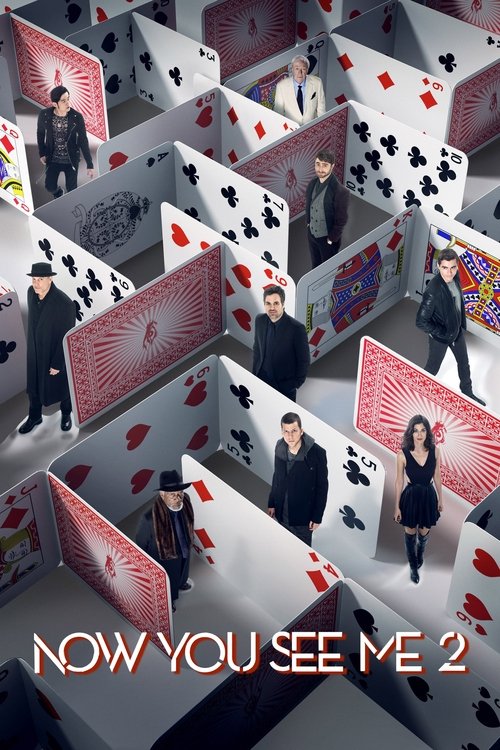
Now You See Me 2 (2016)
Directed by Jon M. Chu
No · Ultra Based
How we score movies →Consciousness Markers
Lizzy Caplan joins the ensemble as the new female member of the Horsemen, and the cast includes actors of various ethnic backgrounds. However, this diversity is incidental to the plot rather than deliberate representation.
Lizzy Caplan's character is presented as capable and central to the heist, though the film makes no particular effort to emphasize feminist perspectives or challenge gender dynamics.
The heist targets a technology corporation, but the critique is superficial and played for spectacle rather than as genuine social commentary.
No LGBTQ+ themes, characters, or subtext are present in the film.
While the cast includes actors of color, the film contains no meaningful exploration of race or racial themes.
Climate change and environmental concerns are entirely absent from the narrative.
No themes of body positivity, body diversity, or challenges to conventional beauty standards are present.
No representation of or engagement with neurodivergence appears in the film.
The film contains no historical elements or revisionist reinterpretation of historical events.
The film makes no attempt to educate the audience or deliver moral lessons about social issues.


Synopsis
One year after outwitting the FBI and winning the public's adulation with their mind-bending spectacles, the Four Horsemen resurface only to find themselves face to face with a new enemy who enlists them to pull off their most dangerous heist yet.
Why it received this score
Now You See Me 2 is a heist thriller of such aggressive entertainment value that it has no time for anything resembling social consciousness. The film concerns itself entirely with elaborate magic tricks, impossible thefts, and the various contrivances necessary to move the plot forward. Lizzy Caplan joins the ensemble as a new member of the Four Horsemen, replacing a male character from the first installment, though the film treats this swap as a narrative convenience rather than a statement about representation. The cast is demographically diverse, but this diversity exists in service of the story, not as commentary upon it.
The film's sole engagement with anything approaching social critique involves technology companies and surveillance, but these elements exist purely for spectacle and plot mechanics. There is no sustained examination of power, no interrogation of systems, no attempt to make the audience reckon with anything beyond the immediate pleasure of watching skilled illusionists execute their tricks. The movie knows what it is and commits to that purpose with admirable focus. It grossed over three hundred million dollars worldwide, suggesting that audiences were satisfied with this bargain.
To score this film's social consciousness is to measure a ruler against a brick wall. The absence is complete and, given the film's genre and commercial intent, entirely unsurprising. We are watching entertainment, not provocation.
Analysis generated by our Consciousness Algorithm
Critic Reviews
“Director Jon M. Chu has a lighter touch than “Now You See Me” director Louis Leterrier. The latter’s “Transporter” pedigree made sure there was plenty of rugged action, but Chu’s résumé boasts “Jem and the Holograms,” “G.I. Joe: Retaliation,” and more than one film in the “Step Up” franchise. The man knows his cartoons, and that’s a good thing.”
“Now You See Me 2 is more like a giddy piece of cheese from the ’80s, a chance to spend two more hours with characters we like, doing variations on the things that made us like them in the first place. The revisit, in this case, is well-earned.”
“The heists are bigger, the illusions are flashier, and the pace is quicker. Even the cast is livelier and more fun. Perhaps best of all, the movie captures the first film’s twisty ability to twirl an audience around, so you’re never entirely sure what’s happened until everything is explained.”
“We used to watch movies and wonder “How did they do that?” The problem with Now You See Me 2 isn’t that we already know the answer, it’s that we’re not even inspired to ask the question.”