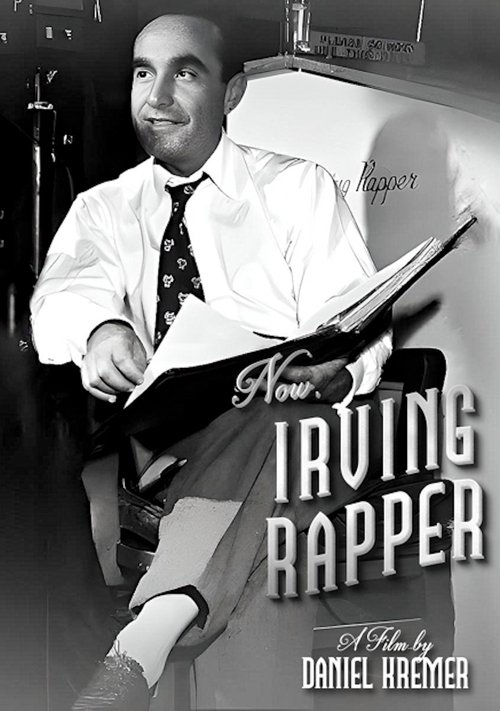
Now, Irving Rapper (2026)
Directed by Daniel Kremer
Yes · Woke
How we score movies →Consciousness Markers
The entire film is structured around Irving Rapper's hidden gay identity and the systematic erasure of queer artists from Hollywood history. LGBTQ+ identity and hidden queer history form the documentary's central thesis and analytical framework.
The documentary explicitly undertakes historical revision by repositioning Irving Rapper as a significant but forgotten figure and reinterpreting his artistic output through the lens of hidden queer identity. This revisionist project is central to the film's purpose.
As a documentary with interview subjects, archival material, and explicit thesis about hidden meanings in historical cinema, the film likely carries some expository weight, though the degree of didactic tone remains unclear from available information.
The documentary features interviews with film historians and critics, but primarily examines historical figures and archival material rather than contemporary casting decisions. Representation is not a primary concern of the film's structure.
While Rapper directed many 'women's pictures' and collaborated extensively with Bette Davis, the documentary's focus on his sexuality rather than gender analysis or feminist themes suggests this marker receives tangential treatment at best.
The film mentions Rapper's conflicts with Warner Bros. studio executives over script selection and his multiple suspensions for refusing assignments, suggesting some critique of studio system power, but this remains secondary to identity-focused analysis.
No evidence from available materials suggests the documentary engages substantially with questions of race, racial representation in Old Hollywood, or racial politics. This marker appears largely absent from the film's analytical framework.
No indication from available materials that the documentary engages with body positivity, body diversity, or related contemporary concerns. This marker appears absent from the film's scope.
Nothing in the available information suggests the documentary addresses neurodivergence, autism, ADHD, or related neurodiversity concerns. This marker is essentially absent.
A documentary about a mid-century Hollywood director contains no apparent environmental or climate-related content. This marker is completely absent.
Synopsis
Irving Rapper is, in many ways, Hollywood's forgotten man. After getting his start as a "dialogue director" at Warner Bros. in the mid 30's, he became synonymous with the studio's "women's pictures" and rose in prominence as one of Bette Davis's most consistent collaborators, including on her biggest commercial success, Now Voyager (1942). He was a rebel who led the studio in suspensions for chronically refusing to direct the scripts handed to him by the brass, waiting instead for material that better suited his interests and thematic preoccupations. He was also one in a secretive fraternity of gay directors who had to conceal their identities and shield their private lives from potential public ruination. Daniel Kremer takes you through an unexamined and misunderstood life of a man of great artistic inclination who expressed his innermost yearnings covertly through his work in motion pictures.
Why it received this score
Daniel Kremer's documentary arrives as a belated correction to the historical record, positioning Irving Rapper's life as a text to be deciphered for its hidden queer meanings. The film takes seriously the proposition that Hollywood's closeted gay directors were forced to channel their authentic selves into coded artistic expression, a thesis that carries weight in contemporary cultural discourse. By excavating Rapper's biography, the documentary suggests that heteronormative institutional power structures systematically erased queer artists from history, and that recovery of their stories constitutes a form of justice.
The film's approach is historical rather than polemical, which provides it with a certain intellectual credibility even as it operates within deeply progressive framings of sexuality and artistic authenticity. We are asked to view Rapper's life through the lens of systemic oppression and forced concealment, with his artistic output read as symptomatic expression of a suppressed self. The documentary's investment in LGBTQ+ historical consciousness is genuine and sustained, though one might note that the film's framing of closeted artists as tragic figures expressing "innermost yearnings covertly" reflects contemporary sensibilities about identity disclosure rather than necessarily capturing Rapper's own sense of his life and work.
The documentary does not extend its progressive analysis much beyond sexual identity. Questions of class consciousness, labor exploitation in the studio system, or the mechanics of studio power receive less attention than the gay subtext hunting that dominates the project. In this sense, the film represents a particular species of cultural recovery work, one that centers LGBTQ+ identity as the primary lens through which historical understanding should be organized.
Analysis generated by our Consciousness Algorithm