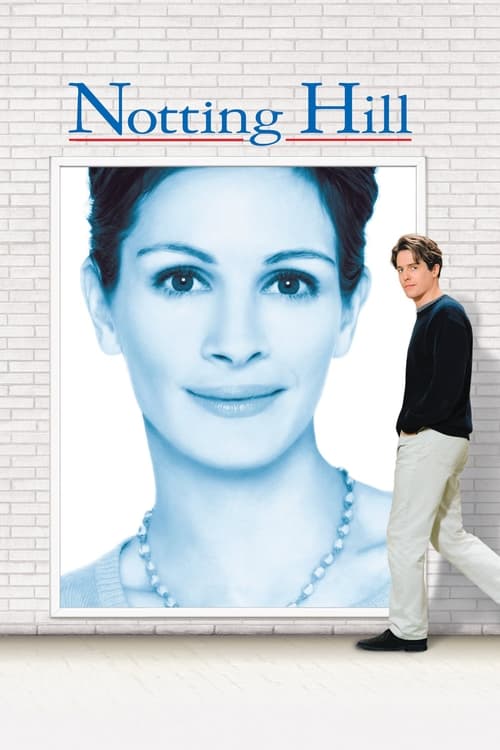
Notting Hill (1999)
Directed by Roger Michell
No · Ultra Based
How we score movies →Consciousness Markers
The female lead is a successful actress, but the narrative arc culminates in her choosing love over career. Standard late-1990s romantic comedy feminism that ultimately centers male perspective.
The cast is predominantly white British actors in a real neighborhood with significant diversity. Minor characters of color exist without agency or development. No meaningful effort toward inclusive casting.
The film occasionally indulges in heavy-handed moments about celebrity and fame, but overall avoids preachy messaging. Mostly light in tone, though some scenes feel preachy about media intrusion.
One supporting character appears to be gay, treated as comic relief with minimal dimension. No serious engagement with LGBTQ+ themes or representation beyond tokenism.
The film presents capitalism and celebrity culture as charming rather than problematic. Wealth and fame are treated as desirable and unproblematic. No critique of economic systems.
No acknowledgment of race, racism, or racial difference. The film exists in a colorblind bubble where London's racial and cultural complexity is entirely absent.
Standard late-1990s presentation of conventionally attractive bodies as the default. No meaningful engagement with body diversity or acceptance.
Zero engagement with environmental themes or climate consciousness. The film shows no awareness of ecological concerns whatsoever.
No representation of neurodivergent characters or any engagement with disability, mental health, or neurodiversity.
A contemporary romantic comedy with no historical setting or pretensions. No revisionist historical narratives present.


Synopsis
London bookstore owner William Thacker's quiet life turns upside down when a chance encounter with famous actress Anna Scott sparks an unlikely romance challenged by their vastly different worlds.
Why it received this score
Notting Hill presents itself as a charming romantic comedy about unlikely love in the heart of London, yet beneath its whimsical exterior lurks a film almost entirely indifferent to the social preoccupations of our contemporary moment. The narrative centers on the romance between a bookstore owner and a famous actress, a premise that seems deliberately designed to sidestep any meaningful engagement with the world around it. Roger Michell's film treats London as a quaint backdrop rather than a living, complex city.
The casting reflects the comfortable homogeneity of late-1990s British cinema. The ensemble consists almost entirely of white British actors in a neighborhood that, even in 1999, was considerably more diverse. The film's treatment of its few non-white characters is notable primarily for their absence from meaningful scenes. There is no engagement with feminist themes beyond the standard romantic comedy trope of the successful woman learning to prioritize love. The script shows no interest in disability representation, queer narratives, or any examination of economic inequality despite being set in one of London's most economically stratified neighborhoods. The film's approach to capitalism is one of gentle acceptance, never questioning the systems that produce both poverty and celebrity.
Notting Hill offers escapism, a film perfectly calibrated for 1999 audiences seeking romance without complication. By contemporary standards, it reads as a museum piece, quaint in its obliviousness. This is not a condemnation of the film's artistic merit, which succeeds admirably at what it attempts. Rather, it is an observation that the film was made in a different cultural moment, one before the markers of contemporary social consciousness became standard expectations. Its low score reflects not artistic failure but rather its profound disconnection from the cultural imperatives that would come to define the 2020s.
Analysis generated by our Consciousness Algorithm
Critic Reviews
“The overall result is a romantic comedy that indulges fantasies, calms insecurities (can an ordinary bloke stack up?), and breaks and mends hearts with surgical precision.”
“It comes as a bonus that this romantic comedy is one of the rare pictures of its type that actually is about something -- the double-edged sword of celebrity.”
“It's pure fluff, but as irresistible as cotton candy.”
“It's an English movie doing its best to masquerade as the shallowest kind of Hollywood romantic comedy, as if somewhere along the way someone had made a calculated supposition that would be the only kind of comedy American audiences would buy.”