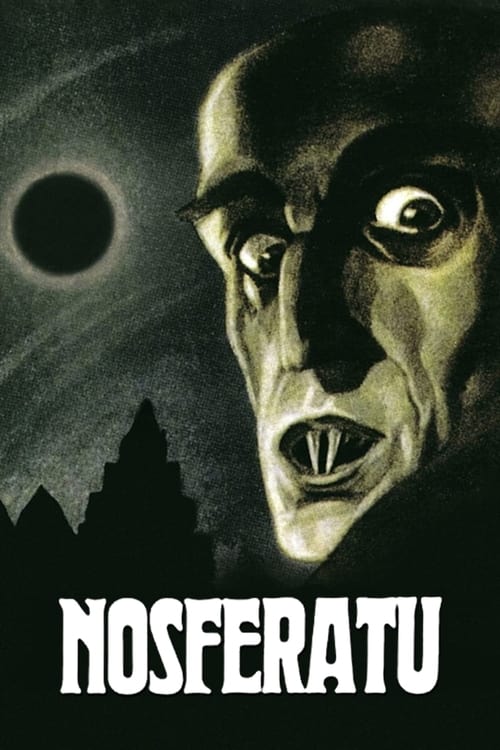
Nosferatu (1922)
Directed by F. W. Murnau
No — Nosferatu is not woke, scoring 5 out of 100 on our wokeness meter.
F. W. Murnau's Nosferatu is a silent German Expressionist vampire film from 1922, and it arrives from a cultural universe that predates the modern vocabulary of social consciousness.
Consciousness Markers
Ellen's self-sacrifice drives the climax, but it is framed through Victorian tropes of female purity and martyrdom rather than any modern feminist agency.
The cast is entirely white German actors of the silent era, with no diversity casting of any kind.
No LGBTQ+ themes or characters appear in the film; the director's personal life is not reflected on screen.
The film's racialized imagery (Orlok's caricatured features, the plague-bearing rats) has been read as antisemitic coding, which is the opposite of progressive racial consciousness.
The plague and rats are supernatural and wartime motifs, not ecological or climate commentary.
Orlok is an aristocrat and the plot involves real estate transactions, but the film offers no critique of capital or class.
No body-positive themes or messaging of any kind.
Knock's madness and Ellen's sleepwalking are gothic horror devices, not depictions of neurodivergence.
A fictional vampire tale with no engagement with historical revisionism.
A silent Expressionist horror film that tells its story through imagery, with no didactic or preachy dialogue.
Why it received this score
F. W. Murnau's Nosferatu is a silent German Expressionist vampire film from 1922, and it arrives from a cultural universe that predates the modern vocabulary of social consciousness. The cast is entirely white German actors of the silent era. Count Orlok's hooked nose, clawed hands, and association with rats have been read as antisemitic coding, which places the film at odds with progressive racial awareness. Murnau's personal life has prompted speculation, but nothing LGBTQ+ appears on screen. The plague is supernatural and rooted in wartime dread, not an ecological parable. The rats are not a climate crisis.
The film offers no critique of capital, though Orlok is an aristocrat and the plot turns on real estate deeds. It has no body-positive message. Knock's madness and Ellen's sleepwalking are gothic devices, not depictions of neurodivergence. No revisionist history is attempted. No lectures are delivered. Silent Expressionist imagery carries the story, and the intertitles do not sermonize. The only element with any progressive pulse is Ellen's self-sacrifice. She learns that a pure-hearted woman can hold the vampire until dawn by offering her blood of her own free will. She does so, and the climax belongs to her. Yet the gesture is framed through Victorian purity and martyrdom, not modern feminist agency. It is a faint signal, barely registering on our instruments.
Nosferatu remains an influential masterpiece of horror, and its importance is not in question. Importance and moral seriousness are not the same as contemporary cultural awareness. This is an unauthorized adaptation of Dracula, a dream of plague and predation, and it does not diversify, revise, or sermonize. It simply terrifies. Our classification finds the vintage culturally inert by modern standards, save for one antiquated sacrificial flourish. The sommelier swirls the glass, notes the dust, and sets it back on the shelf. The cellar is cold. The bottle is old. The sought-after vintage is not here.
Analysis generated by our Consciousness Algorithm


Synopsis
The mysterious Count Orlok summons a happily married real estate agent to his castle, located up in the Transylvanian mountains, to finalise a terrifying deal.
Questions about Nosferatu
Is Nosferatu woke?
No — Nosferatu is not woke, scoring 5 out of 100 on our wokeness meter. That earns it a verdict of Ultra Based.
Does Nosferatu have any woke elements?
Very few. None of the 10 markers reaches 30, the level where a marker counts as present; the highest is Feminist Agenda at 8.
How is the Woke Score calculated?
An AI-assisted process researches the film and its reception, scores it 0–100 on ten markers, then combines those into one 0–100 Woke Score. It measures a specific set of 2020s cultural themes, not film quality.