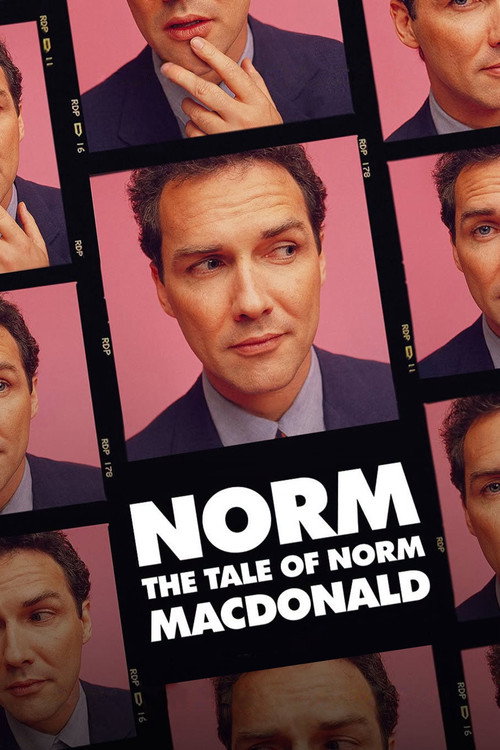
Is Norm: The Tale of Norm Macdonald (2026) Woke?
Norm: The Tale of Norm Macdonald · 2026 · Directed by Judd Apatow
Woke Score
CriticCritic Score
Ultra Based
Critics rated this 77 points above its woke score. Among Ultra Based films, this critic score ranks #336 of 1501.
Answer: No
Woke Score 4/100 · Verdict: Ultra Based
Strongest markers: Feminist Agenda (5) · Racial Consciousness (5)
Representation Casting
Score: 0/100
This is an archival documentary. The cast is assembled from historical footage of people who actually knew Norm Macdonald. No one was cast to satisfy a demographic checklist.
LGBTQ+ Themes
Score: 0/100
The film reportedly addresses Macdonald's gay jokes as part of his taboo-pushing comedy. This is coverage of controversy, not celebration or consciousness-raising, and registers no meaningful score here.
Feminist Agenda
Score: 5/100
The documentary covers Macdonald's 2018 defense of Roseanne Barr and Louis C.K. during the height of #MeToo, including the subsequent backlash. The framing is observational rather than corrective, but the material is present.
Racial Consciousness
Score: 5/100
The OJ Simpson firing is a central chapter of the film, but the documentary frames it as a story about NBC corporate cowardice versus Macdonald's stubborn integrity, not as an occasion for racial analysis or commentary.
Climate Crusade
Score: 0/100
No evidence of climate themes in a documentary about a deadpan stand-up comedian who died in 2021.
Eat the Rich
Score: 0/100
No anti-capitalist framing detected. Macdonald's anti-establishment comedy was philosophical and absurdist, not economic.
Body Positivity
Score: 0/100
No evidence of body positivity themes in the film or its reception.
Neurodivergence
Score: 0/100
No evidence of neurodivergence themes or framing in the documentary.
Revisionist History
Score: 0/100
The documentary actively resists revisionism. Critics note that Apatow avoids applying modern ideological lenses to Macdonald's life and career, letting the archival record speak for itself.
Lecture Energy
Score: 0/100
The film scores a historic zero here. It is a documentary about a man whose entire artistic project was the destruction of sincerity and moral instruction. Any lecture energy would have been a betrayal of the subject.


Synopsis
Go down a wormhole in this documentary on master of deadpan humor Norm Macdonald, whose life and career were uncompromising yet full of contradictions.
Why it received this score
There is a certain irony in running Norm Macdonald through a wokeness-scoring apparatus. He would have appreciated it enormously, told you so with complete sincerity, and meant absolutely nothing by it. Judd Apatow, a director not previously known for restraint in the face of an opportunity to signal cultural virtue, has here made a documentary that largely resists the temptation to posthumously rehabilitate, contextualize, or apologize for its subject. This is either a great act of artistic fidelity or a great accident. The research does not clarify which.
The film is constructed entirely from archival footage, home video, and clips sourced from the vast online archive of Macdonald's television appearances, stand-up recordings, and social media presence. This format, sometimes called a "desktop documentary," means that no living person sat down to offer a carefully considered 2026 framing of Macdonald's legacy. The #MeToo controversies are present. The OJ Simpson firing is present. The gay jokes are present. None of them are resolved into a lesson. For a documentary about a comedian whose central artistic commitment was the refusal to let the audience feel smart for understanding the joke, this is the correct approach. It is also, in the current cultural climate, almost radical.
The score here represents a kind of floor. A documentary subject who defended Louis C.K., told gay jokes without apology, and fabricated his own biography to confound interviewers does not typically generate progressive social consciousness scores. Apatow, to his considerable credit, does not try to make him generate them retroactively. The result is a film that scores lower on this instrument than almost any documentary made in 2026 could reasonably be expected to. Norm Macdonald would have found that very funny, and then denied finding it funny at all.
Analysis generated by our Consciousness Algorithm
Critic Reviews
“After all those decades of Macdonald mastering the cynical wisecracking persona, it’s lovely to see he was also a man of keen wisdom and a huge heart.”
“Maybe the gem of the entire film is the video of his last Letterman appearance. Not a guy to wear his emotions on his sleeve, Norm did just that, and it is legitimately heart-breaking.”
“Norm: The Tale of Norm Macdonald is rooted in what a beloved comedian Norm MacDonald was, and still is. ”
“Macdonald the joker, wit, provocateur and poseur remains an inscrutable figure even in death — unknowable.”
Related rankings
Consciousness Markers
This is an archival documentary. The cast is assembled from historical footage of people who actually knew Norm Macdonald. No one was cast to satisfy a demographic checklist.
The film reportedly addresses Macdonald's gay jokes as part of his taboo-pushing comedy. This is coverage of controversy, not celebration or consciousness-raising, and registers no meaningful score here.
The documentary covers Macdonald's 2018 defense of Roseanne Barr and Louis C.K. during the height of #MeToo, including the subsequent backlash. The framing is observational rather than corrective, but the material is present.
The OJ Simpson firing is a central chapter of the film, but the documentary frames it as a story about NBC corporate cowardice versus Macdonald's stubborn integrity, not as an occasion for racial analysis or commentary.
No evidence of climate themes in a documentary about a deadpan stand-up comedian who died in 2021.
No anti-capitalist framing detected. Macdonald's anti-establishment comedy was philosophical and absurdist, not economic.
No evidence of body positivity themes in the film or its reception.
No evidence of neurodivergence themes or framing in the documentary.
The documentary actively resists revisionism. Critics note that Apatow avoids applying modern ideological lenses to Macdonald's life and career, letting the archival record speak for itself.
The film scores a historic zero here. It is a documentary about a man whose entire artistic project was the destruction of sincerity and moral instruction. Any lecture energy would have been a betrayal of the subject.