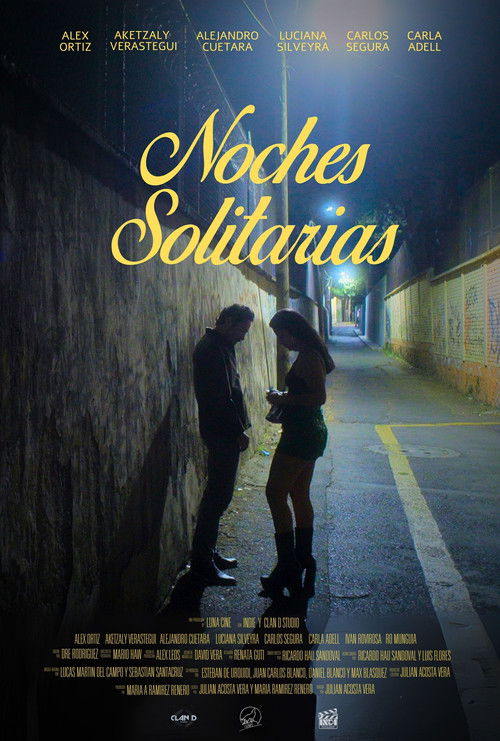
Noches Solitarias (2026)
Directed by Julián Acosta Vera
No · Ultra Based
How we score movies →Consciousness Markers
Class disparity is the film's central dramatic engine: a wealthy teenager and a homeless woman navigate a romance across a sharp economic divide. The commentary remains romantic in register, stopping well short of polemic.
The film is a Mexican production with an entirely Mexican cast and crew, which is simply the natural composition of a Mexican film. No self-conscious diversity signaling is evident.
The film gestures at social commentary on class and conformity, but critics note its philosophical ambitions remain surface-level. The sermonizing impulse is present but largely undeveloped.
No LGBTQ+ themes, characters, or commentary are present in any available source.
No feminist framing is applied to the female lead or the story's dynamics. Lorena's circumstances are treated as human rather than gendered grievance.
Race is not a lens through which the film examines its characters or their conflict. No evidence of racial consciousness framing.
No climate or environmental themes are present.
No body positivity themes or messaging are present.
No neurodivergent characters or related themes are present.
The film is a contemporary romantic drama with no historical revisionism.
Synopsis
An 18-year-old from a privileged family meets Lorena, a homeless woman living on the streets of Mexico City. Their connection explores vulnerability, desire, and courage amid social hierarchies and expectations.
Why it received this score
A young Mexican filmmaker's debut feature arrives carrying the full weight of its premise: a wealthy 18-year-old and a homeless woman find each other on the streets of Mexico City, and the audience is invited to contemplate what this means. Julián Acosta Vera, born in the year 2000 and therefore technically a person of the 21st century, has made a film that is primarily interested in desire and vulnerability rather than in making sure we have understood the correct lesson about inequality. This is, by current standards, a notable act of restraint.
The class dynamics are present and accounted for. Andrés has money; Lorena does not. The film acknowledges this gap with the frequency appropriate to a story where it is, in fact, the entire point. Critics have noted that the film presents "interesting contrasts between wealth and survival without digging as deep as it could," which is the polite critical way of saying the film had the good sense to be a romance instead of a sociology lecture. Alex Ortiz and Aketzaly Verástegui bring enough vulnerability to their performances that the social scaffolding recedes, leaving two people in a city at night, which is what the title promised.
The film's social consciousness is of the old-fashioned romantic variety: the idea that human connection does not respect economic categories. This is a theme as old as literature itself, predating the specific cultural moment that would have required Andrés to also be questioning his relationship with capital on a structural level. Luna Cine has produced a film that uses class as texture rather than as argument. We have seen worse choices made.
Analysis generated by our Consciousness Algorithm