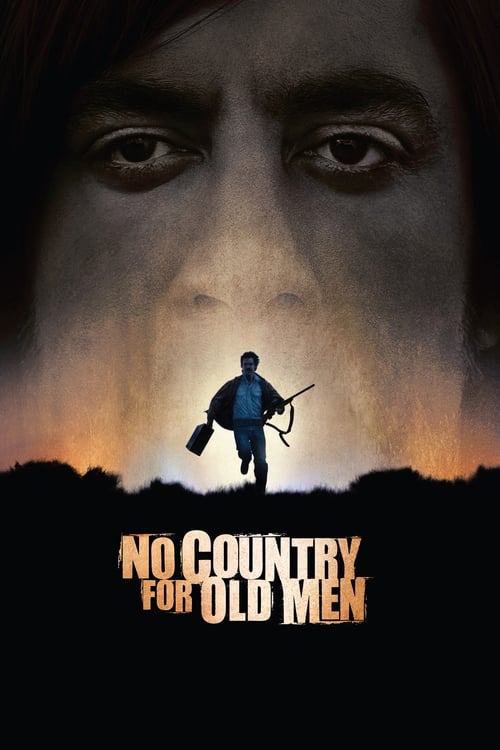
No Country for Old Men (2007)
Directed by Joel Coen
No · Ultra Based
How we score movies →Consciousness Markers
The cast is predominantly male with minimal female presence. No intentional diverse casting is evident.
No LGBTQ+ representation, characters, or themes appear in the film.
The narrative centers entirely on male characters and their violent conflicts, with women largely absent from the story.
Despite the border setting, the film engages in no progressive racial commentary or consciousness about border politics or systemic racial issues.
No environmental themes, climate messaging, or ecological consciousness appears in the film.
While the plot involves violence around money, the film offers no systemic critique of capitalism or advocacy for economic alternatives.
No body positivity themes or representation appear in the film.
No representation of neurodivergence or engagement with neurodivergent characters or themes.
The film is a contemporary crime story that does not reinterpret historical events or narratives.
Despite its philosophical depth, the film avoids lecturing about social issues or progressive causes, maintaining deliberate minimalism.


Synopsis
Llewelyn Moss stumbles upon dead bodies, $2 million and a hoard of heroin in a Texas desert, but methodical killer Anton Chigurh comes looking for it, with local sheriff Ed Tom Bell hot on his trail. The roles of prey and predator blur as the violent pursuit of money and justice collide.
Why it received this score
The Coen Brothers' adaptation of Cormac McCarthy's novel presents a world almost entirely devoid of progressive consciousness. Set in a border region during a drug war, the film concerns itself with three men engaged in a violent chase for money and power, rendered in McCarthy's deterministic worldview where fate and chance govern all outcomes. No female characters occupy meaningful narrative space, no racial commentary accompanies the border setting, and the film's philosophical framework derives entirely from classical nihilism rather than contemporary social consciousness.
The film's thematic concerns are those of classical tragedy and noir: the inevitability of violence, the moral rot beneath American capitalism, and the inadequacy of law enforcement to contain chaos. These are serious and enduring topics, but they are not progressive in the 2020s sense. The film does not interrogate systemic inequality, does not advocate for alternative social arrangements, and does not center the experiences of marginalized communities. It is instead a meditation on masculine futility and the collision between old order and new barbarism.
This is entirely a film of its era, 2007, when such philosophical pessimism could be expressed without contemporary expectations of social consciousness. It remains a masterwork of cinema by conventional standards. Yet by the metrics of modern progressive cultural markers, it registers as a complete null.
Analysis generated by our Consciousness Algorithm
Critic Reviews
“Joel and Ethan Coen's adaptation of Cormac McCarthy's 2005 novel is an indisputably great movie, at this point the year's very best.”
“A scorching blast of tense genre filmmaking shot through with rich veins of melancholy, down-home philosophy and dark, dark humor, No Country for Old Men reps a superior match of source material and filmmaking talent.”
“The most measured, classical film of their (Coen Brothers) 23-year career, and maybe the best.”
“A very well-made genre exercise, but I can’t understand why it’s been accorded so much importance, unless it’s because it strokes some ideological impulse.”