Night King (2026)
Directed by Jack Ng Wai-Lun
No · Based
How we score movies →Consciousness Markers
The ensemble cast includes women in significant roles, particularly Sammi Cheng as the antagonistic CEO, but representation appears incidental rather than intentional. Gender balance exists in the cast without evidence of deliberate diversification efforts.
Female characters exist and some wield power and agency, but the film does not appear to advance any feminist agenda. The ex-wife's corporate ruthlessness is presented as character trait rather than as commentary on gender, capitalism, or power dynamics.
The film depicts capitalist takeover and business consolidation as destructive forces, but treats this as inevitable decline rather than as systemic critique. Sympathy flows toward the displaced manager, not toward workers or systemic change.
The film centers on Hong Kong identity and cultural preservation, but this emerges as nostalgic cultural nationalism rather than as progressive racial consciousness. No evidence of contemporary anti-racism themes.
While the film functions as cultural commentary on Hong Kong's decline, it appears to deliver this message through narrative and atmosphere rather than through explicit preachiness. The approach is elegiac rather than pedagogical.
The film is set in 2012 and engages with Hong Kong's recent past, but does so through nostalgia and affection rather than through revisionist reinterpretation. Historical consciousness remains largely uncritical.
No apparent LGBTQ+ themes, representation, or content in the film. The narrative centers entirely on heterosexual relationship conflict and business drama.
Climate themes are entirely absent from a film focused on urban nightlife and business conflict. No environmental consciousness is evident.
No evidence of body positivity themes or representation in a film centered on glamorous nightlife. Standard aesthetic conventions appear to govern casting and presentation.
No representation or thematic engagement with neurodivergence. The film contains no apparent characters with disabilities or neurodivergent traits.
Synopsis
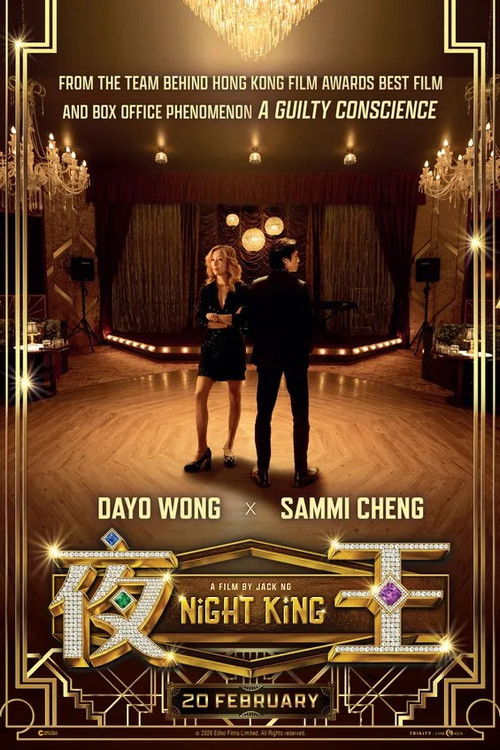
The once-glamourous Club EJ suddenly experiences a hostile takeover. Much like the nightclub industry, the glory days are over for the club's manager, despite having stood tall in East Tsim Sha Tsui for decades. To make matters worse, the new CEO is none other than his cutthroat ex-wife.
Why it received this score
Night King arrives as a nostalgic elegy for Hong Kong's vanished nightclub culture, a form of cultural archaeology conducted by director Jack Ng with the melancholy of a man cataloguing artifacts in a museum no one visits anymore. The film centers on the conflict between manager Foon and his ex-wife Madame V, who orchestrates the hostile takeover of Club EJ. This provides the film with its most substantive engagement with gender dynamics, though the treatment remains comic rather than interrogative. The female antagonist is rendered as capable and ruthless, which reads as mild acknowledgment of female agency without the film bothering to complicate this into anything resembling genuine social commentary.
The nightclub setting inevitably foregrounds the hostess industry, a profession that carries genuine historical and economic significance in Hong Kong's postwar development. Yet the film appears content to deploy these workers as supporting players in a nostalgic comedy about masculine loss and institutional decline. The narrative concern flows entirely toward the male manager's struggle to preserve his domain, not toward any examination of the labor conditions or social circumstances of the women who work there. This is storytelling that honors tradition by refusing to examine it with any critical distance.
The film's preoccupation with cultural and economic decline, with the nightclub serving as metaphor for Hong Kong cinema itself, is a perfectly legitimate artistic pursuit. But it is also entirely uninterested in progressive social consciousness. The film maintains a posture of affectionate nostalgia for an era when things were different and, implicitly, better. It is a work of mourning rather than reform, which means it operates at odds with contemporary progressive sensibilities. This is not a failing in artistic terms. It is simply a clarification of where the film's priorities lie.
Analysis generated by our Consciousness Algorithm
Critic Reviews
“While slightly disjointed and overlong, Night King delivers a fun blend of romance and nostalgic glamour set in Hong Kong's nightclub scene.”
“Director Jack Ng Wai-Lun and his co-writers craft an increasingly unfocused narrative whose third act has weak efforts at genre-hybridity.”
“Night King feels unfortunately retrograde in its parading of what the tabloids once called a bevy of beauties; they are only slightly individuated and mostly foils for catty comedy.”
“A glossy and energetic Lunar New Year hit, Night King blends neon-soaked nostalgia, sharp comedy, and emotional rivalry into a glamorous tale of survival in Hong Kong's fading nightclub scene.”