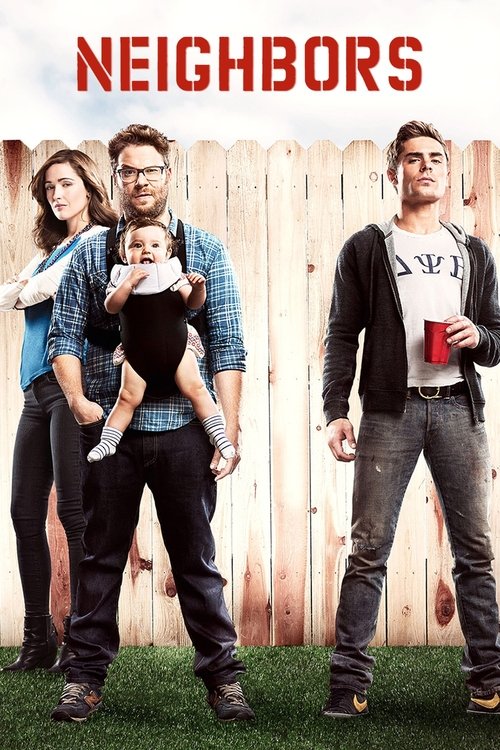
Neighbors (2014)
Directed by Nicholas Stoller
No · Ultra Based
How we score movies →Consciousness Markers
Rose Byrne is a co-lead rather than a supporting character, providing some gender representation in a male-dominated comedy genre. However, this reflects comedic parity rather than conscious progressive casting.
Kelly participates equally in the conflict with the fraternity, but the film makes no effort to examine gender dynamics or power structures. This is comedic egalitarianism, not feminist consciousness.
No LGBTQ+ characters, themes, or representation present in the film.
The cast is predominantly white, and race is never addressed or acknowledged as a meaningful category in the film.
No engagement with climate, environmental concerns, or ecological awareness.
No critique of capitalism, wealth, or economic systems. The film focuses on suburban property disputes.
The film relies on bodily humor and physical comedy without any commitment to body positivity messaging.
No representation of or engagement with neurodivergent characters or experiences.
Not a historical film. No attempt to reinterpret or recontextualize historical events.
The film contains no preachy or preachy moments. It avoids moral instruction in favor of pure comedy.


Synopsis
A couple with a newborn baby face unexpected difficulties after they are forced to live next to a fraternity house.
Why it received this score
Neighbors is a 2014 comedy that operates entirely outside the orbit of contemporary progressive consciousness. While the film features Rose Byrne as a genuine co-lead rather than a supporting romantic interest, this choice reflects standard comedic parity rather than any commitment to feminist examination. Kelly Radner participates equally in the escalating conflict with the fraternity next door, but the film treats this as a matter of comedic convenience, not social commentary. The humor derives from bodily functions, male aggression, and fraternity chaos played for laughs, with no attempt to interrogate the structures or power dynamics at play.
The cast is predominantly white, and their whiteness is never remarked upon or interrogated. There are no LGBTQ+ characters, no discussion of racial identity, no engagement with climate, capitalism, or neurodiversity. The film's universe is one of pure, consequence-free comedy in which parenthood is an inconvenience and suburban life is a setup for destruction. This is a comedy that could have been released in 2004 or 2024 without significant modification to its sensibilities.
The film's indifference to social consciousness is not a failing, merely an observation. It is competently made and commercially successful, operating within the parameters of mainstream comedy. Yet it bears no marks of the progressive cultural sensibilities that became increasingly visible in Hollywood by the late 2010s. It is culturally inert, committed only to the mechanics of comedy.
Analysis generated by our Consciousness Algorithm
Critic Reviews
“Not only is it uproariously funny and almost breathtakingly dirty, it is better written than it needs to be on a character level, delivering completely on its premise.”
“What makes Neighbors exceptional, rather than merely great, is its successful attempt to reinvent the studio comedy.”
“Neighbors is one of the funniest, most visually inventive studio comedies in recent memory.”
“Neighbors stakes its claim in suburban-property cliches. Given the dull, stale results, maybe the end of the world was a better fit. ”