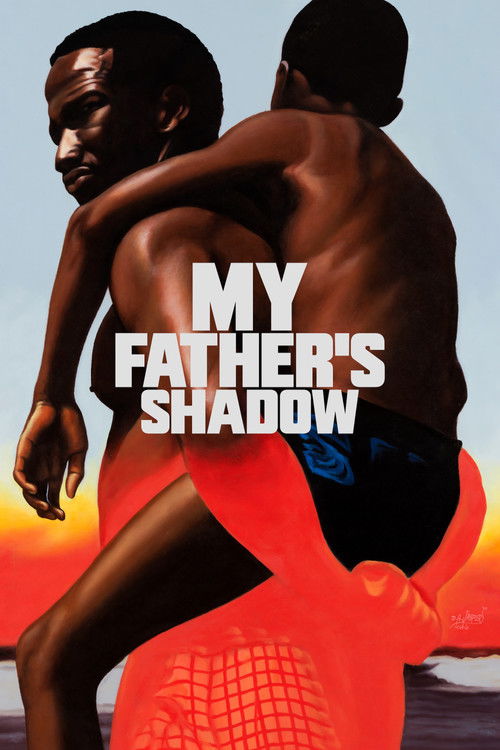
My Father's Shadow (2025)
Directed by Akinola Davies Jr.
No · Ultra Based
How we score movies →Consciousness Markers
The film features an all-Nigerian cast in a Nigerian production, which is narratively appropriate rather than progressively intentional. The casting reflects the story's setting without apparent ideological motivation.
The film depicts Black Nigerian life but does not present this through a framework of racial consciousness or commentary. It simply shows the story as it occurs within its cultural context.
While the film includes female characters, there is no evident feminist agenda or commentary. The narrative centers on male relationships and does not appear to foreground gender as a thematic concern.
The film maintains a restrained approach to its subject matter, prioritizing emotional and sensory experience over preachy instruction or thematic exposition.
While the father's economic struggles are depicted, the film does not mount a critique of capitalism or systemic economic inequality. These struggles are personal rather than ideological.
The film is set during the 1993 Nigerian election but appears to treat the historical moment as context rather than as material for revisionist reinterpretation or moral correction.
No LGBTQ+ themes or representation are evident in the narrative. The film is concerned with family dynamics and personal relationships within heteronormative structures.
No climate-related themes or environmental consciousness appear in the film's narrative or apparent thematic concerns.
No body positivity messaging or commentary on physical appearance and acceptance is present in the narrative.
No representation of or commentary on neurodivergent experiences appears in the film.
Synopsis
Two young brothers explore Lagos with their estranged father during the 1993 Nigerian election crisis, witnessing both the city's magnitude and their father's daily struggles as political unrest threatens their journey home.
Why it received this score
My Father's Shadow emerges as a meditation on family, historical rupture, and the specific texture of Lagos in a moment of political crisis. The film's primary achievement lies in its commitment to depicting Nigerian life with the kind of naturalistic attention that cinema has historically reserved for Western narratives. Its cultural particularity is not deployed as a badge of progressive sentiment but as the simple, incontrovertible fact of where the story occurs. The cast consists entirely of Nigerian actors, a choice so ordinary in a Nigerian production that it requires no special commendation, yet the film's visibility at international festivals seems to have generated a certain amount of discourse around representation by its mere existence.
The narrative itself is fundamentally a family drama, concerned with the estrangement between father and sons, the city as a character unto itself, and the way children process adult failure during moments of collective instability. Political unrest functions as backdrop rather than thesis statement. The film does not appear to be making an argument about authoritarianism or democracy or the specific failures of Nigerian governance. It is interested in how these forces feel to a child. This restraint, this refusal to convert historical events into moral instruction, is perhaps what the film most resists from contemporary prestige cinema's tendency toward preachy social consciousness.
What emerges most clearly is a film preoccupied with memory, loss, and the texture of a particular place at a particular time. It is not hostile to progressive sensibilities, but neither does it subordinate its narrative to their service. The film succeeds or fails based on its cinematic intelligence and emotional truth, not based on the demographic composition of its cast or the political correctness of its historical context. In this regard, it represents something closer to cinema before the current taxonomy of cultural analysis became the primary lens through which films are evaluated.
Analysis generated by our Consciousness Algorithm
Critic Reviews
“It’s through the alchemy of cinema that the Davies brothers have carried out a resurrection of a soul now frozen intact on the screen.”
“My Father’s Shadow is a gem, a deeply felt memory piece and vibrant portrait of Nigeria in 1993.”
“The child’s eye view of a seismic time of political upheaval is not an entirely new storytelling approach, but Davies breathes fresh life into the device. ”
“Hope and fear are inextricably bound in Akinola Davies Jr.’s semi-autobiographical film.”