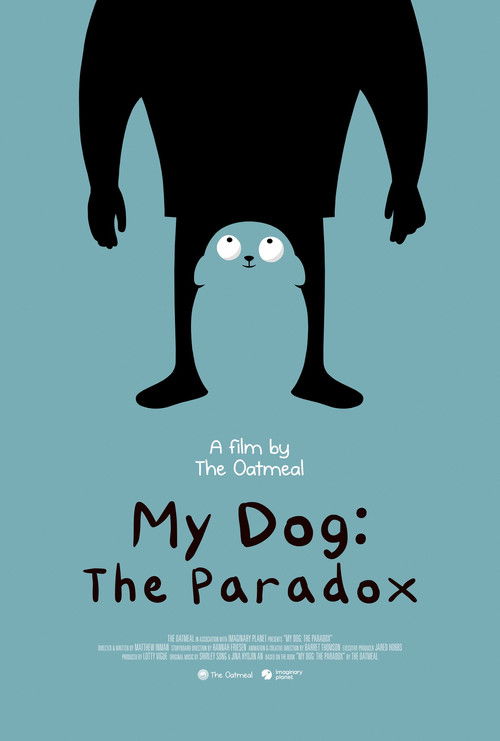
My Dog: The Paradox (2026)
Directed by Matthew Inman
No · Ultra Based
How we score movies →Consciousness Markers
The comic's entire premise revolves around Rambo's atypical behavioral patterns and strange habits. While not explicitly framed as neurodivergence, the film normalizes and celebrates non-standard cognition and behavior patterns.
The film celebrates the physical reality of the dog's body as it is, including the 'weird habits' that make Rambo unique. There is an implicit acceptance of bodily difference and non-normative behavior.
The film features no human characters with speaking roles, focusing instead on an anthropomorphic dog and the implied narrator. There is no opportunity for or demonstration of intentional casting diversity.
The film's humor occasionally touches on consumer culture and materialism as sources of absurdity, though this never develops into systematic critique. It remains observational rather than ideological.
The film centers on a male creator's relationship with a male dog. There are no discernible feminist themes or gender consciousness, though the work also does not actively contradict such perspectives.
The film maintains a light, humorous tone without attempting to educate or instruct the audience about social issues. It does not adopt a pedagogical stance, though its celebration of acceptance could be read as implicitly moral.
No LGBTQ+ themes, characters, or representation are evident in a film about a human and their dog. The work operates entirely outside this framework.
As an animated film about a dog and its owner, race is not addressed or relevant to the narrative. The work contains no racial commentary or awareness.
No environmental or climate themes appear in this personal comedy about pet ownership. The film does not engage with ecological concerns.
No historical claims or reinterpretations appear in this contemporary personal comedy. The film does not engage with history in any form.
Synopsis
This film is a celebration of the absurd, unconditional love between humans and their pets, equal parts hilarious and heartfelt.
Why it received this score
Matthew Inman's animated short film adaptation of his viral 2012 comic operates in the narrow bandwidth between genuine personal expression and the creeping cultural consciousness that defines contemporary entertainment. The film documents the relationship between Inman and his dog Rambo with the kind of observational humor that made the original comic a success, but arrives in 2026 as a product fundamentally shaped by the contemporary moment's sensibilities around authenticity and emotional vulnerability. What we have is a work that does not attempt to lecture us about representation or systemic injustice, yet somehow manages to reflect them anyway through its very existence as a meditation on unconditional acceptance and the paradox of animal companionship.
The film's restraint becomes its most interesting quality. Rather than weaponizing the pet-owner relationship as a metaphor for anything larger, it simply allows the relationship to exist as itself, which in 2026 reads as almost radical in its refusal to performatively align with any particular social framework. The humor remains rooted in the specific absurdities of Rambo's behavior and Inman's deadpan documentation of them, creating a space where the audience is invited to laugh at the animal rather than to contemplate what the animal represents. This is neither particularly progressive nor regressive, it simply is, which may be the most honest position a contemporary animated comedy can occupy.
The minimal cultural footprint of the film, combined with its celebration of human-animal bonds without ironic distance, places it in an awkward middle ground. It does not traffic in the explicit social markers that would elevate its cultural consciousness score, yet its very existence as a sincere, personal work released in the current media landscape suggests an implicit awareness of what audiences are hungry for after years of increasingly calculated entertainment. The film knows what it is and has made peace with it.
Analysis generated by our Consciousness Algorithm