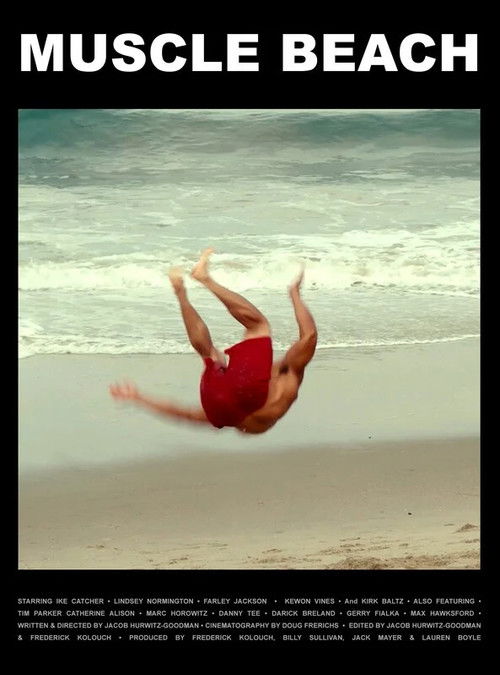
Muscle Beach (2026)
Directed by Jacob Hurwitz-Goodman
No · Based
How we score movies →Consciousness Markers
A film centered on bodybuilders at Muscle Beach necessarily engages with body culture, but the tone is dark and atmospheric rather than celebratory. The washed-up bodybuilder protagonist suggests ambivalence toward the subculture itself.
The film features a diverse ensemble of Venice Beach characters, including real bodybuilder Ike Catcher in a lead role. However, casting appears driven by authenticity and location rather than conscious representation strategy.
The Venice Beach setting naturally includes diverse characters within the ensemble. However, there is no indication the film centers racial consciousness as a thematic preoccupation.
An atmospheric character study set across a single day has inherent potential for expository dialogue, but nothing suggests heavy-handed moralizing or preachy messaging in the available descriptions.
Alice, the ex-partner left managing an infant, appears as a peripheral supporting character. Her situation could invite feminist analysis but the film does not foreground gender critique.
The protagonist's fall from Hollywood fame suggests implicit critique of celebrity and the entertainment industry, but this emerges from character motivation rather than systemic analysis.
No evident LGBTQ+ themes or representation in the available plot and character information. Male friendship and abandonment are central, but not framed as queer narratives.
While Venice Beach has a real cultural history, the film appears to be a contemporary narrative set in the location rather than an attempt to reframe or revise historical narratives.
No evidence of climate-related themes or messaging in this contemporary noir-adjacent narrative set on the Venice Beach boardwalk.
No indicators of neurodivergent representation or thematic engagement with neurodiversity in the available information.
Synopsis
After soaring high and flaming out in Hollywood, Abe, a celebrated bodybuilder, returns home across the 405 to Venice Beach, where it all started. But Abe's beloved boardwalk feels different. There's a nasty bite to the sea breeze, a slew of unexplained overdoses putting the gym rats on edge, strange supernatural sightings on the pier hinting at something primordial lurking beneath the surface of sun-dappled Venice. And Jay, his old lifting partner, his former roommate, the one person he truly abandoned in his pursuit of fame, has disappeared, leaving Alice, his ex, alone to take care of their infant son.
Why it received this score
Jacob Hurwitz-Goodman's debut narrative feature is a Venice Beach fever dream that seems almost aggressively indifferent to contemporary cultural moralizing. The film follows Abe through a single sweltering day as he searches for his vanished best friend Jay, navigating a rogues' gallery of local characters, each harboring secrets and theories about the disappearance. What emerges is less a social problem film than an atmospheric character study, one that treats its setting and inhabitants with the kind of morally neutral specificity that indie cinema occasionally still permits. The supernatural elements hint at something darker lurking beneath the sun-bleached optimism of the boardwalk itself, a primordial wrongness that no amount of progressive consciousness could address.
The film's engagement with body culture and masculine aspiration never quite crystallizes into explicit critique or celebration. Abe is a washed-up bodybuilder, yes, but the film's interest in him appears rooted in his particular psychological predicament rather than in making some broader statement about muscularity, performance, or the commodification of the male form. Lindsey Normington's presence as Alice, the ex-partner left managing an infant, could have been an opportunity for thematic heavy-lifting around gender and abandonment, but instead she remains a peripheral figure, a consequence of Abe's choices rather than a focal point for analysis. The real cultural work here is minimal.
What we have is a genre exercise at heart: a missing person mystery wrapped in Venice Beach local color, featuring a cast of Venice Beach denizens who seem to exist not because they represent some demographic balance but because they inhabit the location. Hurwitz-Goodman's previous work in documentary filmmaking and subculture observation appears to have taught him restraint. "Muscle Beach" is content to be a strange, moody narrative set in a real place with real people, making no particular claims about what that place or those people mean beyond themselves. In the current landscape, such refusal to editorialize reads almost as a radical act of artistic indifference.
Analysis generated by our Consciousness Algorithm