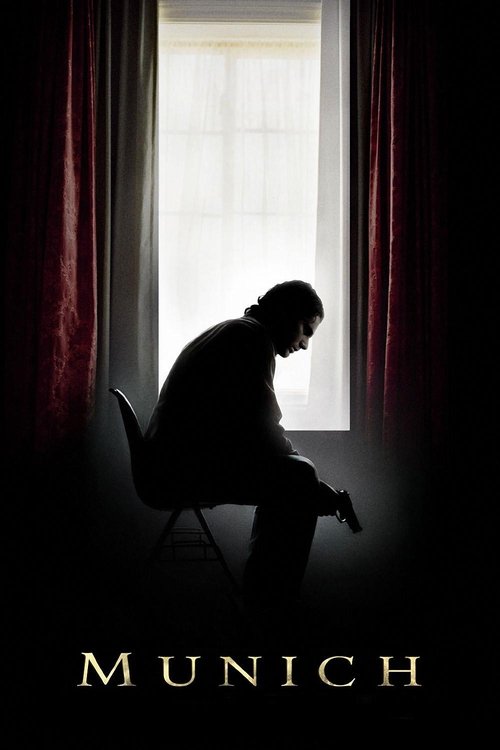
Munich (2005)
Directed by Steven Spielberg
No · Ultra Based
How we score movies →Consciousness Markers
The film presents moral ambiguity about Israeli assassination campaigns, complicating traditional heroic narratives, though this artistic complexity differs from progressive historical revisionism.
The film engages with Israeli-Palestinian conflict from a distinctly Israeli perspective, lacking the nuanced centering of Palestinian voices or explicit identity-conscious framing of modern progressive discourse.
The cast is predominantly white and male with minimal female presence. While Israeli and Palestinian characters appear, the representation is not notably diverse or conscious in a modern progressive sense.
Kushner's script includes philosophical dialogue about morality and consequences, but it remains relatively restrained rather than preachy.
Female characters appear only in supporting roles with minimal narrative agency or thematic importance.
No LGBTQ+ themes, characters, or representation evident in the film.
No environmental or climate-related themes present in the film.
The film contains no economic critique or anti-capitalist messaging.
No body positivity or related themes evident.
No representation of neurodivergent characters or themes.


Synopsis
During the 1972 Olympic Games in Munich, eleven Israeli athletes are taken hostage and murdered by a Palestinian terrorist group known as Black September. In retaliation, the Israeli government recruits a group of Mossad agents to track down and execute those responsible for the attack.
Why it received this score
Steven Spielberg's Munich occupies an awkward temporal position for this particular assessment. Released in 2005, it concerns itself with the moral weight of state violence and the corrosive effects of revenge, themes that predate the contemporary cultural frameworks we now apply. The film presents its Israeli protagonists with considerable moral ambiguity, complicating any simple heroic narrative, yet it does so through a lens of geopolitical philosophy rather than the identity-conscious progressive sensibility that defines the 2020s cultural moment.
The screenplay, co-written by Tony Kushner, carries traces of his intellectual rigor and engagement with moral complexity. However, the film's concerns are fundamentally about the mechanics of retaliation and the psychological toll of assassination, not about systemic representation or cultural awareness. The cast remains predominantly white and male. Palestinian characters exist largely as targets and abstractions rather than fully realized individuals with agency and voice. A 2005 film treating such subject matter with artistic seriousness was perhaps progressive for its era, but by contemporary standards of progressive sensibility, it reads as distant and structurally indifferent to the concerns that now animate cultural discourse.
What this analysis reveals is a film caught between two different modes of engagement with its material. It is neither a straightforward action thriller nor a genuine reckoning with the human cost of geopolitical violence to all parties involved. For our purposes, it registers as a thoughtful historical drama that predates the cultural vocabulary we now use to measure such things.
Analysis generated by our Consciousness Algorithm
Critic Reviews
“A superbly taut and well-made thriller that jumps from Geneva to Rome, from Paris to Beirut, from Athens to Brooklyn, each lethal assignment staged with a mastery Hitchcock might envy.”
“Munich, Steven Spielberg's spectacularly gripping and unsettling new movie, is a grave and haunted film, yet its power lies in its willingness to be a work of brutal excitement.”
“Masterful, atypically political - and flawlessly acted.”
“It's too turgid and redundant to have any real impact. As a thriller, it barely thrills; as a lecture, it has nothing new to say.”