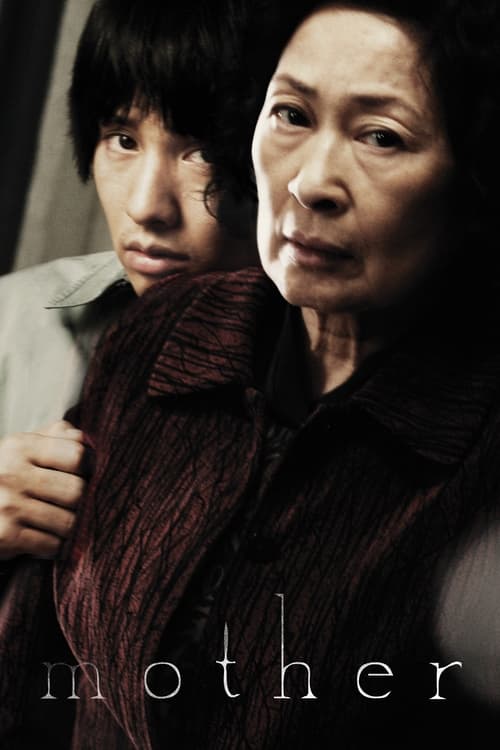
Mother (2009)
Directed by Bong Joon Ho
No · Ultra Based
How we score movies →Consciousness Markers
The protagonist is a complex female character who challenges idealized motherhood, but the film does not explicitly engage with feminist ideology or consciousness-raising about gender systems.
The film depicts class inequality and judicial corruption affecting the poor, but this operates as social realism rather than explicit anti-capitalist messaging.
The son is characterized as mentally challenged, but the film does not engage meaningfully with neurodivergence as a thematic concern or social justice issue.
The film maintains moral ambiguity and resists preachiness, though its exploration of systemic injustice carries implicit social commentary.
The film features a South Korean cast in a South Korean context with no evident deliberate project of diversified representation beyond naturalistic casting.
No LGBTQ themes or characters are present in the film.
The film contains no engagement with racial consciousness or racial justice themes.
Climate themes are entirely absent from this crime thriller.
Body positivity themes are not present in the film.
No revisionist historical narratives are present in this contemporary thriller.


Synopsis
A mother lives quietly with her son. One day, a girl is brutally killed, and the boy is charged with the murder. Now, it's his mother's mission to prove him innocent.
Why it received this score
Bong Joon-ho's "Mother" arrives as a defiantly unsentimental exploration of maternal love, a film that refuses the comfort of vindication narratives in favor of moral murk. The protagonist operates outside conventional sympathies, willing to bend truth and manipulate justice to protect her son. This complication of motherhood as an idealized social role carries some feminist complexity, though not in service of contemporary progressive frameworks. The film's interest in class and judicial corruption reads more as classical social realism than as deliberate cultural consciousness messaging.
The younger female characters in the narrative are subjected to violence and sexualization that serves plot mechanics rather than commentary. The film does not engage with representation casting as a deliberate project, nor does it mobilize LGBTQ themes, climate consciousness, or disability representation in any sustained way. What emerges instead is a morally austere thriller that treats its audience as sophisticated enough to recognize that justice systems fail the poor and that maternal devotion can corrupt judgment. These are serious observations, but they operate in a register that predates contemporary progressive cultural markers by a significant margin.
The film's cultural work consists primarily of deflating pieties rather than constructing new ones. It offers no lectures, no explicit consciousness-raising, no sense that the viewer requires instruction in proper thinking. This restraint, while admirably austere, places it squarely outside the contemporary sensibility. A film about systemic injustice and maternal sacrifice can be morally serious without being culturally progressive in the specific 2020s sense. "Mother" is precisely that: a masterwork of ambiguity that refuses to resolve into the comfortable ideological frameworks contemporary cinema increasingly offers.
Analysis generated by our Consciousness Algorithm
Critic Reviews
“An absolutely phenomenal film by the Korean director Bong Joon-ho.”
“Its combination of dazzling cinematic craft, psychological insight and black humor make this one of the year's moviegoing musts -- and even or especially at her most deranged, Kim Hye-ja's amazing mother is profoundly, passionately human.”
“Another must-see marvel of horror, comedy, and impeccable filmmaking by the Korean director Bong Joon-ho.”
“Though diligently paced and sharp to look at, the mysteries inside Mother are, finally, bloodless.”