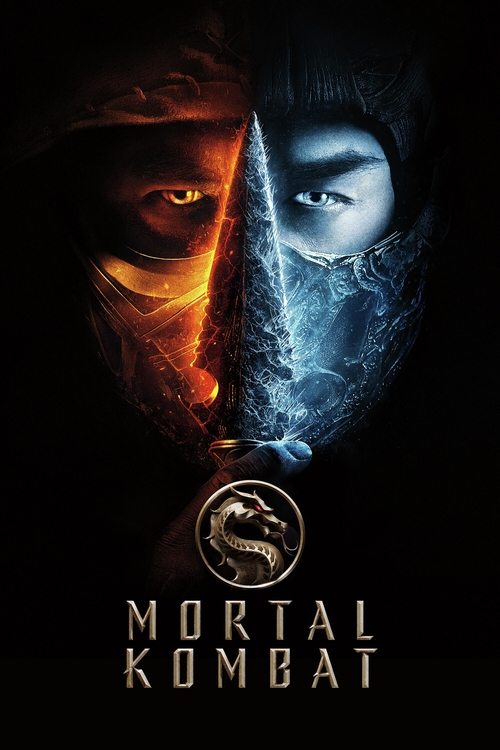
Mortal Kombat (2021)
Directed by Simon McQuoid
No · Ultra Based
How we score movies →Consciousness Markers
The film features a diverse ensemble cast including Asian, African American, and international actors, though this diversity appears more pragmatic than ideologically motivated. The inclusion of characters like Cole Young (Lewis Tan) and Jax (Mehcad Brooks) reflects contemporary casting practices without explicit thematic commentary.
Sonya Blade functions primarily as a warrior character without particular feminist framing. While she is competent and action-capable, the film does not interrogate gender dynamics or advance feminist commentary.
The film does not engage with racial consciousness or systemic racism. Characters of various racial backgrounds exist in the narrative without the film making any statement about race relations or racial injustice.
No LGBTQ+ representation or themes are present in the film. The plot contains no romantic subplots or character arcs that engage with sexual or gender identity.
There is no climate-related messaging or environmental consciousness present in the film. The plot concerns interdimensional conflict rather than environmental or ecological themes.
The film contains no critique of capitalism or wealth systems. The narrative does not interrogate economic structures or class relationships.
The film does not engage with body positivity or body diversity. All fighters are conventionally athletic and fit, with no representation of alternative body types.
There is no representation of neurodivergence or neurodivergent characters in the film. No characters are portrayed with autism, ADHD, or other forms of neurodivergence.
The film contains no revisionist history beyond its own invented mythological framework. It does not reinterpret real historical events through a contemporary lens.
The film contains no preachy messaging or lecture energy. It does not attempt to educate the audience about social justice issues or systemic problems.


Synopsis
Washed-up MMA fighter Cole Young, unaware of his heritage, and hunted by Emperor Shang Tsung's best warrior, Sub-Zero, seeks out and trains with Earth's greatest champions as he prepares to stand against the enemies of Outworld in a high stakes battle for the universe.
Why it received this score
The 2021 Mortal Kombat reboot presents a curious case study in contemporary action cinema, arriving at a moment when the franchise itself had become somewhat dormant in popular consciousness. The film exhibits what we might call a cautious approach to representation casting, with Lewis Tan as the newly created protagonist Cole Young (an original character, not from the game), alongside a multinational ensemble that includes Jessica McNamee, Ludi Lin, Tadanobu Asano, Joe Taslim, and Hiroyuki Sanada. This casting reflects a post-2015 sensibility toward diversity that appears almost obligatory rather than thematically integrated. The character of Sonya Blade, traditionally a blonde American soldier, remains blonde and American, suggesting no particular revisionist impulse in the adaptation. The film concerns itself primarily with martial arts spectacle and tournament mechanics rather than interrogating systems of power or social structures.
What becomes apparent through examination of the plot and character dynamics is a fundamental disinterest in progressive messaging of any kind. The narrative follows a straightforward hero's journey in which Cole Young discovers his birthright and trains to save the world from interdimensional invasion, a plot structure that contains no feminist commentary, no climate consciousness, no anti-capitalist critique, and no examination of neurodivergence or body diversity. The presence of characters from various ethnic backgrounds serves the practical purpose of filling out a large ensemble cast rather than making any statement about representation itself. There exists no LGBTQ+ content of note, no revisionist history beyond the film's own invented mythology, and no lecture energy attempting to educate the audience about systemic injustice. The film is, in essence, a video game adaptation that treats its source material with functional literalism.
The production, directed by Simon McQuoid in his feature debut, prioritizes visceral combat choreography and visual spectacle over cultural commentary. This is not a moral failing on the film's part, but rather a categorical distinction worth noting. The film is aggressively apolitical in the modern sense, concerned with entertaining its audience through action sequences rather than advancing any particular social consciousness.
Analysis generated by our Consciousness Algorithm
Critic Reviews
“A martial arts action-adventure with wondrous special effects and witty production design, it effectively combines supernatural terror, a mythical slay-the-dragon, save-the-princess odyssey and even a spiritual quest for self-knowledge. [21 Aug 1995 Pg. F3]”
“It is one continuous fight sequence from opening scene to final credits, but lacks the blood, profanity, and gore that would have merited a more adult rating.”
“The movie's extensive martial arts sequences, in which combatants bounce off each other doing triple handsprings, suggest a slightly more earthbound version of the aerial ballets in Hong Kong action-adventure films.”
“The bright spot of Paul W.S. Anderson’s film is the villains. ”