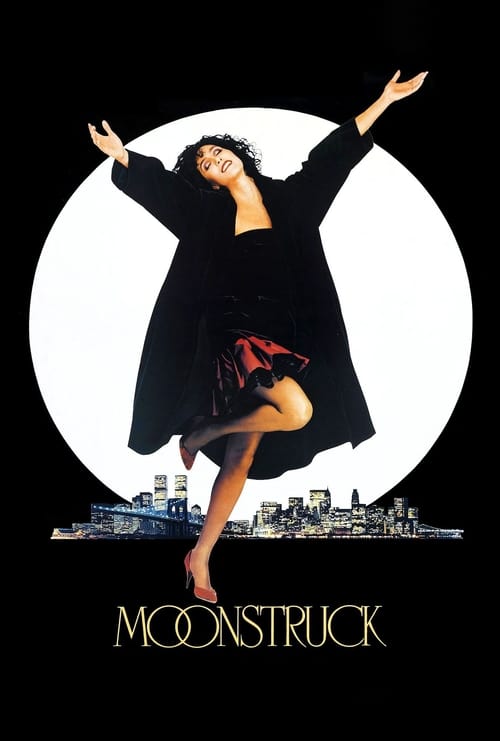
Moonstruck (1987)
Directed by Norman Jewison
No · Ultra Based
How we score movies →Consciousness Markers
Features an Italian-American cast with Cher in the lead role, which represented notable representation for the era. However, the casting serves the story rather than functioning as conscious diversity positioning.
Loretta exercises agency in her romantic choices and resists family pressure, but the film does not frame this through explicit feminist ideology. Her autonomy emerges organically from character rather than social messaging.
While Cher's character is deliberately de-glamorized at the film's opening through costume and styling choices, this reflects the character's self-perception rather than body positivity messaging or celebration of diverse body types.
The film engages with Italian-American cultural identity as a lived experience rather than as a vehicle for racial consciousness discourse. There is no meta-commentary on representation or systemic issues.
Moonstruck prioritizes character and comedy over preachy messaging. Any thematic content emerges naturally from the narrative rather than through explicit instruction or sermonizing.
No LGBTQ+ themes, representation, or content present in the film.
No climate-related themes, messaging, or environmental consciousness present in the film.
No critique of capitalism, wealth inequality, or systemic economic injustice appears in the narrative.
No representation of neurodivergence or neurodivergent themes present in the film.
The film contains no historical content or revisionist framing of historical events.


Synopsis
37-year-old Italian-American widow Loretta Castorini believes she is unlucky in love, and so accepts a marriage proposal from her boyfriend Johnny, even though she doesn't love him. When she meets his estranged younger brother Ronny, an emotional and passionate man, she finds herself drawn to him. She tries to resist, but Ronny, who blames his brother for the loss of his hand, has no scruples about aggressively pursuing her while Johnny is out of the country. As Loretta falls for Ronny, she learns that she's not the only one in her family with a secret romance.
Why it received this score
Moonstruck arrives as an anomaly in the landscape of modern cultural assessment, a film that predates contemporary progressive sensibilities by a full generation and thus exists in a peculiar liminal space. The movie centers a woman of a certain age pursuing her own romantic desires in defiance of family expectation and societal pressure, which might seem progressive to the untrained eye. Yet the film makes no effort to theorize this autonomy, to contextualize it within broader systems of patriarchal oppression, or to educate the viewer about the injustice that Loretta overcomes. She simply acts, and we watch her act, and that suffices. The narrative indulges in Italian-American cultural specificity with genuine affection, allowing its characters to inhabit their world without apology or explanation, which is to say it treats them as people rather than as representatives of an identity category requiring interpretation.
The film's restraint in this regard may itself be its most conspicuous feature. There are no speeches about women's agency, no acknowledgment that Loretta's choices represent a rebellion against patriarchy, no pause to emphasize the significance of a woman in her late thirties claiming desire on her own terms. Nicolas Cage screams into the night. Olympia Dukakis delivers withering one-liners. Cher moves through the narrative with the practical determination of someone who has decided what she wants and intends to have it. The film trusts us to notice these things, or perhaps it simply does not care whether we do. This is not indifference to character so much as a refusal to manage our interpretation of it.
What emerges from this approach is a comedy that functions as a time capsule of a particular moment in American cinema, when stories about people could proceed without constant metacommentary about what those stories meant. There is something bracing about a film that simply shows us characters making decisions and living with the consequences, without insisting we understand the political implications. Moonstruck occupies a neutral position on this spectrum, a film of genuine charm and craft that belongs to an era before such choices became fraught with meaning.
Analysis generated by our Consciousness Algorithm
Critic Reviews
“Such nourishing comedy. It satisfies every hunger, especially the irrational ones that seem to hit hardest at holidays: hunger for impetuous romance and for the reassuring warmth of family, for reckless abandon, and for knowing who we are and what we want. [16 Dec 1987]”
“In its warmth and in its enchantment, as well as in its laughs, this is the best comedy in a long time.”
“The most beguiling romantic comedy this side of "Broadcast News." [11 Jan 1988]”
“A corny, overblown romance, and while it eventually wins you over with its atmosphere and good nature, it's far from the masterpiece you've been hearing about. [15 Jan 1988]”