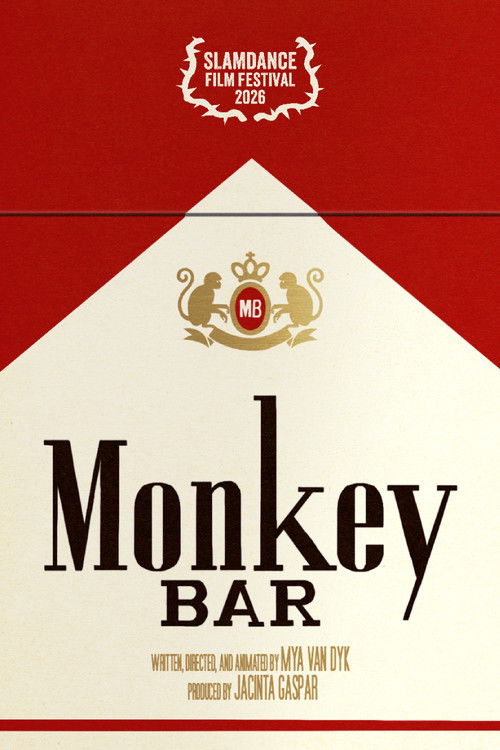
Monkey Bar (2026)
Directed by Mya Van Dyk
No · Ultra Based
How we score movies →Consciousness Markers
The bar setting and the monkey's apparent alienation suggest some implicit critique of labor and leisure capitalism, though this remains thematic rather than explicit. The film does not articulate any coherent anti-capitalist argument.
While the film's existential themes carry pedagogical weight, it resists explicit preachiness. The quick-witted wordplay and physical comedy prevent the film from devolving into pure intellectual lecturing, though the existential subject matter maintains a certain earnest gravity.
The cast consists of a single monkey character with no specified demographic markers. There is no deliberate representation strategy, though the absence of human characters prevents any meaningful assessment of casting practices.
The monkey's melancholic disposition and existential preoccupation might suggest psychological divergence, but the film does not frame this through a neurodivergence lens or offer any clinical interpretation.
No LGBTQ+ themes or representation are evident in this existential comedy about a solitary primate. The film contains no romantic or relational content of any kind.
The film exhibits no feminist agenda or commentary on gender dynamics. The protagonist's existential crisis operates entirely outside gendered experience or critique.
There is no engagement with racial themes, racial consciousness, or any interrogation of racial systems. The monkey exists in an abstract, deracialized philosophical space.
No environmental or climate-related messaging appears in the film. The setting is a generic bar exterior with no ecological commentary.
Body positivity messaging is absent. The film does not engage with bodily representation or challenge conventional aesthetic standards.
The film contains no historical content and therefore offers no revisionist historical commentary. It exists entirely in an ahistorical philosophical register.
Synopsis
A monkey steps out of a bar to get some air, grappling with the harsh nature of existence.
Why it received this score
Monkey Bar presents itself as a philosophical meditation on existence rendered through the vehicle of a despondent primate. The film's existential preoccupations, however, operate entirely outside the framework of contemporary progressive sensibilities. There are no identity markers, no consciousness-raising, no interrogation of social structures. The monkey simply exists, smokes, contemplates oblivion. This is an exercise in pure nihilism dressed in stop-motion charm, which is to say it is remarkably resistant to any ideological interpretation whatsoever.
The directorial voice of Mya Van Dyk exhibits an affinity for transformation and explosion as narrative devices, according to the available materials. Yet Monkey Bar resists the temptation to transform its alienated protagonist into a vehicle for social commentary. The film does not ask us to identify with the monkey as a stand-in for any particular demographic experience. It does not weaponize the character's suffering in service of a larger cultural thesis. Instead, it permits the monkey to suffer in isolation, which is almost radically uncommitted by contemporary standards.
What remains is a film fundamentally indifferent to the concerns that animate contemporary progressive filmmaking. It is, in that sense, almost refreshingly vacant of cultural agenda. One observes a discipline in this refusal, a commitment to the aesthetic and philosophical over the ideological. Whether this constitutes artistic integrity or mere provincial indifference remains an open question.
Analysis generated by our Consciousness Algorithm