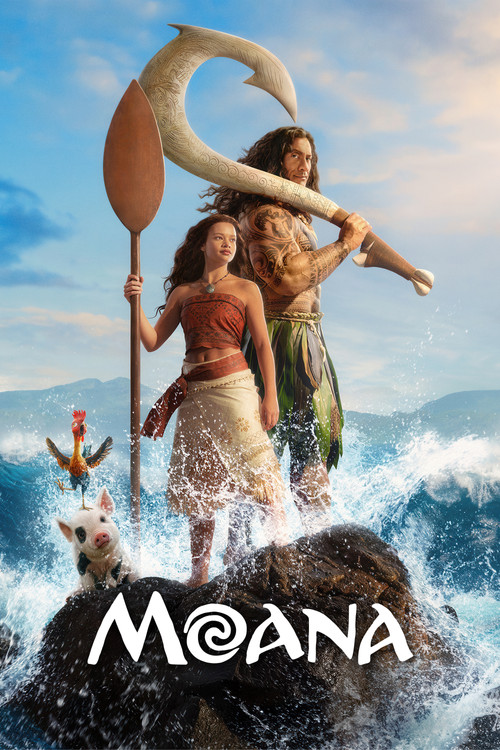
Moana (2026)
Directed by Thomas Kail · $121.6M domestic
Yes · Woke
How we score movies →Consciousness Markers
Authentic Pasifika casting is not merely a feature of this film but its entire cultural justification. The production assembled a predominantly Polynesian cast with explicit, publicly stated intent to provide representation for Pacific Islander audiences, and the press apparatus around the film treated this as a primary achievement.
The film generated sustained public discourse about what Pasifika representation means for children of color, including a controversy over whether the lead actress's natural hair texture had been altered, with commentators arguing this sent harmful messages to young girls of color. Cast and crew gave multiple interviews framing the film explicitly as a cultural platform.
Moana is a young woman who overrules her father's prohibitions, sails into danger without permission, and saves her entire civilization. The film frames her autonomy and defiance of patriarchal village authority as straightforwardly heroic, which is the animating engine of the plot.
Dwayne Johnson and Auliʻi Cravalho conducted a visible public campaign framing the film as a meaningful cultural intervention, and the production's self-consciousness about its representational mission bleeds into the film's promotional and narrative DNA. It stops short of sustained in-film sermonizing, but the awareness of its own importance is audible throughout.
The hair texture controversy touched on the acceptability of natural hair for women of color, which sits at the edges of body positivity discourse. The film itself does not appear to foreground body image themes directly.
The film presents Polynesian navigational heritage and mythology with cultural pride and a corrective emphasis on its sophistication, though this reads more as celebration and restoration of erased history than as revisionism in the modern polemical sense.
No LGBTQ+ themes, characters, or subtext are present in the film or its surrounding discourse.
No climate or environmental justice themes are present in the film's content or cultural framing.
No anti-capitalist themes are identifiable in the film's narrative or reception discourse.
No neurodivergence themes or characters are present in the film or its surrounding discourse.
Synopsis
Teenage Moana answers the Ocean's call and, for the first time, voyages beyond the reef of her island of Motunui with infamous demigod Maui on an unforgettable journey to restore prosperity to her people.
Why it received this score
Disney's live-action remake of Moana arrives less than a decade after the animated original, which is either a bold creative decision or a very efficient deployment of an existing intellectual property. The studio has assembled a cast of predominantly Pasifika actors, a choice celebrated at length by everyone involved, and directed by Thomas Kail with the kind of reverent cultural seriousness that occasionally remembers it is also supposed to be an adventure film for children. Catherine Lagaʻaia is, by most accounts, genuinely magnetic in the lead role. This is fortunate, as she is required to carry both the film and the symbolic weight of Pacific Islander representation in global cinema simultaneously, which is a considerable load for a debut.
The film's social consciousness operates on two frequencies. The first is embedded in the narrative: Moana is a young woman who ignores her father, sails into a mythologically hostile ocean, and rescues her civilization from ecological collapse, all without being asked. This is a perfectly standard Disney heroine arc, executed with the expected competence. The second frequency is external and considerably louder, consisting of press interviews, social media campaigns, and public statements from producers framing the film as a historic cultural platform. Dwayne Johnson personally defended the film's existence against online skepticism. Auliʻi Cravalho, the original animated Moana, endorsed her own replacement as an act of mentorship. The apparatus of cultural significance was deployed with the same budget as the film itself.
The production did not escape without incident. Online discourse erupted over whether Lagaʻaia's natural hair texture had been altered for the role, with critics arguing that straightening the hair of a Pasifika actress in a film explicitly celebrating Pasifika identity sent a message that was, to put it diplomatically, at odds with the stated mission. Disney, meanwhile, continued to use a padded muscle suit on Dwayne Johnson, which generated less philosophical commentary but arguably more visual distraction. The film sits, in the end, in a familiar modern position: a corporate entertainment product that has absorbed enough progressive cultural aspiration to generate both sincere praise and reflexive backlash, leaving the actual film somewhere in the middle, covered in CGI and goodwill.
Analysis generated by our Consciousness Algorithm